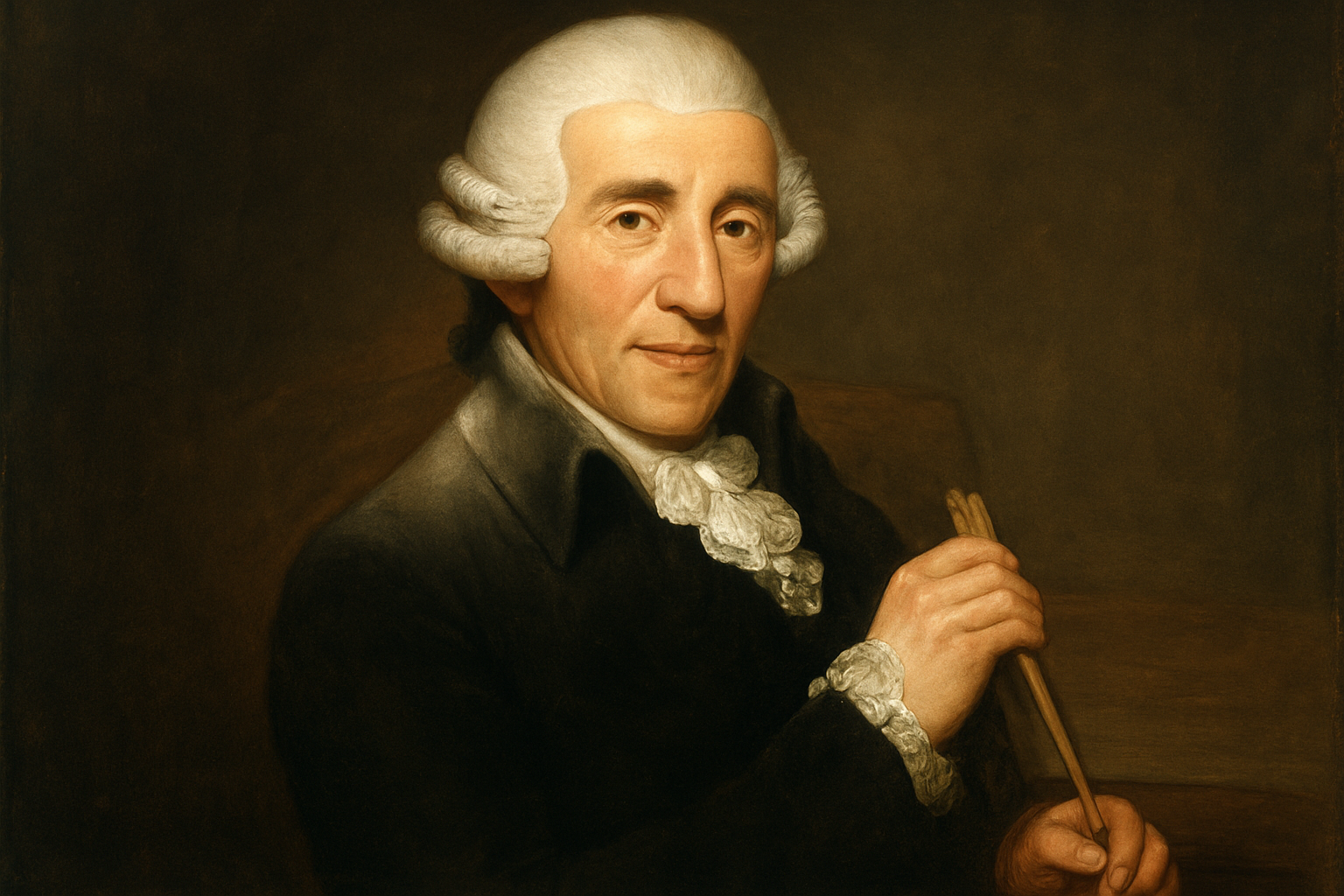
Franz Joseph Haydn, an influential composer of the Classical period, has earned the title of “Father of the Symphony” and the “Father of the String Quartet” through his groundbreaking work in these genres. Living from 1732 to 1809, Haydn’s musical innovations laid the groundwork for future composers, making significant contributions to the development of classical music.
The Early Life of a Musical Pioneer
Born in Rohrau, Austria, Haydn’s journey to becoming a maestro was not immediate. At the age of six, he was sent to nearby Hainburg to receive a proper musical education. His early exposure to music paved the way for his eventual arrival in Vienna, where he joined the choir at St. Stephen’s Cathedral.
Revolutionizing the Symphony
Throughout his career, Haydn composed 104 symphonies, each contributing to the evolution of the symphonic form. He introduced new ideas in orchestration and structure, establishing the basic framework for composers like Mozart and Beethoven to build upon. As quoted by British musicologist and composer Donald Tovey, “to one tuned in the key of Haydn, the key to all Viennese music of the succeeding century is unlocked.”
Creation of the String Quartet
The string quartet, consisting of two violins, a viola, and a cello, became a dominant form in chamber music largely due to Haydn’s efforts. He composed 68 string quartets, exploring and perfecting the interplay between the instruments. Haydn’s quartets are celebrated for their wit, inventiveness, and expressive power. The Emperor Quartet remains one of the most performed and cherished pieces in the quartet repertoire.
“It was from Haydn that I first learned the true way to compose quartets,” remarked Wolfgang Amadeus Mozart, evidencing Haydn’s profound impact on his contemporaries.
Legacy and Influence
Haydn’s works were not only cornerstone pieces of his time but also paved the way for new generations of musicians. His use of thematic development, variation, and motivic unity opened new avenues for musical expression. As such, his influence extends well beyond his own era.
Today, Haydn is remembered not only for his prolific output but also for shaping the symphonic and chamber music traditions. His relentless curiosity and unyielding quest for innovation have solidified his status as a towering figure in the history of Western music. For those who study and appreciate the classics, Haydn’s contributions remain invaluable—as vital today as they were over two centuries ago.