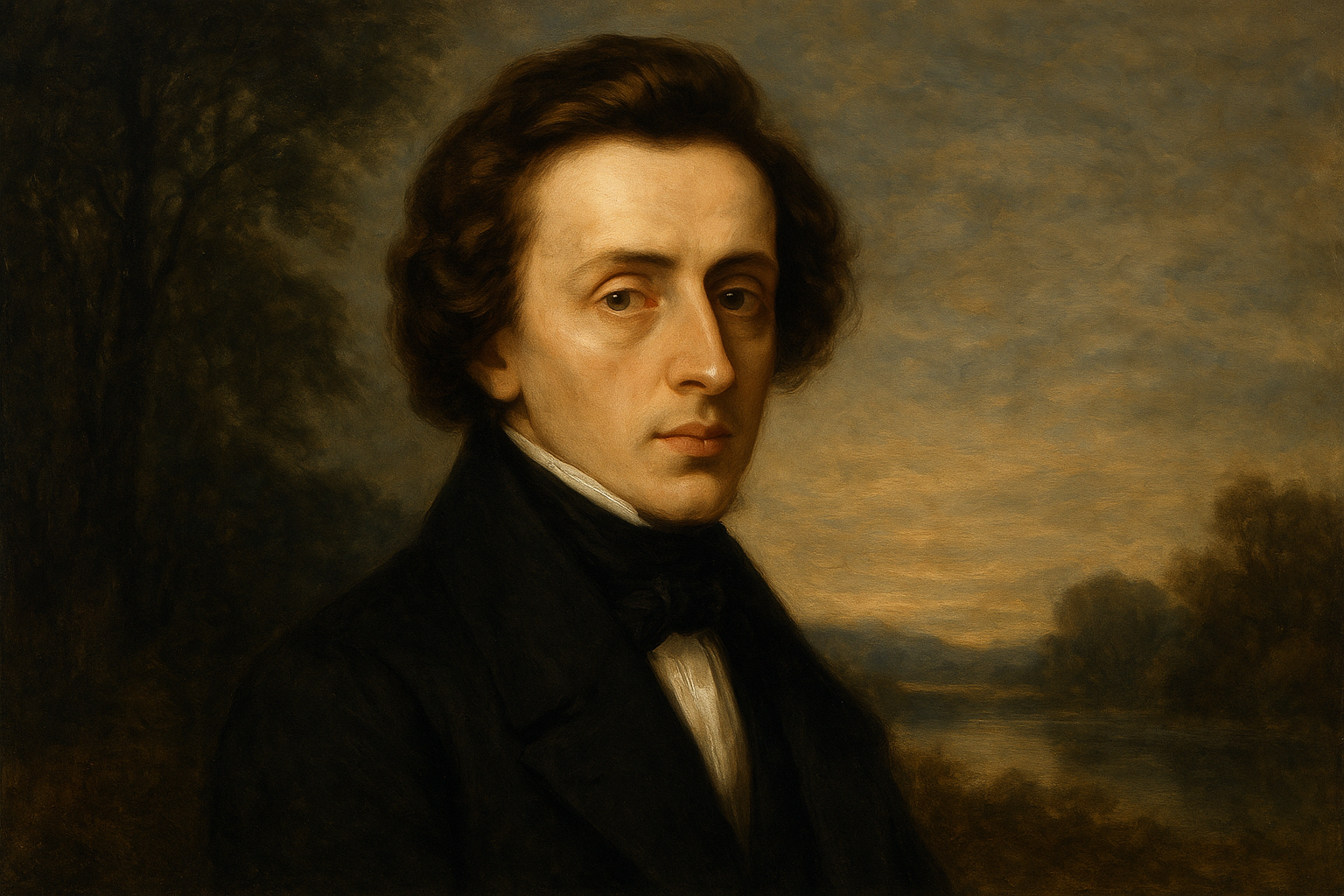
Chopin’s Poetic Soul: The Nocturnes as Windows to the Romantic Spirit
Romanticism, with its emphasis on emotion, individualism, and nature, found its sublime expression in various art forms during the 19th century. Among the foremost figures in music who encapsulated the Romantic spirit was Frédéric Chopin, a genius whose compositions have continued to resonate through time. The nocturnes, perhaps more than any of his works, are a testament to Chopin’s ability to harness the power of the subtle and the sublime.
The Nocturne: A Form Perfected by Chopin
Though not invented by Chopin, the nocturne was indelibly shaped by his genius. Originally developed by the Irish composer John Field, Chopin transformed the form into a nuanced and expressive vehicle, rivaling the great vocal arias of opera.
“I want to write and not say everything, for the story must be deciphered between the lines.”
This quote attributed to Chopin hints at his compositional ethos that comes alive in his nocturnes. These pieces invite listeners to delve into a world where clarity mingles with ambiguity, creating a tapestry of emotions.
The Romantic Spirit Through the Lens of Chopin’s Nocturnes
Chopin’s nocturnes offer a perfect lens through which to explore the core ideals of the Romantic spirit:
- Individual Expression: Unlike the grand symphonies of the era, Chopin’s nocturnes are intimate, personal pieces, almost confessional in nature. He invites the listener into his world, offering glimpses of delicate and fleeting feelings.
- Infinite Melancholy: An air of wistfulness pervades much of the Romantic music, and Chopin’s nocturnes are no exception. Pieces like Nocturne in E-flat Major, Op. 9 No. 2 embody a serene melancholy, where tranquil forms belie tumultuous undercurrents.
- Nature and the Night: The nocturnes, literally “of the night,” conjure images of night skies, lending a mysterious aura reinforced by their variations in light and shade.
An Analysis of Select Nocturnes
Among the twenty-one nocturnes penned by Chopin, a few stand out as particularly illustrative of his Romantic style. Each contains profound depths that act as windows into Chopin’s soul.
Nocturne in B-flat Minor, Op. 9 No. 1
This piece begins with a simple, haunting melody in the right hand, accompanied by deep, resonant bass chords. As it progresses, the nocturne reveals complexities and turbulence, echoing the inner conflicts that characterize much of Romantic art.
Nocturne in C Minor, Op. 48 No. 1
A stark departure from the more serene nocturnes, this composition exudes an almost unrestrained passion. Its form is akin to a dramatic soliloquy, capturing the essence of Romantic heroism and tragedy.
Nocturne in D-flat Major, Op. 27 No. 2
With a lyrical quality that soars, this nocturne feels almost like a radiant love song, enveloping the listener with its tender articulations. The gentle introspection of this piece offers a tender glimpse into the gentle side of Romanticism.
A Lasting Impact
Chopin’s nocturnes have long outlived their creator, standing as timeless beacons of the Romantic spirit. Musicians for generations have studied and performed these works, revealing new emotions and interpretations with each performance.
As one of his contemporaries aptly stated:
“Chopin was a revolutionary enfolded in the luxury of a song… He was a leading force in taking music from the rationality of Classicism into the expressive embrace of Romanticism.”
Indeed, the nocturnes serve not only as a testament to Chopin’s compositional prowess but as a continual reminder of music’s ability to bridge the world of meaning and mystery, capturing the ethos of the Romantic age.
Chopin’s Place in Romantic Hearts
In the realm of Romantic music, Chopin reigns as a sovereign of the heart’s most sacred chambers. His nocturnes encapsulate the subtle expressions of solitude, passion, and longing—fragments of the soul rendered through the delicate touch of the piano. These works reaffirm his standing as not only a technical virtuoso but also a poet whose verses need no words.
Thus, Chopin’s nocturnes remain as windows to the Romantic spirit, not just because of their form and content, but because they express the ineffable through every chord and silence, inviting listeners to explore their own inner landscapes with each note that fades into the night.