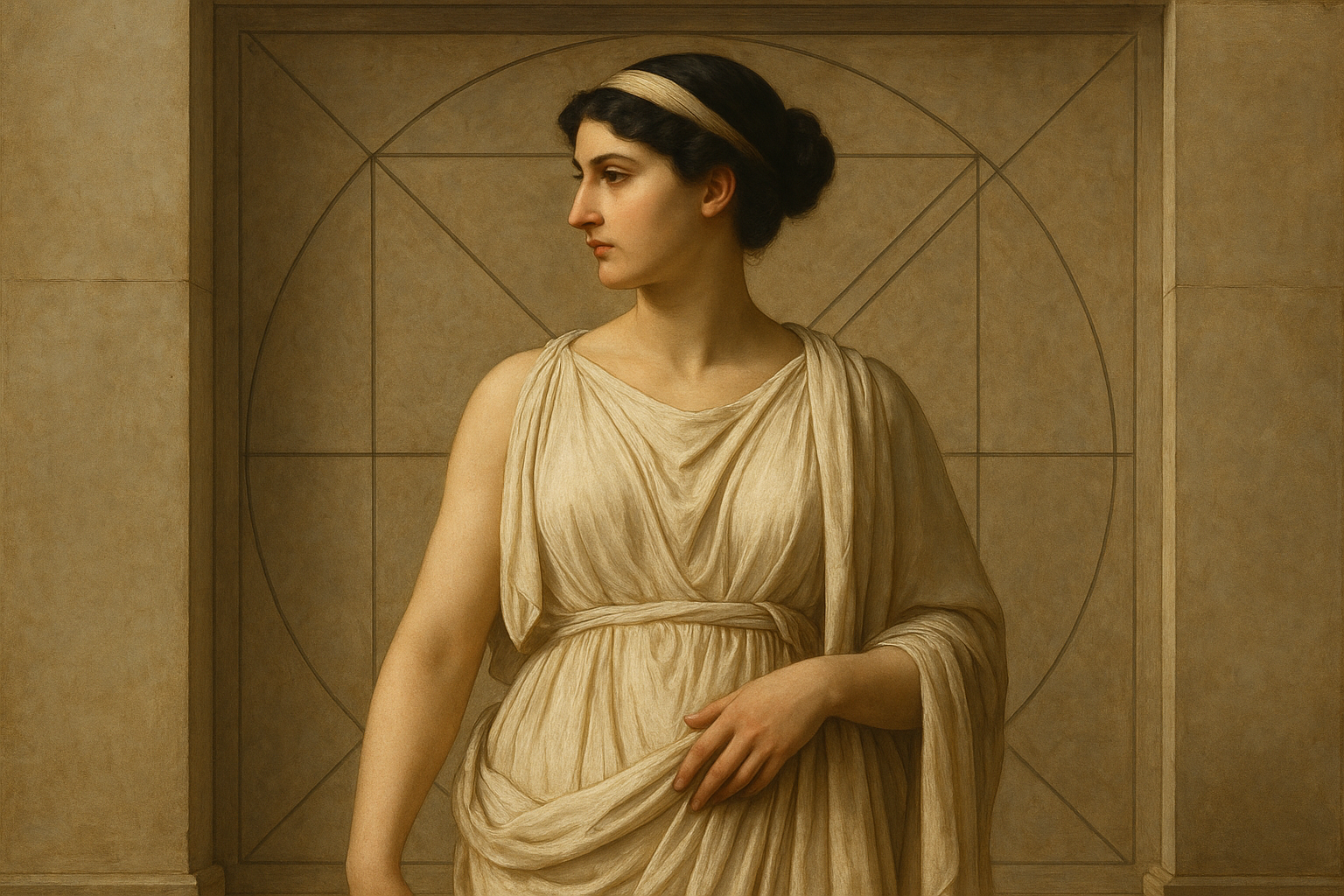
The world of classical music is a cosmos of structured beauty and intricate patterns. Among its most fascinating forms, the canon stands out as a testament to the genre’s mathematical precision and aesthetic grace. This article delves into the profound connection between geometry, order, and the timeless art of classical music composition.
The Structural Essence of the Canon
A canon is a form of contrapuntal music where a melody is imitated by one or more voices at a fixed time interval. This imitation is not just a simple repetition but a sophisticated play with harmony and timing that results in an elegant tapestry of sound. Pioneered during the Renaissance and Baroque periods, the canon often serves as a cornerstone for larger compositions.
- Johann Sebastian Bach: Known as the master of counterpoint, Bach’s The Musical Offering includes canons that remain unparalleled in complexity and beauty.
- Wolfgang Amadeus Mozart: His canons often display a playful, yet mathematically precise structure, delighting listeners with their clarity and ingenuity.
- Ludwig van Beethoven: Beethoven explored the canon form extensively, expanding its emotional and musical boundaries.
Geometric Principles in Music
At its core, a canon embodies the principles of symmetry and order, akin to geometric figures. Just as circles and polygons reveal their beauty through symmetry, so does the canon through its repetitive and mirrored structures.
“Music is the arithmetical exercise of the soul, which is unaware of its counting.” – Gottfried Wilhelm Leibniz
Types of Canons
- Simple Canon: Where the imitating voice enters after a prescribed duration.
- Mirror Canon: Here, the imitating voice reproduces the melody in reverse, akin to a reflection.
- Mensuration Canon: The imitating voice transforms the melody by a consistent alteration in duration, adding a rhythmic complexity.
The Mathematical Paradigms
Music, much like mathematics, relies on precision and patterns. The composer employs mathematical paradigms to create symphonies of sound that appeal to the listener’s sense of order. This mathematical foundation can be recognized in the structuring of canons, modulating through key changes and harmonic progressions similar to algebraic transformations.
Integration with Geometry
The interplay between music and mathematics in canons can be likened to the geometric concepts of synchronicity and balance. Just as geometric shapes maintain balance through symmetrical aspects, the canon maintains its structure through the harmony between leading and imitating voices.
In contemporary times, this analogy with geometry has influenced other art forms and media, leading to innovations in visual music representations and computer-generated compositions. The visualization of such patterns can often be found in digital platforms and educational resources, illustrating the close ties between these disciplines (JSTOR).
Modern Applications and Legacy
While the canon may seem like a relic of the past, its principles are vibrantly alive in today’s music. From jazz to modern electronic compositions, the canon’s essence of order, symmetry, and imitation finds its place. Contemporary artists use loops and samples, echoing the principles of canonic form in electronic dance music and beyond.
“The history of music is inextricably linked with the history of mathematics.” – Iannis Xenakis
Conclusion
The canon’s influence transcends time and space, reminding us of the shared beauty between the arts and sciences. Its symmetry and order resonate with our intrinsic appreciation for both the logical and the divine—a true testament to human ingenuity.
As we explore our universe, the classical canon stands as a beacon of harmony, beckoning us to find unity in diversity, much like the harmonious existence of shapes within the mathematical world.
The enduring allure of canons is found not only in their sound but also in their representation of a deeper cosmic order—a harmonious symphony of numbers and notes. To delve into a canon is to witness the serene marriage of melody and mathematics.