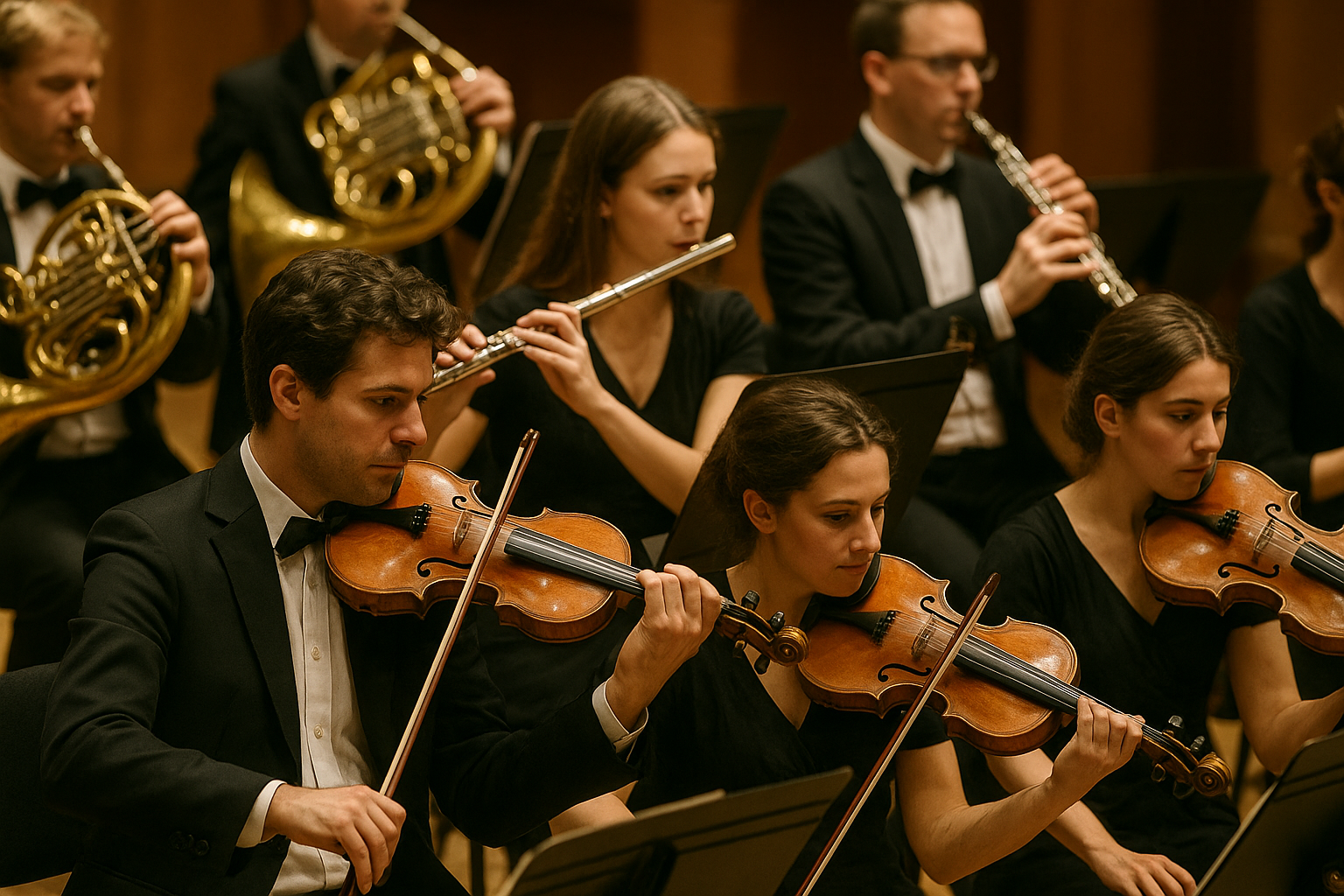
The Secrets of Instrumentation: How Composers Use the Orchestra’s Colors
The world of orchestral music is a vivid tapestry of sound, where composers wield the orchestra’s diverse palette like a painter with a canvas. Each instrument carries its unique color and texture, offering composers a wide range of expressive possibilities to evoke emotions and tell stories. But what exactly are the secrets behind how composers use these orchestral colors?
Understanding Instrument Families
The modern orchestra is divided into four main families of instruments:
- Strings: Violins, violas, cellos, and double basses form the backbone, often providing warmth and resonance.
- Woodwinds: Instruments like flutes, oboes, clarinets, and bassoons add color with their distinctive timbre.
- Brass: Trumpets, trombones, French horns, and tubas bring power and brilliance to the ensemble.
- Percussion: From timpani to cymbals, these instruments inject rhythm and punctuation into the music.
By understanding the capabilities and timbres of these families, composers can skillfully blend them to achieve their desired sound.
Orchestration: The Art of Mixing Colors
At the heart of using the orchestra’s colors is the art of orchestration. Hector Berlioz, a trailblazer in orchestration, once said, “Instrumentation is both a science and an art. It teaches the student the properties and resources of the instruments, their appropriate use…” (Berlioz’s Treatise on Instrumentation).
Composers meticulously craft their scores, considering how different instruments interact. For example:
- Doubling: Reinforces musical lines by having multiple instruments play the same melody, enhancing richness.
- Contrasts: Juxtaposes different timbres to create intrigue, such as a solo flute against a string section.
- Harmony and Texture: Explores the balance between instruments to build lush, intricate layers of sound.
Creating Atmosphere and Emotion
Through skilled orchestration, composers can evoke a wide range of emotions. Consider Maurice Ravel’s “Boléro,” where a simple melody is transformed as it winds through various instrumental colors, creating an ever-growing intensity. Gustav Mahler, another master orchestrator, believed that “A symphony must be like the world. It must contain everything.” (Library of Congress).
In essence, the secrets of orchestration lie in understanding each instrument’s unique voice and how they can be combined to create a vivid sonic picture. Composers who master these skills can transport listeners to different worlds, painting scenes of drama, beauty, and emotion using the orchestra’s colors.