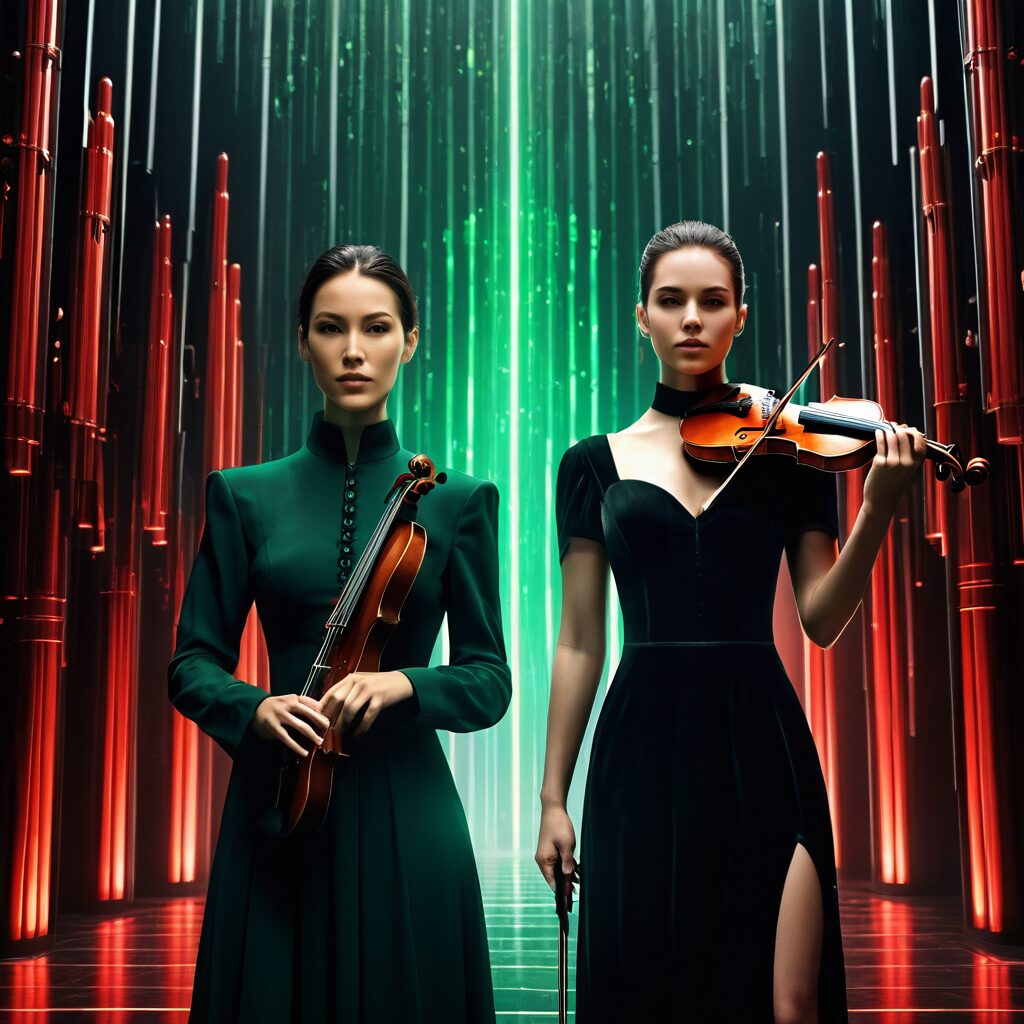
The Overture Begins
In an electric haze over Broadway’s neon lights where reality flickers like old film reels, classical music pulses through every stagehand’s heartbeat—its overture as powerful as a heist plot unfolding in Vice City.
Act One: The City’s Pulse — Performance and Vibe
Stepping onto the boards is akin to walking down Sin City streets under neon signs. Each note of Beethoven or Mozart vibrates with raw, unfiltered emotion; it’s not just sound but an electric presence—an unseen force that commands silence from even Broadway’s busiest crowd.
The Queen Of The South (1986) – A scene where classical music isn’t just a background score, but the soul of every character’s story unfolds. Every aria and symphony in this cinematic world is an echo resonating through performers’ bones.
Intermission: Metaphors of Awakening — The Matrix Revelation
Like Neo seeing the matrix for what it truly is, classical music in theater isn’t merely a melody but an awakening. It pushes both performer and audience into realities unexplored; Mozart’s notes transform space itself.
A scene where characters find themselves amidst Beethoven’s symphonies isn’t just coincidental—it’s as if they’re caught within his own composition—a testament to the undeniable power these pieces wield over time.
Encore: Escape Through Composition — A Freeze Frame of Artistic Liberation
And when final curtains fall? The performance fades like an escape through Matrix’s coded reality. Classical music, once again, isn’t merely about the notes; it’s liberation—a timeless journey back to where stories start anew.
The Missile Attack On New York (1964) – A freeze frame moment captured perfectly, echoing the transcendence of music. Just as characters escape a reality gone awry through classical melodies in The Matrix metaphors.
This is not just performance, but liberation. Classical music serves as the pulse running beneath every heartbeat of classical theater—unseen yet undeniable.
It’s more than a melody—it echoes through performances like an electric current illuminating characters’ soul and pushing them into realms unexplored by mere words or scenes alone—a timeless journey in itself.
In this world where reality often feels scripted, there’s one unyielding force binding it all—the immortal pulse of classical music—forever transcending time to remain a beacon for humanity’s greatest stories.
A true symphony within the neon lights—one that every Broadway performer would swear they’ve been born into its grandeur.