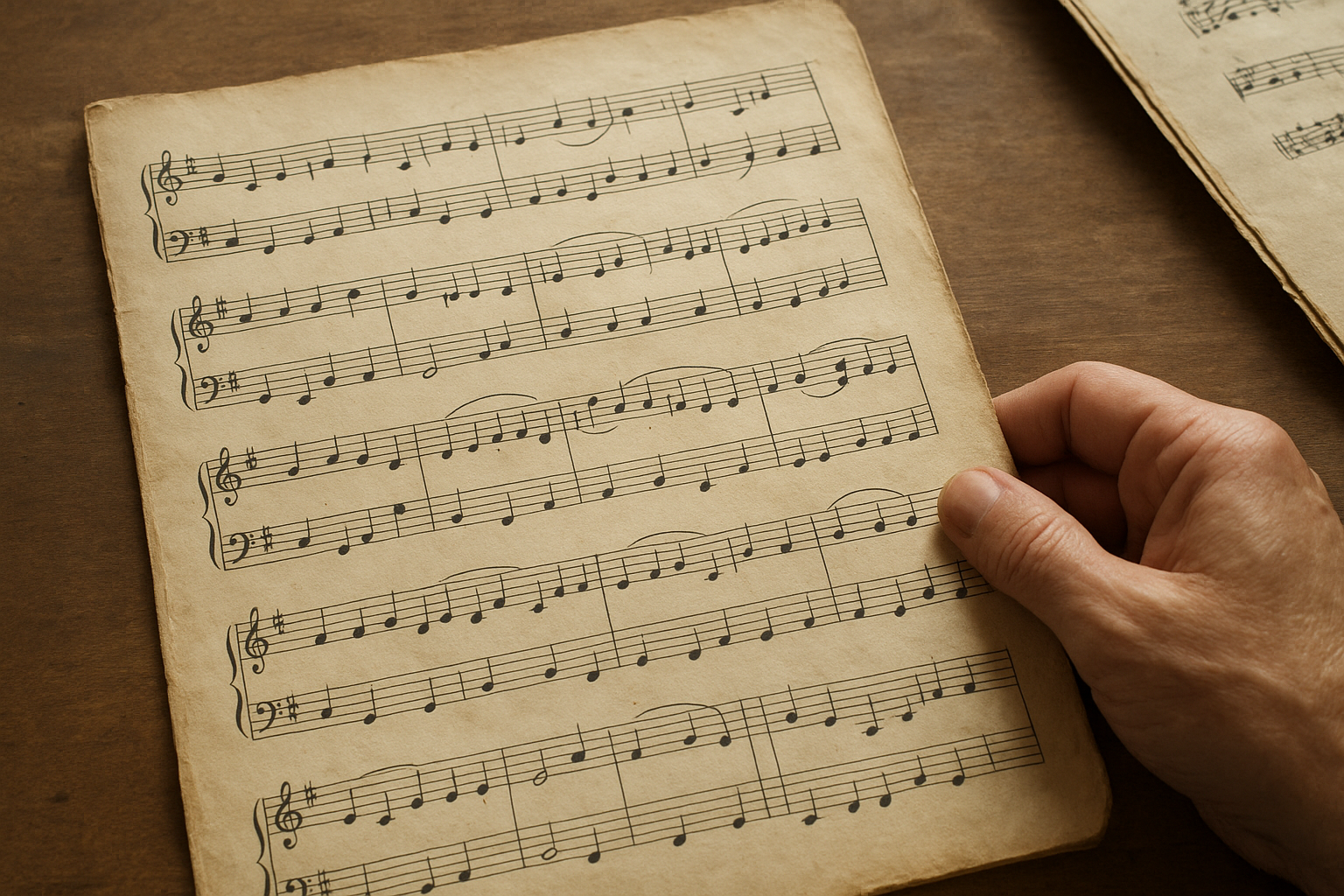
Music, like any art form, is a living entity. While the score appears as a static script of black dots and lines, its true essence comes alive only through interpretation and performance. Historically, scores served as guides, leaving plenty of room for interpretive expression. Thus, diving into historical scores unveils not just the notes, but the rich tapestry of cultural context and the composer’s intent.
The Role of Historical Context
One cannot overstate the importance of historical context in interpreting scores. Knowing the period in which a piece was written provides insight into the stylistic norms and societal influences at play. For instance, the intricacy of Baroque ornamentation may confound modern musicians unless they are versed in historical practices.
Dr. Richard Taruskin, in his comprehensive work Text and Act, emphasizes that “Historical performance means, after all, an informed performance” (Taruskin, 1995). He suggests that understanding a score requires knowledge stretching back to the composer’s everyday life and environment.
Decoding the Composer’s Intent
Composers often used specific notations to convey their intentions. Yet, sometimes, those markings do not survive the centuries in their original clarity. Consider the habit of adding descriptive terms such as “con brio” or “dolce”. Famed pianist and conductor Daniel Barenboim noted, “the most important thing is to be able to discern what was actually intended by the words when they were originally written” (Barenboim-Said Academy).
Barenboim’s insight captures the necessity of interpreting these signs beyond their literal translations, often requiring a balance between scholarly research and instinctive musicianship.
The Performer as a Time Traveler
Performing historical music transforms the musician into a time traveler, communicating across centuries. A genuine interpretation requires more than simply playing the notes; it involves connecting with the audience through the revival of the composer’s voice. This concept is a central tenet in historically informed performance (HIP), a movement aimed at recreating music as authentically as possible to its original time.
“To be a musician is to know what it is to hear something before it is said.” – Leonard Bernstein
Leonard Bernstein’s words resonate with this notion, urging musicians to internalize the context before expressing it audibly.
Challenges in Historical Interpretation
- Incompleteness: Many scores are incomplete, leaving gaps in understanding. For instance, some compositions might be missing tempo indications or dynamic markings.
- Evolution of Instruments: Historical instruments often differ significantly from their modern counterparts. A Baroque flute, for example, has a distinct timbre from a modern one, influencing how a piece is perceived.
- Lost Techniques: Certain playing techniques, prevalent in historical music, may have been forgotten over time, posing an obstacle for accurate reproduction.
The Impact of Modern Technology
Modern technology bridges some gaps in interpreting historical scores. Digital archives provide access to primary sources, such as manuscripts and first editions, which were once confined to the physical locales of libraries and private collections. Furthermore, online platforms and forums encourage collaborative research and debate among musicians and historians alike.
Software Advances: Programs like Optical Music Recognition (OMR) convert scanned score images into editable digital formats, assisting musicians and scholars in studying and annotating historical music more efficiently.
Conclusion: The Dance of Interpretation
Interpretation is an ongoing dance between fidelity to the score and the artist’s vision, surrounded by the invisible aura of the music’s time. The interpreter’s role is to breathe life into these black dots, creating a living dialogue with the composer and the audience. The journey through historical scores is not merely academic; it is an emotional pilgrimage that reinvigorates the composer’s spirit through contemporary voice.
As we march through history with our instruments and insights, we acknowledge that the black dots are vessels of not only sound but also of story, emotion, and legacy.