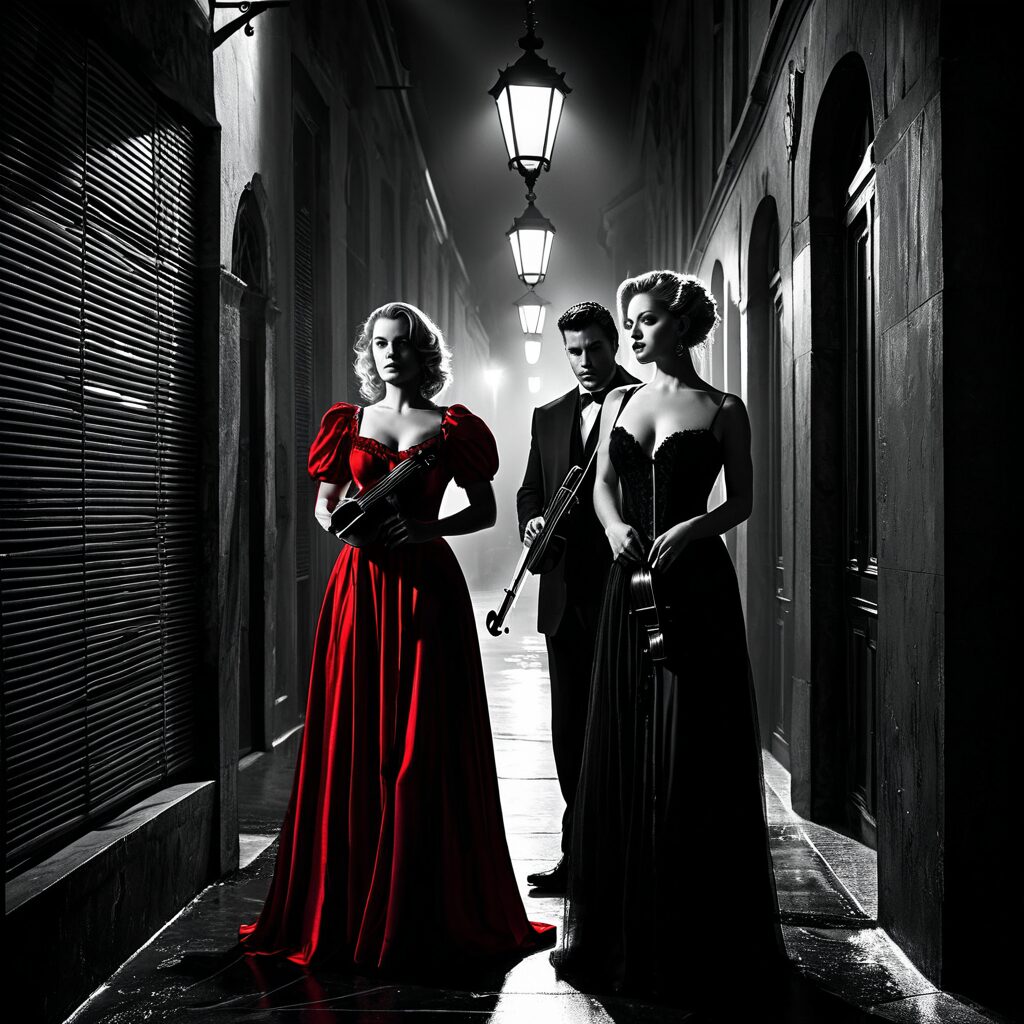
Overture as Heist into Opus Nocturnum
The city’s neon veins pulse with life; each flickering light an echoing note from a distant baroque cathedral, where Bach’s fugues once soared through grand halls—a heist of sound against silence itself.
In the dimly lit backstreets between eras and movements lie scores whispered in shadowed corners. Composers like Vivaldi danced with strings as if casting spells over Venice’s waters; Beethoven thundered his symphonies, challenging even time to stand still amidst revolutions both literal and metaphorical within Vienna’s heart.
Intermission: Stepping into Darkness
Stepping through an intermission shroud reveals Sin City’s stark noir. As darkness consumes light, Debussy’s prelude in shades of gray invites us—a melancholic reflection where music becomes a lone wanderer amidst the city’s cacophony and vice-cities.
In this space between notes lies ambient’s overture—atmospheric tones drifting like shadows against neon backdrops; an electric hum weaving through Ligeti as if to say, “we exist beyond your time.”
Encore: Escape into Opus Nocturnum
Emerging from darkness we find ourselves enveloped in a matrix-like fog—a simulated awakening. Here ambient becomes orchestral—Chamberlain’s delicate threads intertwine with nature’s own symphony; Adams’ 4’33” as if silence itself holds its breath, awaiting the return of sound.
In this electric city where neon signs flicker like metronomes counting down to a silent finale—a freeze-frame coda—we realize: music evolves. From baroque’s opulent chambers through sin-city noir into ambient’s simulated landscapes—the evolution is perpetual and unending; forever an orchestral heist in the heart of our very existence.