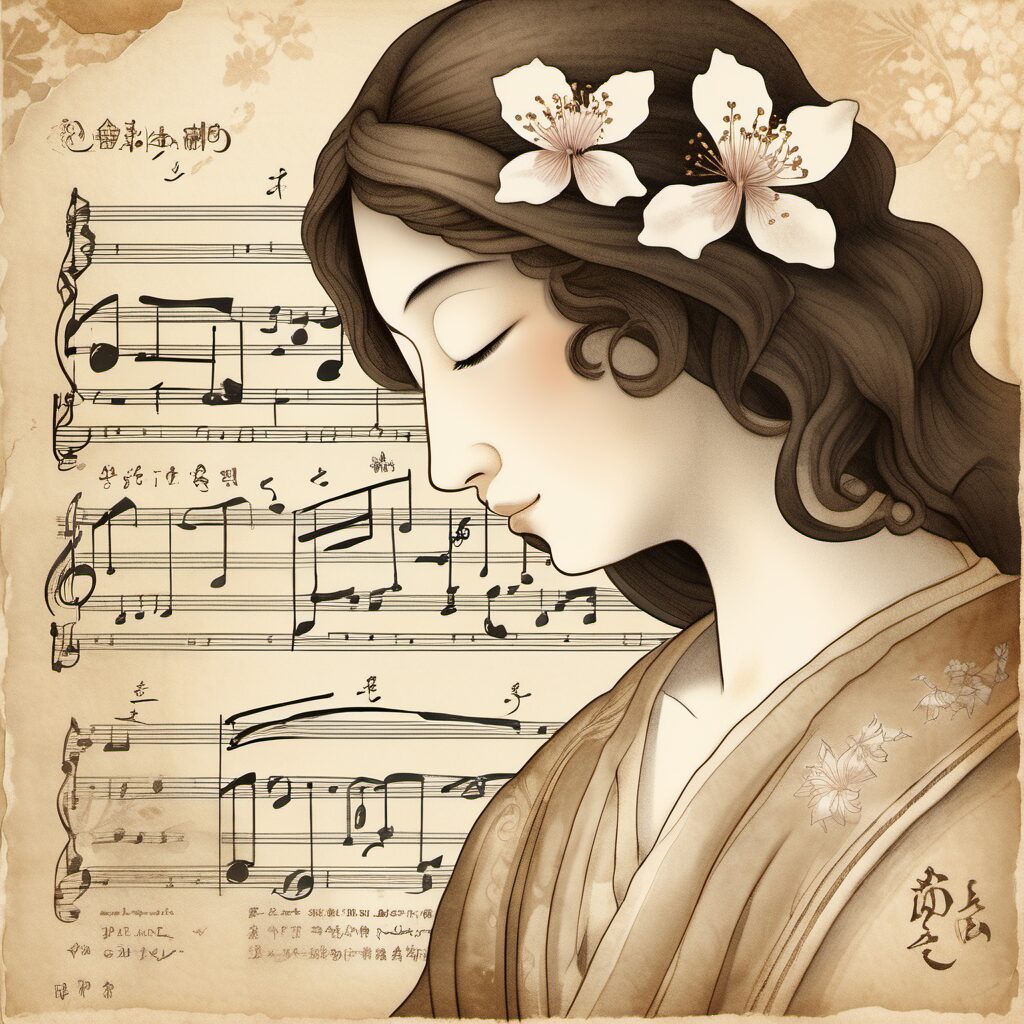
Cherry Blossoms in E Minor: Spring Imagery in Japanese Scores
In Japan, cherry blossoms have long been a symbol of spring and new beginnings, with the brief blooming period of these trees considered a precious gift. For musicians, the beauty and fragility of these flowers have inspired some of the most stunning pieces ever composed. This article will explore the role of spring imagery in Japanese scores, focusing on works that feature cherry blossoms in E minor.
History of Cherry Blossom Music
The association between cherry blossoms and music in Japan dates back to the 17th century. During this time, musicians would often perform traditional instruments such as the shamisen or koto during hanami (cherry blossom viewing) festivals. These performances not only brought joy to those watching but also served as a way to appreciate the fleeting beauty of the blossoms.
Cherry Blossom in E Minor: A Spring Imagery
While there are numerous pieces that feature cherry blossoms, few are written in E minor. However, one notable example is Yumi Kido’s "Yuzushenju". Composed in 1977, this work for piano and orchestra captures the delicate beauty of the blossoms during their brief blooming period.
- Yuzushenju (The Legend of the Mume) by Yumi Kido – A piano piece that evokes the feeling of picking a cherry blossom. The melody is delicate and fleeting, just like the blossoms themselves.
- Spring Cherry Blossom by Hiroshi Yoshimura – This piano work captures the beauty and vibrancy of spring in Japan. The piece is full of movement and energy, much like the blooming cherry blossom trees.
Culture and Symbolism
In Japanese culture, cherry blossoms are often seen as a symbol of the fleeting nature of life. This theme is reflected in many works that feature these flowers in E minor pieces. Music composed during this time period often captures the beauty and fragility of the blossoms, as well as the passing of time.
Conclusion
Cherry blossoms have long been a source of inspiration for musicians in Japan. Works written in E minor are few, but those that exist capture the delicate beauty and fleeting nature of these flowers. From Yumi Kido’s "Yuzushenju" to Hiroshi Yoshimura’s "Spring Cherry Blossom", music composed during this time period is a reflection of the joy, beauty, and fragility of spring in Japan.
References:
Yumi Kido – Yuzushenju (The Legend of the Mume) – Discography by Yumi Kido
Hiroshi Yoshimura – Spring Cherry Blossom – Official Website of Hiroshi Yoshimura
The importance of cherry blossoms in Japanese culture cannot be overstated. These flowers bring people together and inspire new music every year.