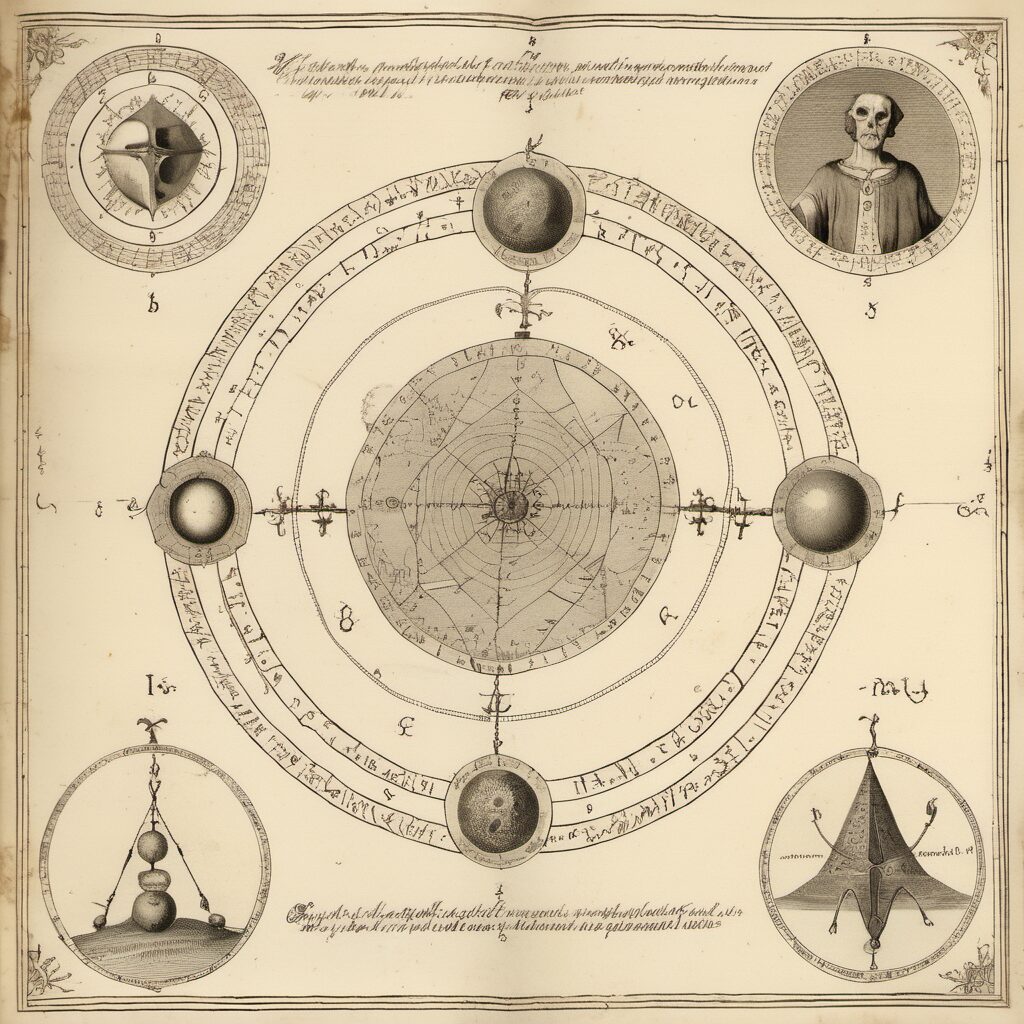
Sacred Geometry – The hidden numerology in Josquin’s masses
Josquin des Prez (c 1450-1521) is widely regarded as one of the greatest masters of the late Renaissance polyphony. His contributions to music are immeasurable, and his influence can still be heard today. This article will examine how sacred geometry appears in his masses.
Introduction
Sacred Geometry explores the connection between art, science, spirituality, and mathematics. Its principles have been used for centuries to create aesthetically pleasing compositions. Josquin’s music is no exception – a true masterpiece of the Renaissance era.
Theology and Sacred Geometry
In the book ‘Sacred Geometry: A Quest by the Light of the Ancients’ by Michael J. Faraday, he explains that geometry holds the key to understanding many aspects of our lives. The authors believe that it is a fundamental part of God’s language – a divine and beautiful blueprint for the universe.
“The universe is not only much stranger than we think, even stranger than we can think.”
— Albert Einstein
Geometry in Josquin’s Masses
Josquin des Prez was a composer that thrived during the Renaissance. His music has been preserved and studied for centuries – it is truly timeless.
In his mass setting “Missae militaris” (Milan 1515), he used various geometric shapes to create harmony. The mass features a number of geometric patterns, such as circles and squares. These patterns can be seen in the score itself.
“The beauty of mathematics lies in its simplicity.”
— Paul Dirac
Conclusion
In conclusion, Josquin’s masses showcase his mastery of sacred geometry – an art form that is both beautiful and timeless. By using geometric shapes to create harmony, he has left us a piece of music that will continue to be cherished for centuries to come.
“The universe is full of magic things, patiently waiting for our senses to grow sharper.”
— W.B. Yeats