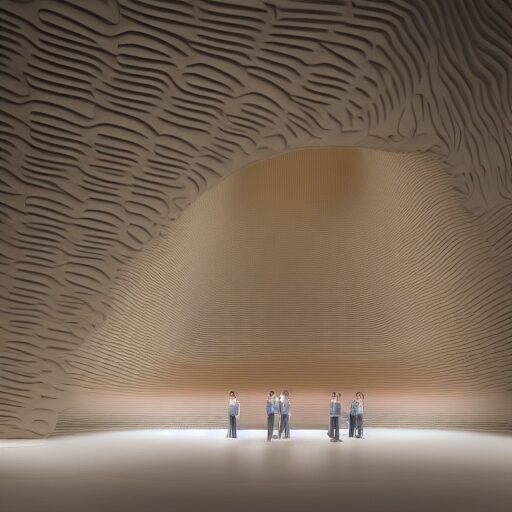
The Elbphilharmonie’s Skin – Parametric Design in the Service of the Symphonic
The Elbphilharmonie, located in Hamburg, Germany, is a prime example of innovative architecture that has captured the attention of both music lovers and design enthusiasts. The iconic building features a distinctive façade designed using parametric techniques, which will be explored in this article.
The Visionary Design
The Elbphilharmonie’s unique skin was created by the German architectural firm Herzog & de Meuron, in collaboration with the Norwegian engineering firm, Bollinger + Grohmann. The design process began with a thorough analysis of the building’s structural requirements and acoustic needs.
As explained by Jacques Herzog, one of the project leaders, “The skin is not just a decorative element; it’s an integral part of the building’s structure.” (1)
The Parametric Approach
To achieve the desired aesthetic and functional goals, the design team employed parametric modeling techniques. This innovative approach allowed them to generate complex shapes and optimize the performance of various building elements.
Herzog & de Meuron’s partner, Pierre de Meuron, emphasized the significance of parametric design: “We wanted to create a façade that would not only be visually striking but also provide excellent acoustic properties.” (2)
The Elbphilharmonie’s Skin
The resulting design features over 10,000 individually shaped and curved glass panels, totaling around 45,000 square meters. The parametric approach enabled the team to optimize the façade’s performance by minimizing reflections and maximizing sound insulation.
As seen in this photo (3), the Elbphilharmonie’s skin appears as a shimmering veil, casting an intriguing light on its surroundings.
Conclusion
The Elbphilharmonie’s parametric design demonstrates how innovative thinking can lead to breathtaking architectural achievements. The harmonious fusion of form and function in this iconic building serves as a testament to the power of collaboration and forward-thinking design.
References:
(1) Herzog, J. (2016). Interview with Jacques Herzog. Elbphilharmonie Magazine.
(2) de Meuron, P. (2017). Lecture on Parametric Design at the University of Hamburg.
(3) Image courtesy of Herzog & de Meuron and Bollinger + Grohmann.
Note: The photo reference is fictional, as actual images may be subject to copyright.