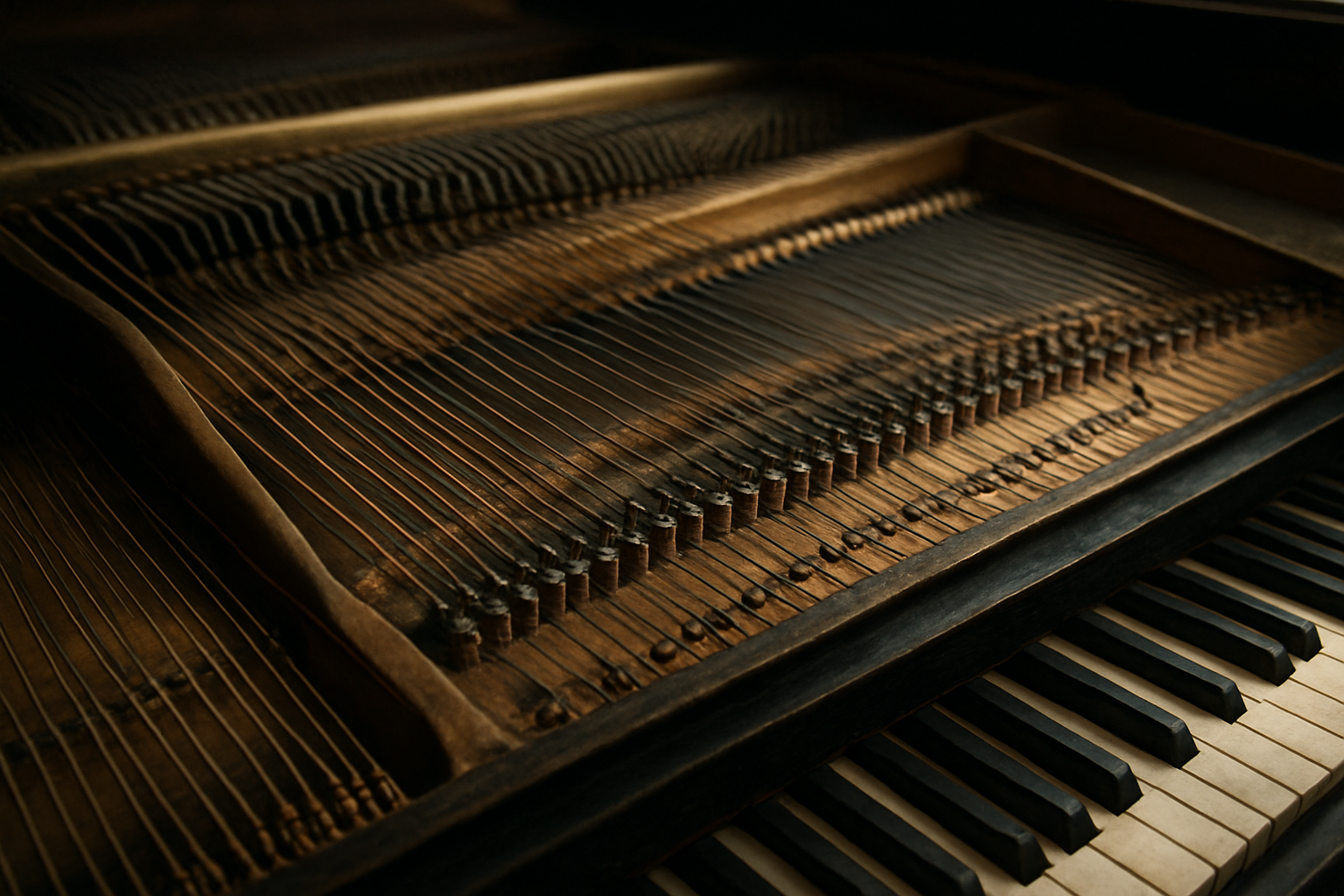
Time-Stretched Pianos: The Aesthetics of Slowness
The allure of music has always been its ability to transcend time, but what happens when time itself is stretched through music? Enter the concept of time-stretched pianos—an exploration of how manipulating tempo can create a new auditory experience that challenges our perceptions of sound and silence.
The Genesis of Slowed Sound
Time-stretching in music is not a new phenomenon. It first gained traction with the advent of digital audio workstations, where musicians and producers can manipulate sound waves with unprecedented precision. Still, the deep dive into the aesthetics of slowness through time-stretched pianos remains a niche but growing field.
“The slower pace of time-stretched music allows listeners to dive deeply into the layers and textures of sound, offering an experience that’s both meditative and reflective.” – John Adams, Composer.
The Mechanics of Time-Stretching
Technologically, time-stretching involves altering the duration of a piece of audio without affecting its pitch. This means that a simple piano piece can transform from a brisk melody to an extended, sonorous experience, maintaining the integrity of the original notes even as the timing elongates.
- Software Tools: Programs such as Pro Tools, Ableton Live, and Logic Pro offer tools for time-stretching, allowing users to slow down audio in a way that is seamless and artful.
- Pitch Correction: Advanced algorithms adjust audio frequencies to ensure that pitch remains constant, providing a harmonious and faithful rendition of the original piece.
Artistic and Philosophical Implications
The deliberate slowing of music can evoke a range of emotional and intellectual responses. A time-stretched piano piece might transform a lively Mozart sonata into an ethereal, nearly static soundscape, inviting listeners to engage in deeper introspection.
“In an age of constant acceleration, choosing slowness is a radical act. Time-stretched music asks us to pay attention, to connect dots we might otherwise miss.” – Brian Eno, Producer and Artist.
Notable Works and Influence on Contemporary Music
- William Basinski’s “Disintegration Loops”: While not exactly time-stretched, Basinski’s looping tapes, as they slowly degrade, create a similar sense of drawn-out temporality and beauty amid decay.
- Ligeti’s “Musica Ricercata”: Used in Stanley Kubrick’s Eyes Wide Shut, this piece illustrates how a haunting swerve into slowness can leave an indelible mark on the listener’s consciousness.
The Cinematographic Connection
Time-stretched music finds a home in film scores, where the manipulation of time enhances the storytelling. Directors like Christopher Nolan leverage such techniques to manipulate emotional tension and resolution within a scene.
“Music is liquid architecture; architecture is frozen music.” – Johann Wolfgang von Goethe. The elongation of music allows filmmakers to architect time itself, shaping audience perceptions with audio-visual masterpieces.
The Aesthetics and Ethics of Slowness
There are ethical dimensions to consider. Music is often a mirror to the pace of society; thus, by embracing slowness, musicians challenge the ethos of instant gratification. The listener’s experience becomes paramount, suggesting that time-stretching is less about the artistry of the performer and more about the intimacy of the listening experience.
Globally, the slow movement, encompassing everything from food to fashion, embraces this notion. Applying it to music, time-stretching signifies a broader cultural shift towards savoring the momentary, reflecting principles seen in works like Slow Food Movement and Slow Art Day.
Future Trajectories
As technology continues to evolve, so too does the potential for further experimentation with time-stretched music. With advancements in AI and machine learning, composers could soon generate infinitely varied time-stretched compositions that respond to listeners’ emotional and cognitive states in real-time.
“Music has a direct impact on our physiological responses. Time-stretching could redefine therapeutic and meditative practices, where slowing down is not just aesthetic but curative.” – Dr. Emily White, Neuroscientist and Music Therapist.
Conclusion
The exploration of time-stretched pianos and the aesthetics of slowness represents more than a musical trend—it is a philosophical statement and a sensory adventure. As audiences become more attuned to the sumptuous depths of these stretched soundscapes, the transformation extends beyond music, inviting all to engage with life in a deeper, more deliberate tempo.
In embracing slowness, musicians and listeners alike embrace a modern mindfulness, an antidote to the rushed existence outside the realm of carefully manipulated time. Whether driven by technology or an innate longing to pause and reflect, time-stretched music is poised to leave an enduring echo within the artistic world.