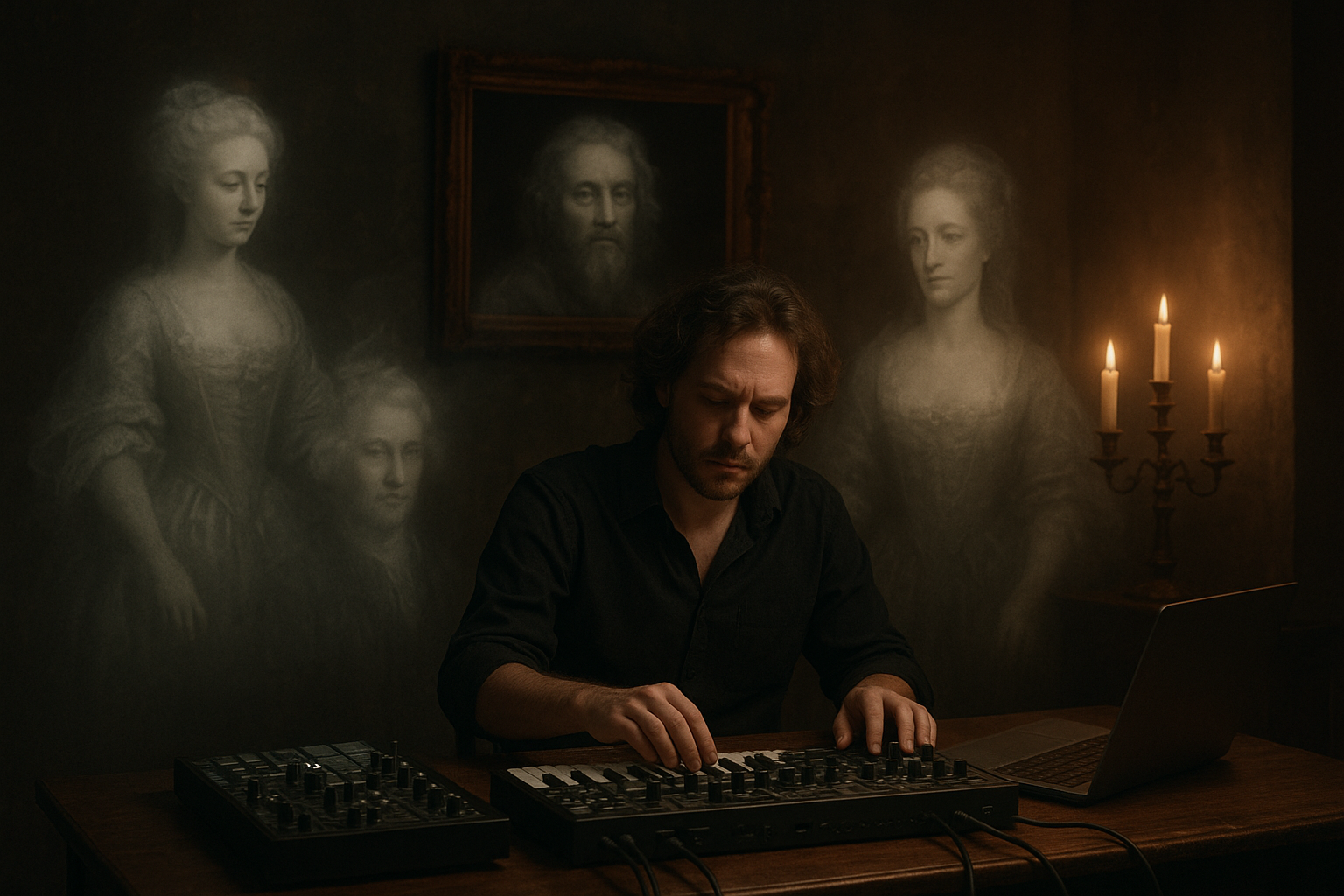
Ghosts of Baroque: Historical Memory in Electronic Composition
In the realm of music, some of the most intriguing specters are those of the Baroque period, haunting modern compositions with their intricate ornamentations and expressive grandeur. As electronic composers increasingly find themselves entangled in the enchanting echoes of the past, a striking fusion emerges: the melding of Baroque spirit with contemporary technology.
The Baroque period, spanning the 17th and early 18th centuries, is characterized by complex musical styles and emotional intensity. Composers such as Johann Sebastian Bach and George Frideric Handel explored new musical expressions, leveraging intricate harmonies and flamboyant compositions. Fast forward to the present-day, and these Baroque influences resurface in unexpected arenas, particularly within electronic music, crafting a historical dialog bridging centuries.
The Reverberation of the Past
Contemporary electronic music often draws inspiration from historical sources, embedding familiar motifs in entirely new contexts. One prominent figure in this endeavor is Max Richter, whose work effectively channels Baroque sensibilities through modern lenses. His album, Recomposed by Max Richter: Vivaldi – The Four Seasons, offers a transformative reinterpretation of Vivaldi’s iconic concertos, reimagining their energy and structure with a distinctly modern palette.
“To engage with Vivaldi, is to engage with time itself,” Richter remarked in an interview with Deutsche Grammophon. “I wanted to preserve the precision and beauty of Vivaldi’s work while opening up a conversation across centuries.”
Synthesizing History
Electronic artists are not only resurrecting Baroque themes but are also exploring how digital tools can reinterpret historical styles. The synthesis of digital technology with Baroque’s layered complexity opens new doors to innovation. For instance, Underworld, a British electronic music group, often dip into the Baroque’s vast textures, layering them over pulsating rhythms to create a bridge between eras.
Through sampling, looping, and remixing, electronic composers breathe fresh life into ancient compositions. These techniques enable a dynamic interaction with classical elements, offering a fluid interpretation that molds the original ethos into something distinctly new.
Future-Echoes of the Baroque
As the tides of music continue to ebb and flow, the integration of Baroque influences in electronic compositions highlights a profound respect for historical memory. It suggests a future where music is not confined by time but shaped by it, where the digital and the historical dance in harmony, offering listeners a transcendental experience.
Ultimately, the interplay between Baroque elements and electronic music exemplifies how tradition and innovation can coexist, crafting compositions that resonate as deeply today as they might have centuries ago. As we navigate through layers of sound, we find ourselves captivated by the ghosts of Baroque—distant yet ever-present in modern creation.