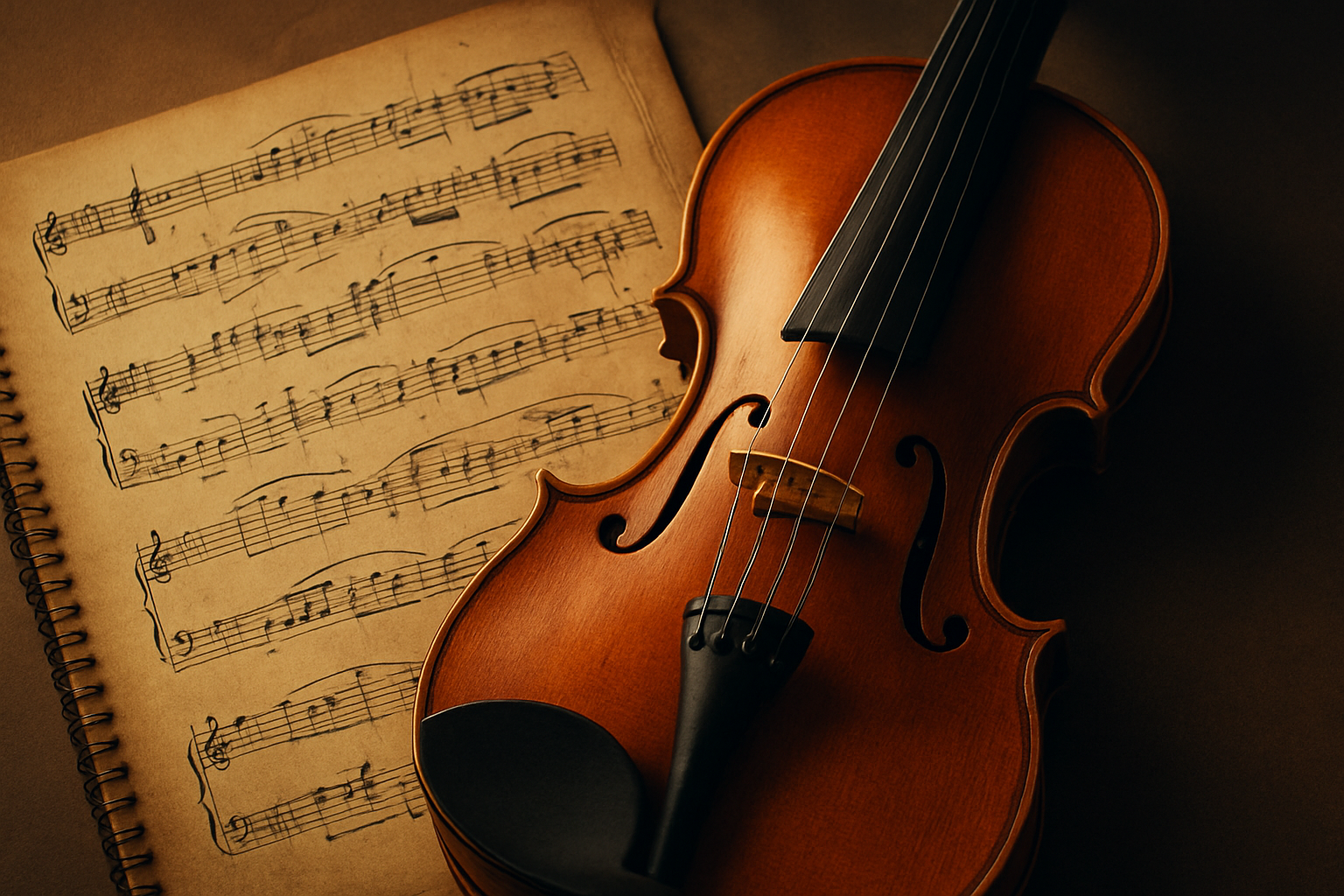
Mystical Cadences – The Sacred Patterns Behind Musical Closure
The concept of the cadence in music is as ancient as music itself, with mystique and complexity that captivates both the novice listener and the seasoned musician. Often described as the punctuation in musical language, cadences bring a sense of conclusion, providing the all-important feeling of closure to a musical phrase. This exploration into “Mystical Cadences” delves into their sacred patterns, historical significance, and their role in the seemingly cosmic order of musical closure.
Understanding Cadences: The Building Blocks of Harmony
Cadences are the harbingers of finality in music. Whether unwittingly accompanying a lullaby or syncopating in a jazz ensemble, these sequences of chords voice the conclusion of a phrase, section, or even a whole piece of music.
Here are some of the primary types of cadences used throughout musical compositions:
- Authentic Cadence: Often considered the most final, this cadence moves from the dominant chord (V) to the tonic chord (I) and can either be perfect when both chords are in root position or imperfect when they aren’t.
- Plagal Cadence: Known as the “Amen cadence” because of its frequent use in hymns, this moves from the subdominant chord (IV) to the tonic chord (I).
- Half Cadence: A more open and incomplete cadence that ends on the dominant chord (V), often setting up for more music.
- Deceptive Cadence: As implied by its name, this cadence avoids the expected resolution to the tonic chord, often moving from V to vi, thus creating surprise or prolongation.
The Mathematical Symmetry in Music
The use of cadences creates a structural symmetry that is pleasing to the human ear. A study published in The Journal of Mathematics and Music discussed the mathematical nature of cadences, highlighting their interplay with rhythm and harmony (Brooks, T.). The predictability governed by math within cadences often creates a sense of fulfillment akin to solving a mathematical problem.
“Music is the shorthand of emotion.” – Leo Tolstoy
This quote captures the essence of why cadences resonate deeply. When a cadence delivers its final note, it feels like an emotional resolve echoing through both time and space.
From Sacred Chorales to Symphonic Cadences
Historically, cadences have played a crucial role in religious and ceremonial contexts. In Gregorian chants and Baroque chorales, cadences underscored pivotal moments, marking transitions in the sacred liturgies. Composers like Johann Sebastian Bach were adept at using these to reflect spiritual gravitas.
In the orchestral realm, cadences began to take on more complex forms. Ludwig van Beethoven, for instance, transformed the cadence into an artistic statement in his monumental symphonies. Beethoven’s cadences weren’t just conclusions; they were transformations of themes, embodying the philosophical underpinnings of his time.
“To play without passion is inexcusable!” – Ludwig van Beethoven
This statement reflects the power and purpose behind Beethoven’s cadences, which often conveyed passion and narrative, far from being mere harmonic conclusions.
Jazz, Pop, and Modern Cadences
In more modern compositions, the evolution of cadences continues to evolve. Jazz, with its blues roots, often embarks on a genetic dance of cadences, using them both to subvert and confirm listener expectations. Jazz progressions like ii-V-I have become a cornerstone of the genre’s improvisational nature.
In pop music, cadences are indispensable for their role in crafting catchy hooks and memorable conclusions. Artists continuously play with cadences to create arresting musical endings that leave audiences yearning for more.
Click here for a comprehensive guide on identifying and understanding musical cadences.
Mystical Cadences in Cultural Traditions
Throughout various cultural traditions, cadences have been revered for their mystical qualities. Eastern music, for example, frequently employs microtonal cadences that enrich the emotive spectrum of the music.
Consider the proliferation of musical traditions that incorporate tonal systems distinct from the Western twelve-tone scale. Indian classical music, with its ragas, uses specific cadences to invoke particular emotions or times of the day, creating an immersive, spiritual experience that goes beyond mere entertainment.
Conclusory Thoughts on Musical Closure
In the sacred world of music, where every note contributes to a vast, vibrant tapestry, the cadence stands as a sentinel of order. With its ability to provide resolution, surprise, or anticipation, the cadence possesses an almost mystical ability to invoke closure, drawing the listener back to the source of the music, a universal language without borders.
Whether in the cosmic dance of a symphony or the intimate whisper of a lullaby, cadences remind us that music, in all its varied forms, is a journey bound by threads of harmony and chaos. They are the keepers of musical vigil, ensuring that every end is not just a closure but a promise of continuity—a sacred pattern echoing across eternity itself.
For more insights into the structural elements of music, explore Britannica’s Guide to Musical Form.