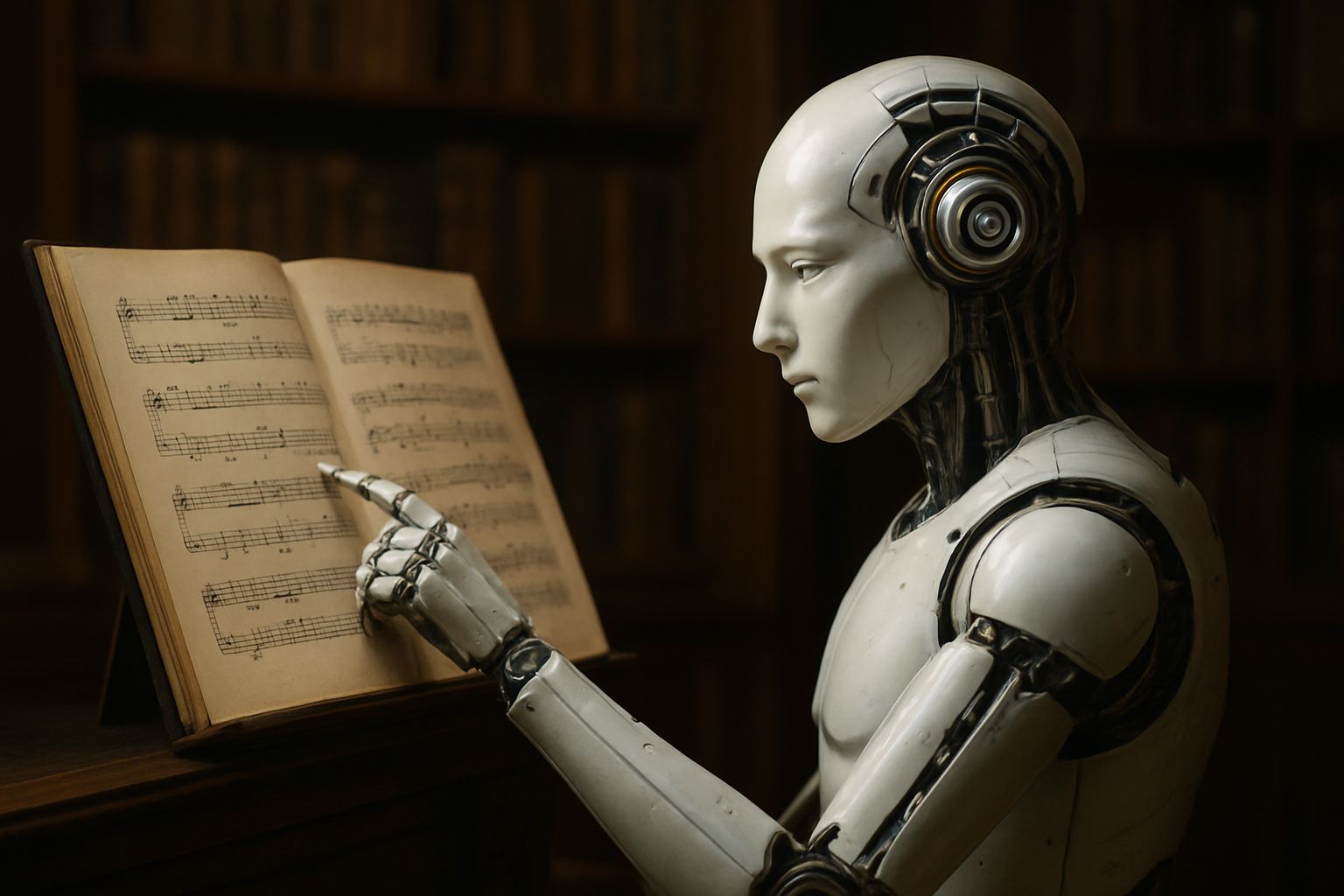
Machine-Eared Musicology: AI Analyzing Classical Tradition
In recent years, the intersection of technology and the arts has evolved dramatically. One of the most remarkable developments is the advent of Artificial Intelligence (AI) in the sphere of musicology, particularly in analyzing and interpreting classical music tradition. This technological leap not only promises to deepen our understanding of iconic compositions but also paves the way for innovative collaborations between human artistry and machine intelligence.
The Role of AI in Music Analysis
AI’s capacity to sift through vast amounts of data allows it to analyze musical compositions with a level of detail that was previously unattainable. By processing intricate patterns and extracting subtle themes, AI can delve into the complexities of classical scores.
- Pattern Recognition: AI algorithms can detect recurring motifs and variations within a piece, providing insights into a composer’s stylistic tendencies. For example, Google’s Magenta project explores machine learning applications in music and art.
- Historical Contextualization: AI can compare different compositions across time periods, identifying influences and evolving techniques. This capability was demonstrated by Sony CSL Research Laboratory’s creation of DeepBach, an AI that composes music in the style of Johann Sebastian Bach with remarkable accuracy.
- Emotional Nuance: Through sentiment analysis, AI can interpret the emotional undercurrents of musical works, providing new perspectives on the emotional impact of a piece.
Applications in Classical Music
AI’s application in classical music extends beyond analysis—it has begun to play a role in performance and even composition. Musicians and composers are collaborating with AI to explore new creative horizons.
- Performance Augmentation: AI systems like IRCAM’s ANTESCOFO aid musicians by listening to live performances, following along the score, and adjusting the accompaniment in real time. This technology offers soloists and conductors the flexibility to experiment with tempo and expression.
- Composition Assistance: Composers are increasingly using AI to generate melodies and harmonies. For instance, AIVA Technologies developed an AI capable of composing classical symphonies, opening debates about originality and creativity in music.
Challenges and Ethical Considerations
Despite the promising applications of AI in classical musicology, there are certain challenges and ethical considerations that must be addressed. The core of these concerns revolves around authenticity, originality, and the essence of human creativity.
- Authenticity Dilemma: While AI can mimic the style of legendary composers, it raises questions about authenticity. Is an AI-composed symphony truly a work of art, or just an imitation?
- Creative Ownership: When AI collaborates with human composers, issues of copyright and intellectual property arise. Determining authorship in a piece partly created by AI becomes complex.
- Musical Interpretation: The interpretation of music is inherently subjective. As Yale University musicologist Ian Quinn suggests, “
Music is an art, not a science, and the nuances of interpretation can vary vastly from one musician to another, which an algorithm may never fully capture.
“
Future Prospects
The future of AI in classical music promises not just refined analysis and enhanced collaboration but also the potential to redefine music education and accessibility.
- Music Education: AI can democratize access to music education by offering affordable and personalized learning tools. Imagine a virtual music tutor that adapts lessons to a student’s skill level and learning pace.
- Access and Preservation: AI-derived insights can help preserve and promote lesser-known works, bringing them to the forefront and expanding the classical music repertoire.
As we forge ahead into an era where artificial intelligence becomes more embedded in artistic processes, the collaboration between machines and human creativity will undoubtedly yield profound and transformative results. The field of machine-eared musicology is still nascent, but its potential to enrich our understanding and appreciation of classical music is immense.
The integration of AI in classical musicology is an evolving journey. As Paul Leinweber, a leading figure in Computational Creativity, puts it, “AI is not here to replace composers; it is here to inspire and expand their creative horizons.“