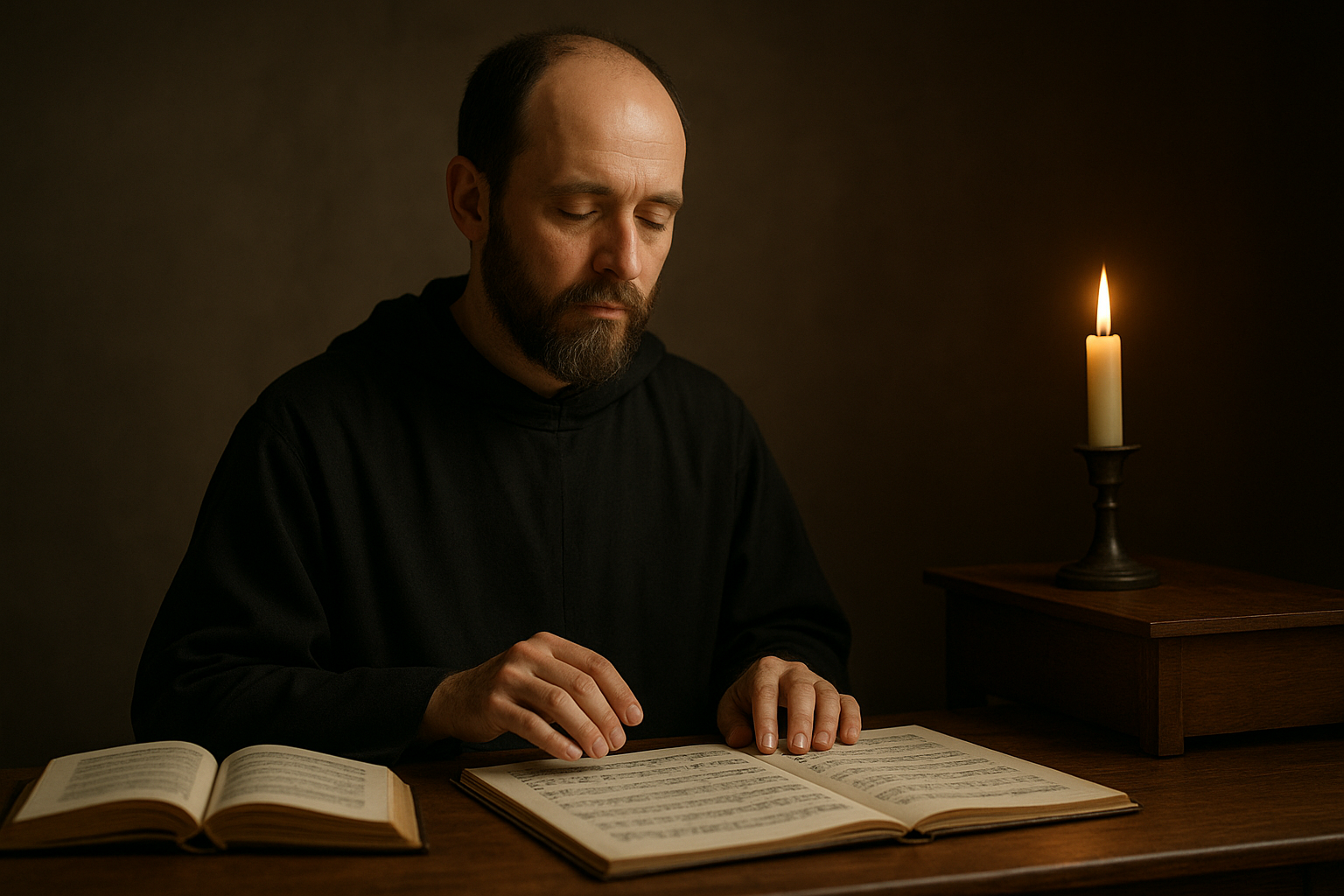
The 20th century was a time of constant change and experimentation in music. Among the many movements that emerged, minimalism stands out not only for its distinctive style but also for its spiritual undertones. While initially criticized for its simplicity, minimalist music soon captivated listeners, offering a transcendent experience through its repetition and gradual evolution. This article delves into the lives and works of the mystic minimalists—composers who forged a deep connection between minimalism and spirituality.
The Roots of Minimalism
Minimalism, as a genre, emerged in the late 1960s as a reaction against the complex structures and emotional intensity of modernist compositions. It is characterized by its use of repeated phrases, steady pulse, and often, a clear tonal center. The simplicity of minimalist compositions allows the listener to enter a meditative state, experiencing a sort of musical transcendence.
According to musicologist David Lewis, “Minimalist music emphasizes simplicity and intuition over complexity and calculation, focusing intensely on the few elements it uses.” This focus on simplicity has provided a fertile ground for exploring spiritual themes, making minimalism a poignant means of expressing mysticism.
La Monte Young – The Pioneer of Minimalism
La Monte Young is often regarded as one of the founding figures of minimalist music. His early works, such as “Trio for Strings” (1958), employed sustained tones and drones that encouraged deep listening. Young’s intense interest in Indian music and philosophy influenced his compositions, steering them towards a meditative aesthetic.
“Draw a straight line and follow it.” – La Monte Young
This simple instruction from Young has guided many of his compositions, emphasizing the importance of sustained attention and the spiritual journey within music. His Dream House project—a continuous light and sound environment—embodies his vision of creating an immersive space where listeners can experience a prolonged state of meditation.
Terry Riley – A Fusion of Cultures
Terry Riley’s landmark work, “In C”, premiered in 1964, is often credited with launching minimalist music into wider recognition. The work consists of 53 short musical phrases that performers repeat freely, allowing the piece to evolve organically. Riley’s interest in Indian classical music and his study under Pandit Pran Nath further deepened his understanding and implementation of repetition as a spiritual practice.
Riley’s work merges Western and Eastern musical traditions, creating a sonic environment that invites reflection and introspection. His innovative use of tape loops and improvisation highlights the unpredictable and sacred nature of repetition.
Steve Reich – The Process of Discovery
Steve Reich is another pivotal figure in the minimalist movement, noted for his exploration of phasing and rhythm. Reich’s “Music for 18 Musicians” is a symphony of rhythmic patterns, pulses, and sustained harmonies. Its meticulous evolution mimics natural processes, creating an auditory landscape that is both mesmerizing and sacred.
“Rhythmic structure is the very heart of all music.” – Steve Reich
This idea has driven Reich’s compositions, which reflect his journey from Judaism to exploring a range of spiritual ideas through music. His interest in Hebrew chant and African percussion further enriched his work, presenting repetition as a transformative and divine act.
Philip Glass – The Iconic Minimalist
Philip Glass, perhaps the most commercially successful minimalist composer, has often spoken of his music’s spiritual dimensions. His compositions, known for their repetitive structures, create an immersive tapestry that encourages inner contemplation. Works such as “Einstein on the Beach” and his series of operas echo Glass’s personal pursuit of connection and understanding of the divine.
In a 2018 interview with The Guardian, Glass explained the spiritual ethos underlying his music, saying, “What we were doing was exploring the language of music. I was evolving a system of music that was beyond the song.”
The Mysticism of Minimalism
For these composers, minimalism is more than just a musical style—it is a reflection of their spiritual quests. The genre’s use of repetition and gradual change mirrors meditation and spiritual growth, allowing both composer and listener to attain a sense of transcendence. Whether through La Monte Young’s droning notes, Riley’s cultural fusion, Reich’s rhythmic innovations, or Glass’s operatic inquiries, minimalist music opens a pathway to the divine.
As minimalism continues to influence contemporary music, its mystical qualities endure. By finding God in repetition, the mystic minimalists have expanded the possibilities of musical expression, inviting us to explore the infinite within the infinitesimal. Their legacy is a testament to the power of simplicity and the profound depths that can be discovered in its embrace.