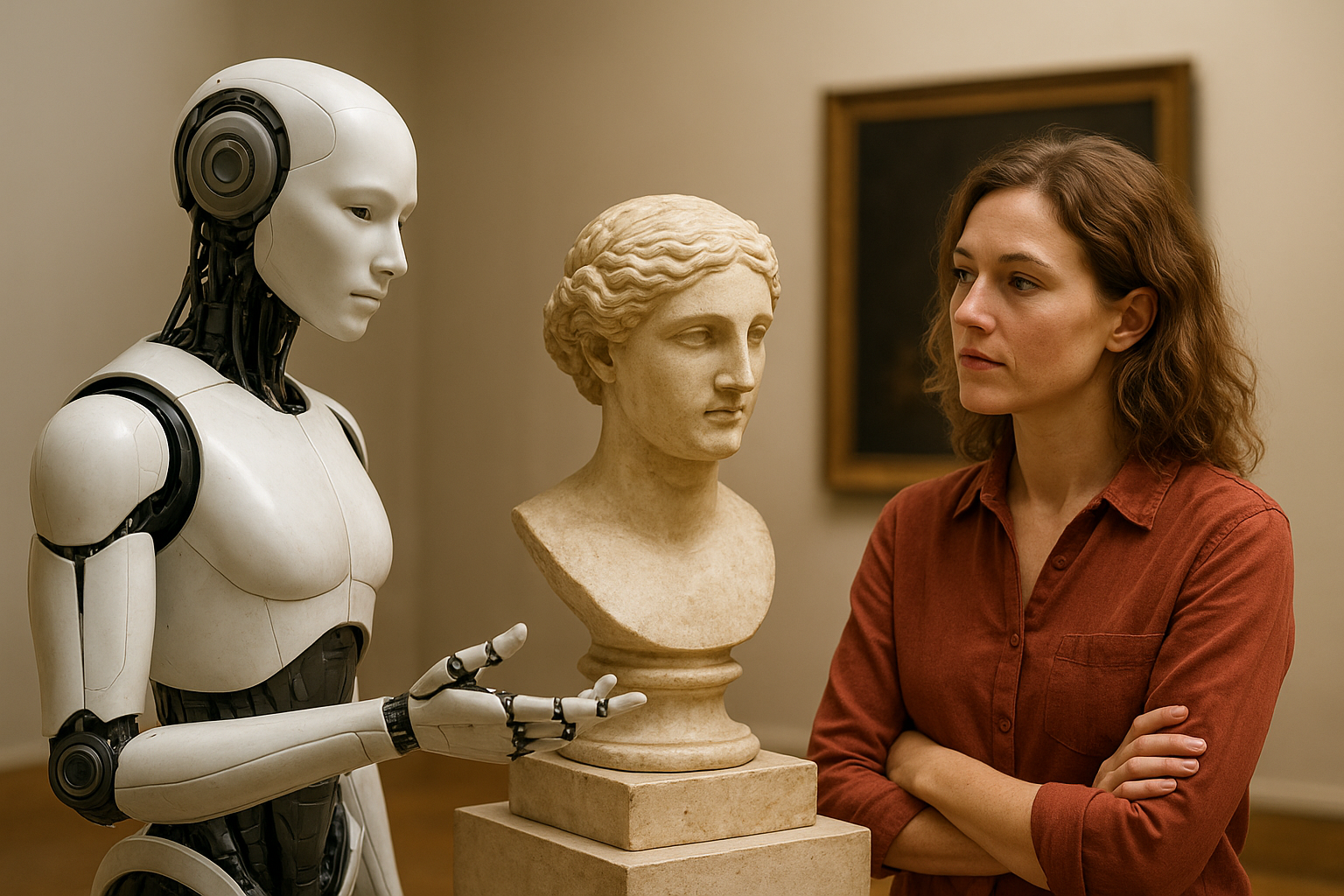
In the ever-evolving landscape of artificial intelligence, the debate over its role in interpreting classical works is intensifying. The intersection of AI technology and humanistic authenticity presents a conundrum akin to an enduring philosophical dilemma: Can machines truly understand and convey the depth of human creativity?
The Rise of AI in the Arts
AI has already made significant strides in the arts, from composing music to creating visual art. Programs like OpenAI’s DALL-E and Google’s WaveNet have showcased the potential for AI to simulate artistic processes.
“AI is here to augment human creativity, not replace it,” said Demis Hassabis, the CEO of DeepMind. “It’s about creating tools that allow humans to express themselves more fully.”
Authenticity in Interpretation
Authenticity in the interpretation of classical works—be it literature, music, or fine arts—has long been a subject of debate. Traditionally, the task of interpretation belongs to scholars and artists who bring their subjective understanding and cultural context to the table.
- Subjective Interpretation: Human interpreters draw from their personal experiences and emotional insights, which adds richness to their interpretations.
- Objective Analysis: AI, on the other hand, offers analysis based on data patterns and computational models, providing potentially objective insights.
The question arises: Can AI-generated interpretations ever capture the true spirit of classical works, with their layers of emotional complexity and historical significance?
The Classical Dilemma
This dilemma traces back to Plato’s concerns about art and imitation in his work The Republic, where he questioned the merit of representations in conveying reality. Just as he debated the potential deceit in art, today’s scholars question what might be lost when machines undertake tasks of interpretation once reserved for humans.
“Every generation must interpret the works of the past in light of its own experiences,” remarked Alan Liu, a professor of English at UC Santa Barbara. “The machine lacks the lived experience crucial for this task.”
The Future of Interpretation
As AI continues to mature, its role in interpreting classical works will likely grow, aided by greater collaboration with human interpreters. While machines bring speed and breadth, humans provide depth and context—perhaps the most holistic approach involves leveraging both.
The future promises a fusion where AI aids rather than eclipses human creativity, inviting a nuanced partnership that respects the authenticity of our shared cultural heritage.