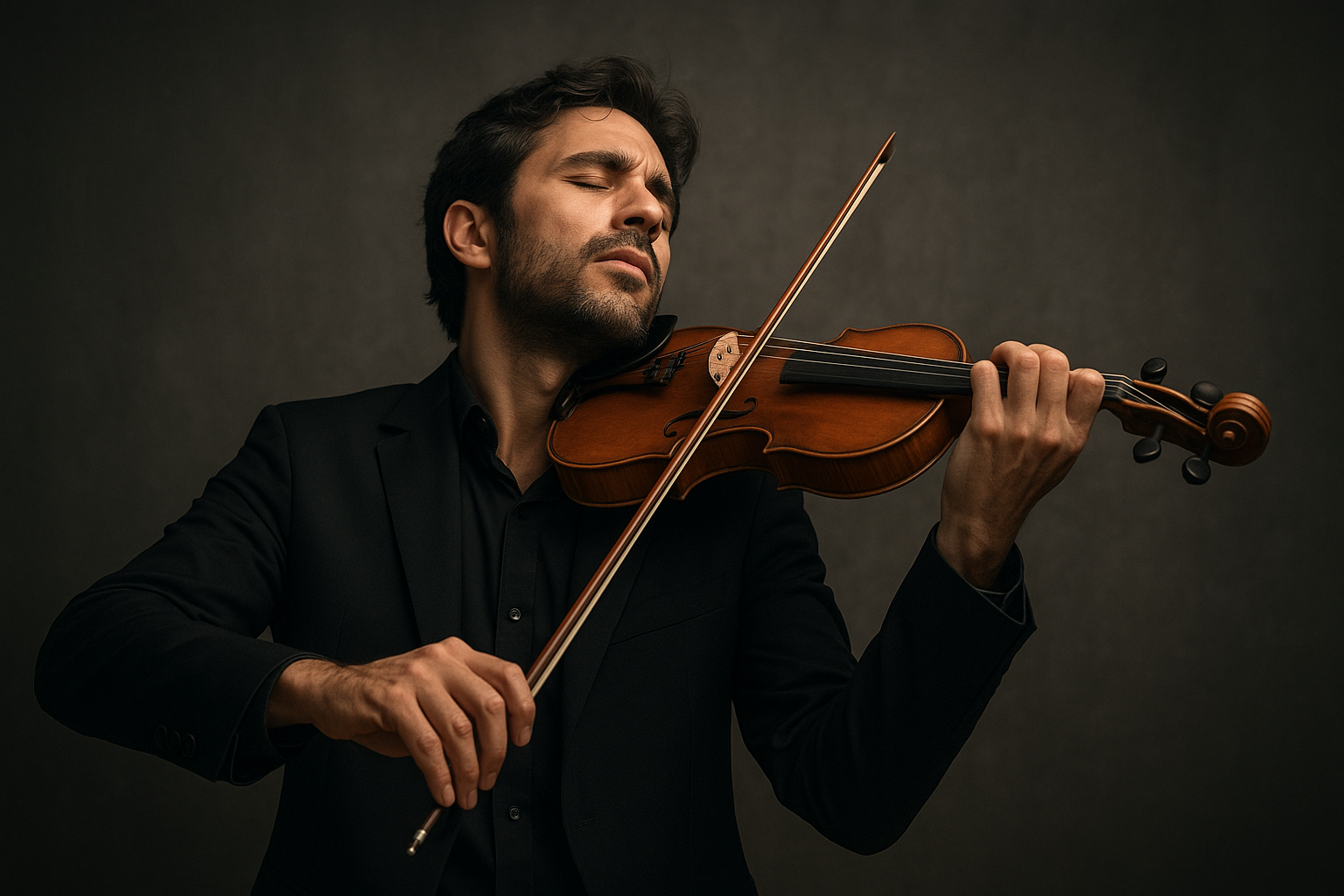
The Virtuoso’s Paradox: Control and Surrender in Performance
Music and performing arts offer a unique blend of technical mastery and emotive expression. This duality is often described as the Virtuoso’s Paradox—a delicate balance between rigorous control and absolute surrender. This article delves into how performers navigate these seemingly contradictory demands to create compelling and authentic performances.
The Dual Nature of Performance
Performance art is characterized by a dual nature that requires both precision and freedom. On one hand, performers must maintain strict control over their technique, ensuring each note or step is executed with excellence. On the other hand, they must also surrender to the flow of the piece, allowing for spontaneity and emotional depth.
Technical Control
- Control involves precision and discipline. Whether it’s a pianist perfecting a Rachmaninoff concerto or a ballet dancer mastering Swan Lake, control ensures the artist can reliably reproduce their craft.
- The path to control is rigorous. It includes years of dedicated practice, often under the guidance of a mentor or coach, and requires a deeply ingrained familiarity with one’s instrument or body.
- As legendary cellist Pablo Casals once said, “The most perfect technique is that which is not noticed at all.” (Pablo Casals Official)
Emotional Surrender
- Surrender involves emotional expression and authenticity. It means allowing the music or performance to transcend mere technical execution and reach into the realm of storytelling and emotion.
- This aspect requires trust in one’s instincts and a willingness to be vulnerable in front of an audience. As choreographer Martha Graham famously remarked, “Dance is the hidden language of the soul.” (Martha Graham Organization)
- “To be great, art must not only be heard patiently but it must also be felt by its proponents,” writes musicologist Roger Scruton.
The Intersection of Control and Surrender
The intersection of control and surrender is where the magic of performance happens. This fusion creates a live and authentic experience, unique to each artist and each audience.
Balancing Act
- A virtuoso relies on their extensive training to ensure every performance meets a high technical standard, which in turn allows them to explore new creative territories during a live performance.
- This balance is not static. Instead, it shifts dynamically during a performance. At times, the virtuoso may emphasize technical prowess; at other times, emotional delivery takes precedence.
- As composer and pianist Franz Liszt put it, “Beware of missing chances; otherwise, it will be as when you jump at a conclusion in mathematics—in skipping over some of the steps actuaries ask to see.” (Biography of Franz Liszt)
The Role of Improvisation
- Improvisation stands as the epitome of integrating control with surrender. Jazz musicians, for instance, rigorously learn scales and motifs, but in performance, they spontaneously create music in the moment.
- Saxophonist Charlie Parker is noted for saying, “You’ve got to learn your instrument. Then, you practice, practice, practice. And then, when you finally get up there on the bandstand, forget all that and just wail.” (Charlie Parker Residence)
- Improvisational mastery is achieved only after navigating the conflicts between learned structure and expressive liberty.
Case Studies of Mastery
Several performers exemplify the Virtuoso’s Paradox in action. Let’s delve into a few notable examples.
Glenn Gould – The Pianist with Precision
- Glenn Gould’s recordings of Bach are celebrated for their crystalline clarity and meticulous attention to detail.
- His technique was beyond reproach, yet his performances astonished audiences because of their emotionally charged delivery.
- Russian pianist Vladimir Ashkenazy recounts Gould’s uniqueness: “Gould was extraordinary in every way, and that ability to control and express was part of his extraordinary ability.” (The Canadian Encyclopedia)
Mikhail Baryshnikov – Dance and Dynamism
- A beacon of control and creativity, Mikhail Baryshnikov elevated ballet by marrying technical rigor with breathtaking spontaneity.
- His performances were noted for their athletic prowess and artistic sensitivity, earning him renown as one of the greatest dancers of his era.
- Baryshnikov once noted, “I do not try to dance better than anybody else, I only try to dance better than myself.” (Kennedy Center)
Conclusion
The Virtuoso’s Paradox, the dance between control and surrender in performance, is the essence of artistic mastery. It is a dynamic interplay that challenges performers to transcend their technical training and reach the emotive core of their craft. In their pursuit of this balance, virtuosos create moments of transcendent beauty that linger in the hearts and minds of audiences long after the final note has sounded or the last curtain call has been made.
Whether in music, dance, or another performance art, the ability to meld technical acuity with passionate expressiveness stands as a testament to the profound depth of human creativity and resilience.
“Art is not a thing; it is a way.” — Elbert Hubbard