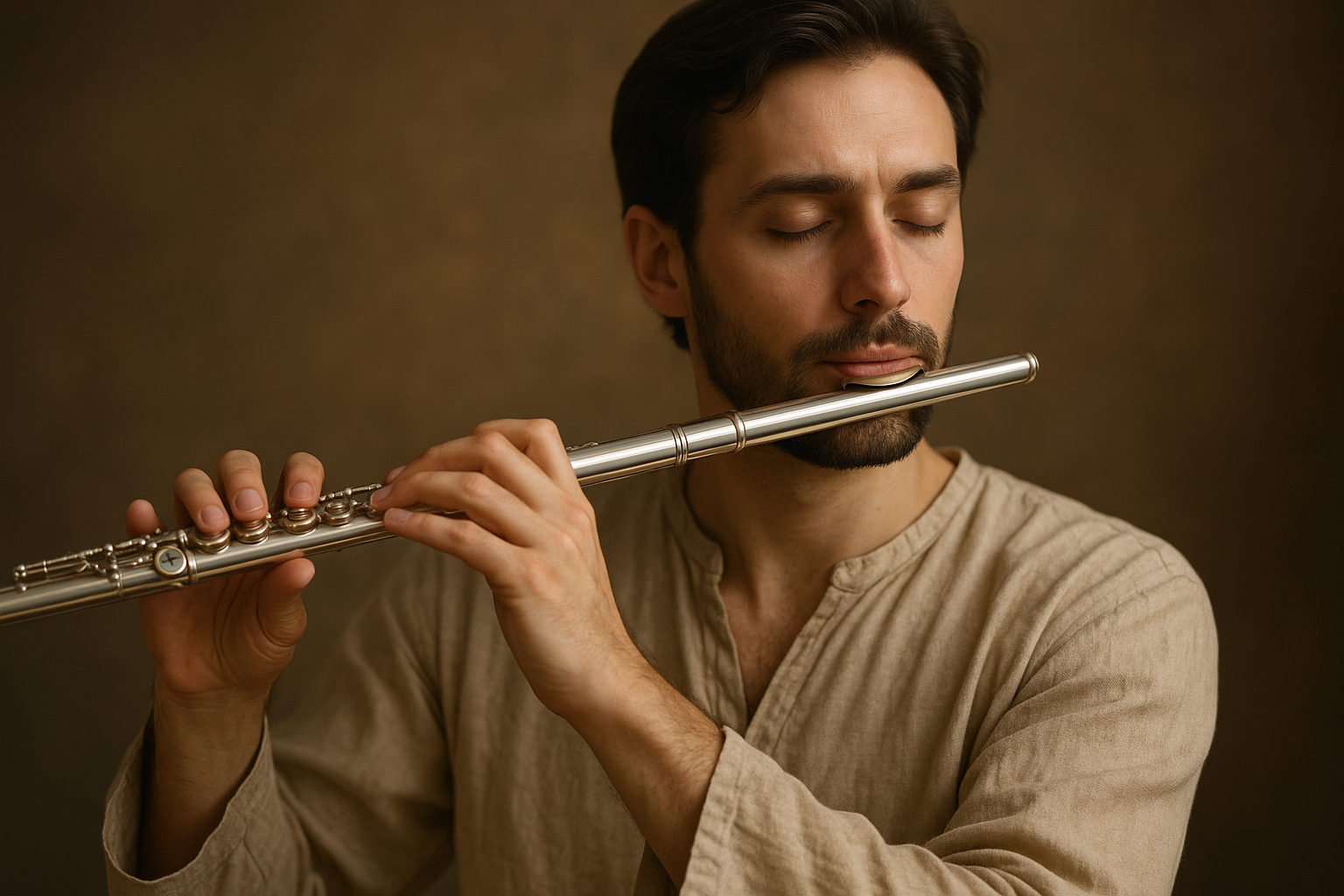
From ancient rituals to modern concert halls, the flute has traversed an extraordinary journey, weaving its airy notes into the spiritual and musical tapestries of countless cultures. This article explores how the simple yet profound flute has carried spiritual traditions across different eras and locations, from the mystical ceremonies of indigenous peoples to the refined air of classical compositions.
The Flute’s Ancient Roots
Historians trace the origins of the flute to prehistoric times, with discoveries like the Divje Babe flute, a cave bear femur with purposeful holes believed to be over 40,000 years old. This suggests that even early humans found a spiritual connection in the sounds they could produce with their breath. As Leonard Bernstein once asserted:
“This will be our reply to violence: to make music more intensely, more beautifully, more devotedly than ever before.”
Across different cultures, the flute has been a sacred symbol, its hollow body serving as a vessel for the breath of life and spiritual expression.
Native American Flute Traditions
- Purpose and Connection to Nature: The Native American flute is deeply intertwined with nature and spirituality. Traditionally, it was used not just for ceremonies, but also for courting rituals and storytelling. According to Smithsonian Institute, the flute symbolizes the voice of nature, echoing the sounds of the wind, animals, and even the human spirit.
- Construction and Craft: Painstaking craftsmanship goes into each flute, with wood choices and carvings reflecting the creator’s and player’s spirit. Each flute is unique, intended for its owner, akin to a spiritual artifact rather than a mere musical instrument.
The Eastern Mystique: Flutes in Asia
- The Shakuhachi: In Japan, the shakuhachi is a flute made of bamboo and was historically used by Zen Buddhist monks for the practice of suizen—blowing meditation. As described by Morton Marcus in his paper on its spiritual efficacy, players seek inner peace through song, each breath a fresh wave washing over the senses.
- The Bansuri: In India, the bansuri holds a divine status, often associated with the god Krishna, who is frequently depicted playing this flute. Thus, in addition to being a musical instrument, the bansuri encapsulates a deep spiritual narrative, representing devotion and divine love in Hindu mythology.
The Flute in Western Classical Music
Within Western classical music, the flute has found its place amidst orchestras and solo repertoires, contributing to the sublime auditory landscapes of composers such as Debussy, Mozart, and Bach. Its light and airy sound has been associated with the divine and ethereal qualities of the music:
- Debussy’s “Syrinx”: This solo piece for flute captures the mythical voice of Pan’s flute, illustrating how deeply imbued the instrument is in both cultural lore and musical narrative. The work’s haunting and fluid melody speaks to the mystical qualities associated with the flute.
- Mozart’s Flute Concertos: Deftly blending elegance and virtuosity, these compositions highlight the flute’s ability to convey a broad range of emotions, from lightheartedness to profound introspection. Mozart frequently used the flute to evoke celestial beauty, as evidenced in the Mozart’s Flute Concertos.
A Universal Symbol of Harmony
The flute’s unique ability to produce sound purely through breath makes it a universal symbol of life’s vitality and emotional expression. Across cultures and eras, the flute has been a conduit for spiritual and emotional exploration:
- Contemporary Use and Innovation: While rooted in traditional spirituality, modern musicians are continually innovating with the flute, blending it with new genres and technologies to produce novel sounds and expressions.
- A Tool for Healing: Today, the flute is often utilized in music therapy to foster relaxation, meditation, and healing, further emphasizing its spiritual and therapeutic capabilities.
Through its many forms, both ancient and modern, the flute remains a powerful vessel for human expression. As we breathe life into its hollow form, it continues to fill the world with its ethereal melodies, reminding us of the unseen connections that bind us to each other and to the mysteries of existence.