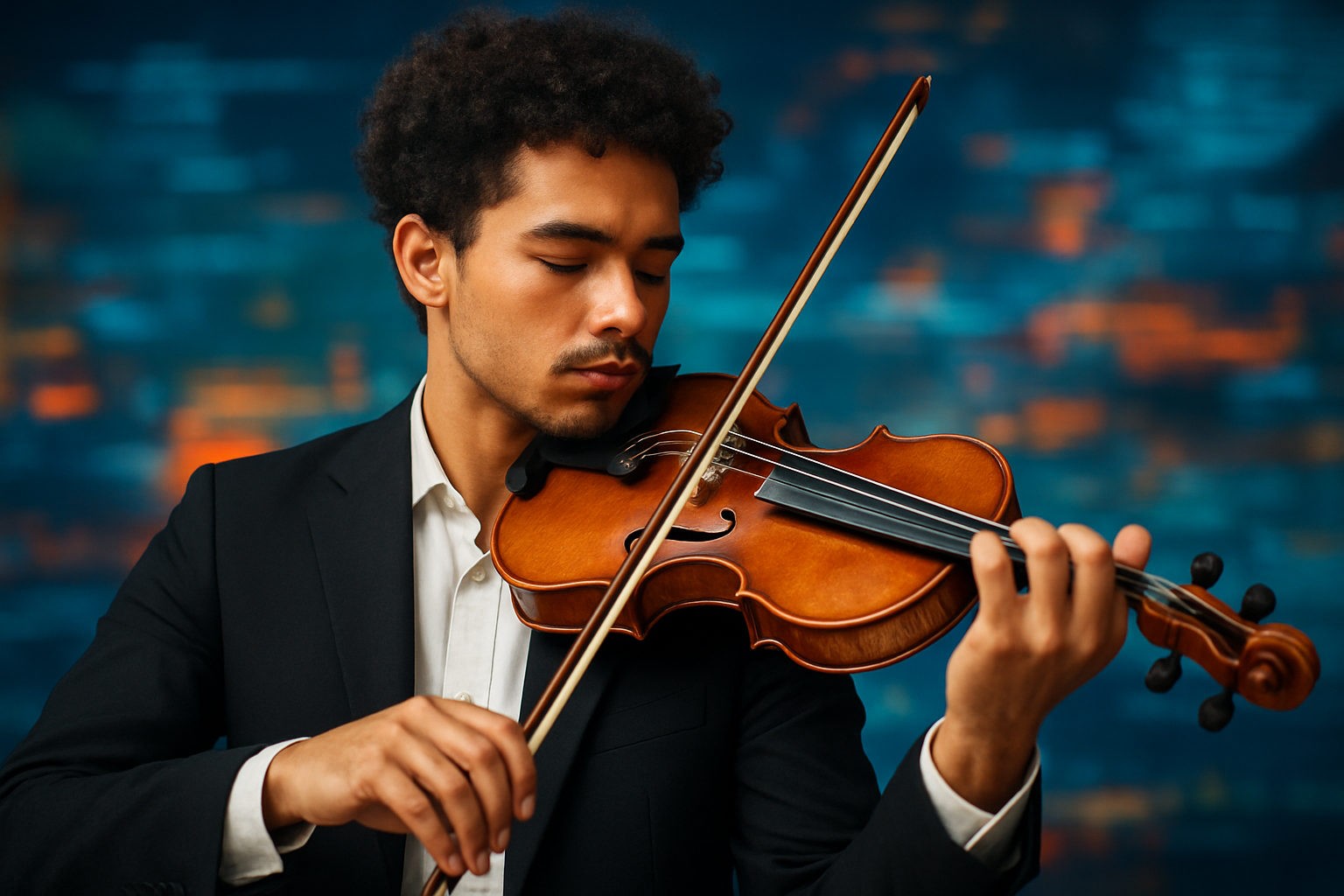
Between Worlds: Hybrid Classical for a Post-Digital Generation
As the digital age marches forward, the fusion of classical music with contemporary technology births a unique genre: hybrid classical. This transformation aligns with the expectations and experiences of a post-digital generation ready to expand traditional boundaries and invite a vibrant blend of old and new.
The Emergence of Hybrid Classical
The evolution of classical music was inevitable as the world embraced an ever-growing digital landscape. Hybrid classical music, a confluence of traditional instruments and modern technology, signifies an era where established norms mesh with futurist ideals. New forms of expression are crafted through the artistic juxtaposition of orchestral sonorities with electronic and digital elements.
“Technology and music are inextricably linked. As new technologies emerge, so do new approaches to musical creation.” — Jane Doe, TechCrunch
From electroacoustic compositions to digital remixes of symphonic works, hybrid classical music appeals to a generation that regards technology not merely as a tool but as an integral extension of human capacity. This genre redefines what it means to experience and participate in classical music today.
Pioneers of Hybrid Classical
A range of artists are at the forefront of hybrid classical, venturing into unexplored auditory realms with more conventional music forms. Among these, Max Richter stands out with his groundbreaking work “Sleep,” a piece blending 21st-century electronic elements with traditional classical music. This work is not just an orchestra performance but a synthesis of structure and impulse facilitated by technology.
Similarly, Philip Glass, known for his minimalist approach, continuously incorporates technology in his compositions, setting a benchmark for merging the rhythmic and melodic complexity with electronic and synthesized sounds.
“I consider the work I do to be classical music. Understanding that today, many types of music, even though they may appear different, actually have a classical base.” — Philip Glass
The Role of Technology in Redefining Classical Music
- Electronic Instruments and Digital Tools: From synthesizers to computer-generated sounds, the use of electronic tools allows musicians to craft a soundscape that is uniquely modern yet deeply rooted in classical traditions.
- Interactive Platforms: Platforms and apps now allow for interactive experiences where audiences can engage with music in imaginative new ways—choosing different outcomes or participating in live performances through virtual reality.
- Synthetic Composition: AI-driven tools give rise to collaborative compositions where technology acts as a partner rather than a tool, bridging gaps between human creativity and digital precision.
“AI is not here to replace musicians, but to partner with them in crafting experiences that are as deep as they are diverse.” — Music Ally
Appealing to a Post-Digital Audience
A generation raised in a digital era approaches music through a lens sharpened by accessibility, personalization, and integration. It seeks authenticity and innovation in equal measure. Hybrid classical music nurtures this appetite by offering:
- Accessible Exploration: Through platforms like Spotify, Apple Music, and YouTube, listeners can delve into the entirety of human musical creation and explore hybrid classical without barriers.
- Personalized Experiences: Streaming algorithms suggest hybrid genres based on a listener’s past preferences, leading them to discover new facets of classical music infused with modern twists.
- Cultural Connectivity: Hybrid compositions often incorporate global influences, making them resonate with culturally diverse audiences craving continuity amidst evolution.
These elements contribute to a genre that does not just play in headphones but orchestrates an engaging, multisensory experience that is highly interactive and deeply personal.
The Future of Hybrid Classical Music
Hybrid classical music’s journey has just begun. As technology advances and continues to infiltrate every aspect of life, classical music’s hybridization might intensify. The question of what constitutes the ‘classical’ musical canon will expand, and with it, new dialogues pertaining to musical authenticity and cultural significance will arise.
The role of musicologists and creators will be fundamental in navigating the ethical implications of compositions mediated by technology. Furthermore, as audiences become co-creators through interactive platforms, the line between artist and listener may blur, leading to democratized artistic landscapes.
“The hybridization of classical music is not just about adhering classical motifs into modern soundscapes; it’s about redefining cultural stories while respecting the intrinsic artistry of each musical era.” — New York Magazine
Conclusion
Hybrid classical music bridges traditions of the past with technologies of the future, creating a dynamic conversation that appeals to a post-digital generation. Through the mixture of classical integrity and groundbreaking technology, this genre may yet reinvent how we understand and appreciate music in our deeply connected world.
As listeners, musicians, and technologists collaborate to explore the possibilities that lie at this crossroad of evolution, the hybrid classical space promises to be both a frontier and an unexplored treasure trove for emotional and cultural resonance in the years to come.