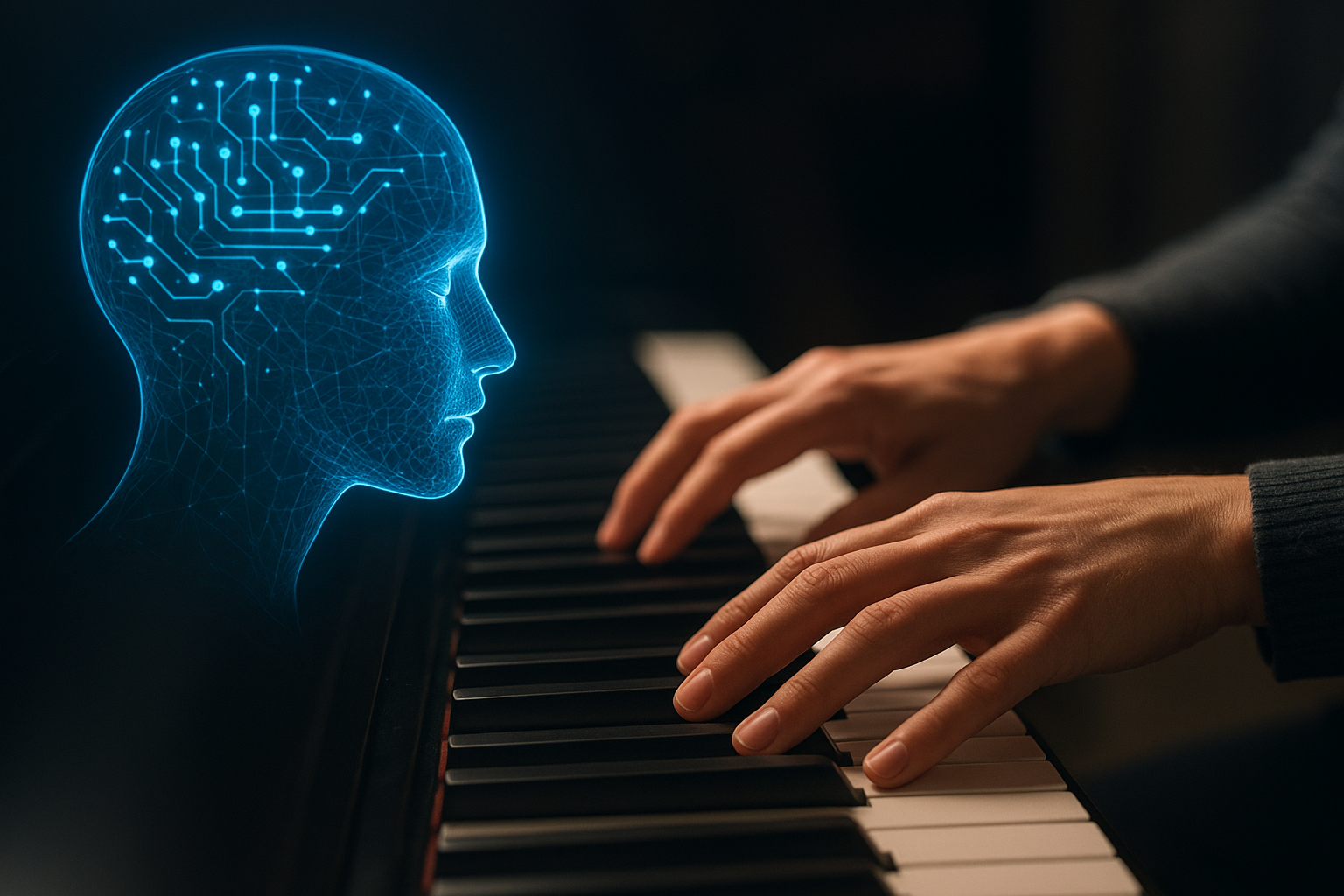
As artificial intelligence (AI) continues to pervade different aspects of human life, its presence in art and music opens intriguing possibilities, especially in terms of expressivity—a domain traditionally dominated by human sensitivity and creativity. One cornerstone of musical expressivity is the concept of legato, an Italian term meaning “tied together,” which refers to the seamless connection between notes. This article explores the journey of teaching AI to master this nuanced aspect of music, driving towards a future where algorithms can emulate, and even augment, human expressivity in melodic performances.
The Quest for Expressive Algorithms
Expressivity in music refers to the way artists manipulate musical elements to convey emotion and meaning. Beyond merely playing the correct notes, musicians employ techniques like dynamics, phrasing, and articulation to infuse their performances with personal touch and emotion. Among these techniques, legato playing is crucial, characterized by smooth transitions with minimal perceptible breaks between notes.
- Legato: Involves connecting notes closely, ensuring a fluid and continuous sound.
- Staccato: The opposite of legato, where notes are played in a short and detached manner.
AI’s Growing Musical Repertoire
The development of AI in music initially focused on composition, such as generating new pieces that imitated specific styles or genres. However, recent advancements are turning towards the realm of performance. AI now strives to not only create music but also to perform it expressively.
Projects like OpenAI’s Jukebox illustrate the progress in this domain by generating music with complex structures and artistic style. Similarly, Google’s Magenta project leverages deep learning to explore the creative potential of machines in music-making, including efforts to make AI systems understand and replicate musical emotions and techniques.
Codec of Musical Emotion
The key to teaching AI to “understand” legato lies in its ability to perceive music not merely as data but as a language of emotion and expression. Through deep learning and neural networks, AI systems are exposed to vast datasets of musical recordings, enabling them to identify patterns associated with expressivity.
“Machines are learning to listen and understand the nuances in human performance that convey emotion, effectively bridging the gap between technical proficiency and expressiveness.” — From a study published in Scientific Reports.
Challenges in Emulating Human Touch
However, bridging this gap is no small feat. The human touch involves subtle variations and micro-timing that are challenging to quantize or code. AI must navigate the complex web of tempo, rhythmic intricacies, and dynamic shading intrinsic to legato playing. Additionally, human musicians often draw from personal experiences and emotional contexts, qualities that AI systems struggle to replicate authentically.
These challenges necessitate innovative approaches, such as incorporating feedback from professional musicians to fine-tune AI models and using complex algorithms that can process and mirror human emotion in their output.
A Collaborative Future
The ultimate goal of embedding legato and other expressive techniques into AI-driven music is not to replace human musicians but to complement their craft. Musicians can collaborate with AI to create music that is as emotive as it is technically perfect, pushing the boundaries of what is possible in musical expression.
Dan Tepfer, a jazz pianist known for collaborating with AI, highlights the potential of this partnership by noting, “The possibility of introducing AI into musical research not only challenges us to understand, more deeply, the nature of musical taste and expression, but also helps us discover what it truly means to express emotion.”
Conclusion
In conclusion, teaching AI to feel and perform legato entails more than just mastering technical prowess; it requires a profound understanding of the art of expression. As AI systems evolve, they hold the promise of producing performances that resonate with human audiences, expanding our appreciation and understanding of music. This intersection of technology and artistry not only enriches the musical landscape but also redefines our relationship with both music and machines, heralding an era where human and artificial musicianship coalesce in expressive harmony.