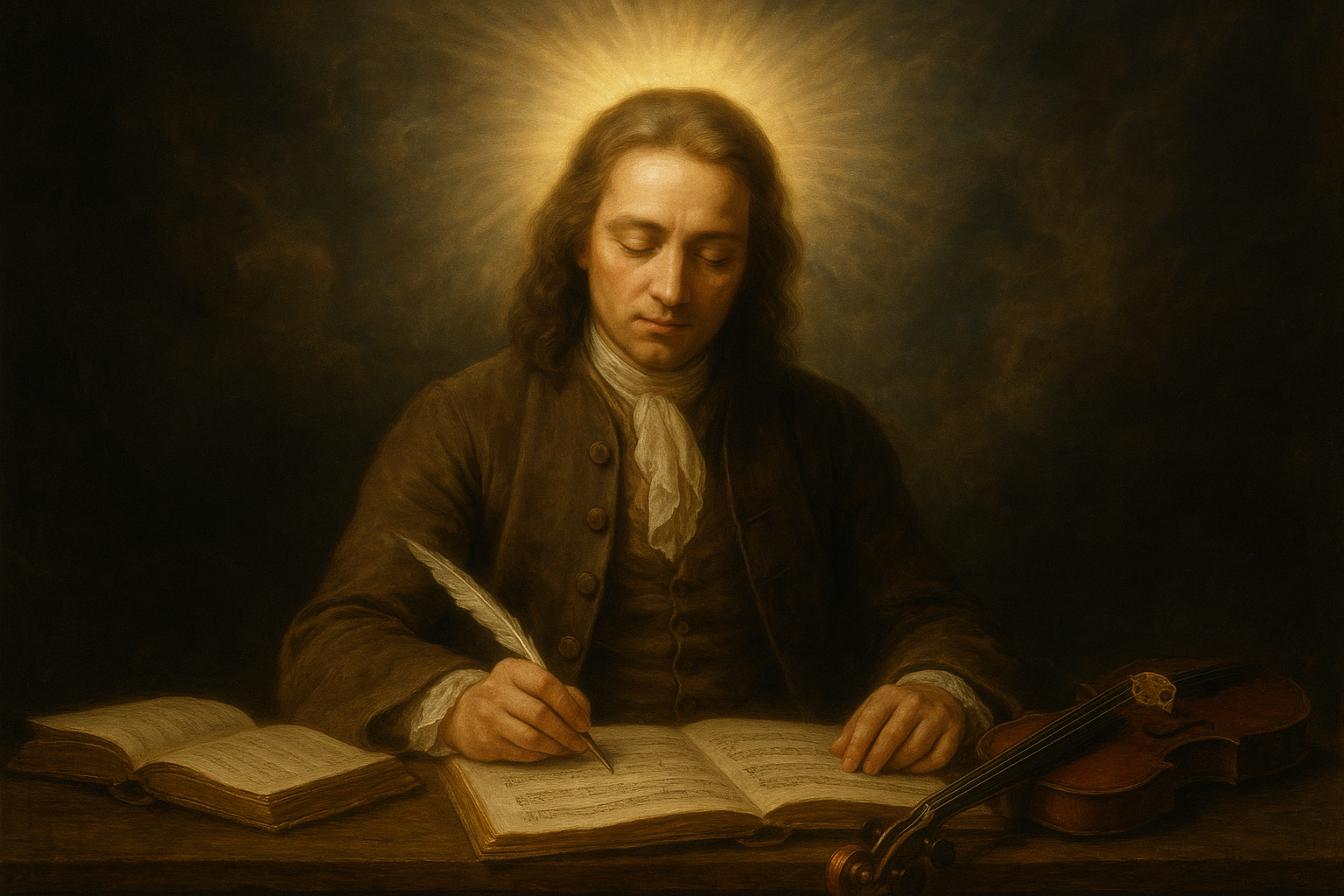
The Enlightenment, a historical period spanning roughly the 17th to 19th centuries, is often characterized by its emphasis on reason, science, and individualism. However, less frequently discussed is the period’s intricate relationship with mysticism and how this relationship manifested in the music of the time.
While the Enlightenment sought to challenge traditional doctrines and promote empirical thought, it was also a time when composers imbued their works with the spirituality and wonder that mystical thought embraced. The illumined composer refers to those who, inspired by mysticism, sought to transcend the mundane through their compositions.
Mysticism in the Age of Reason
Mysticism during the Enlightenment took on a unique form. While traditional religious structures were scrutinized, personal spiritual experiences and the notion of an inner divine presence gained traction. The writings of Jacob Boehme, a 17th-century German mystic, influenced many Enlightenment thinkers, challenging the rigid frameworks of organized religion and inspiring individuals to seek divine truths within themselves.
As noted by historian Dame Frances Yates:
“The deep and widespread study of Christian Hermeticism is one of the most important aspects of Enlightenment thought, influencing the great philosophers and composers alike.” (Cambridge University Press)
The Symbiosis of Music and Mysticism
Music, often seen as the most abstract of the arts, became a perfect medium for expressing mystical sentiments. Several composers during this era were profoundly influenced by mystical ideas and sought to reflect them in their works. Their music provided a sanctuary where mystical contemplation could flourish beyond the confines of reason and logic.
- Johann Sebastian Bach: Bach’s Mass in B Minor and The Well-Tempered Clavier are laden with religious and mystical symbolism, inviting the listener to experience the divine.
- Wolfgang Amadeus Mozart: Besides being a musical genius, Mozart was connected to the Freemasons, an organization known for its mystical and secretive rites. His opera The Magic Flute is a celebration of Masonic symbols and spiritual enlightenment.
- Ludwig van Beethoven: Beethoven’s works often reflect his attempts to grapple with existential and spiritual questions. His Symphony No. 9, with its choral finale set to Friedrich Schiller’s “Ode to Joy,” is a powerful anthem to the unity of mankind.
In their music, these composers transcended the empirical focus of their age, capturing the ineffable essence of mystical experience.
The Legacy of Enlightenment Mysticism in Music
The impact of Enlightenment-era mysticism on music stretches far beyond the period itself. It laid the groundwork for future generations of composers and musicians who continued to explore themes of spirituality and transcendence.
Echoes of mystical themes can be found in the works of later composers such as Gustav Mahler, whose symphonies are imbued with existential and spiritual questioning, and Olivier Messiaen, known for his deep Catholic faith and integration of religious themes in his music.
Even today, the influence of mysticism persists in contemporary music, where artists often seek to explore inner universes and spiritual trials through sound. This continual exploration reflects a fundamental human desire to connect with something beyond the self, a theme that Enlightenment-era mystic composers both recognized and endeavored to express through their compositions.
Conclusion
The Enlightenment, while a period renowned for its rational advancements, was also a time rich with mystical exploration and expression. Composers of this era, inspired by the mysteries of existence and the pursuit of the divine, created music that transcended rational thought.
By examining their works, one gains insight into how these illumined composers harmonized the dichotomies of reason and mysticism, crafting legacies that continue to resonate with the profound mysteries of humanity’s spiritual quest.
As Goethe famously observed:
“Music is the mediator between the spiritual and the sensual life.” (Encyclopedia Britannica)
In this way, the music of Enlightenment-era mystics serves not only as an artistic triumph but also as a lasting testament to the enduring power of spirituality in the face of reason.