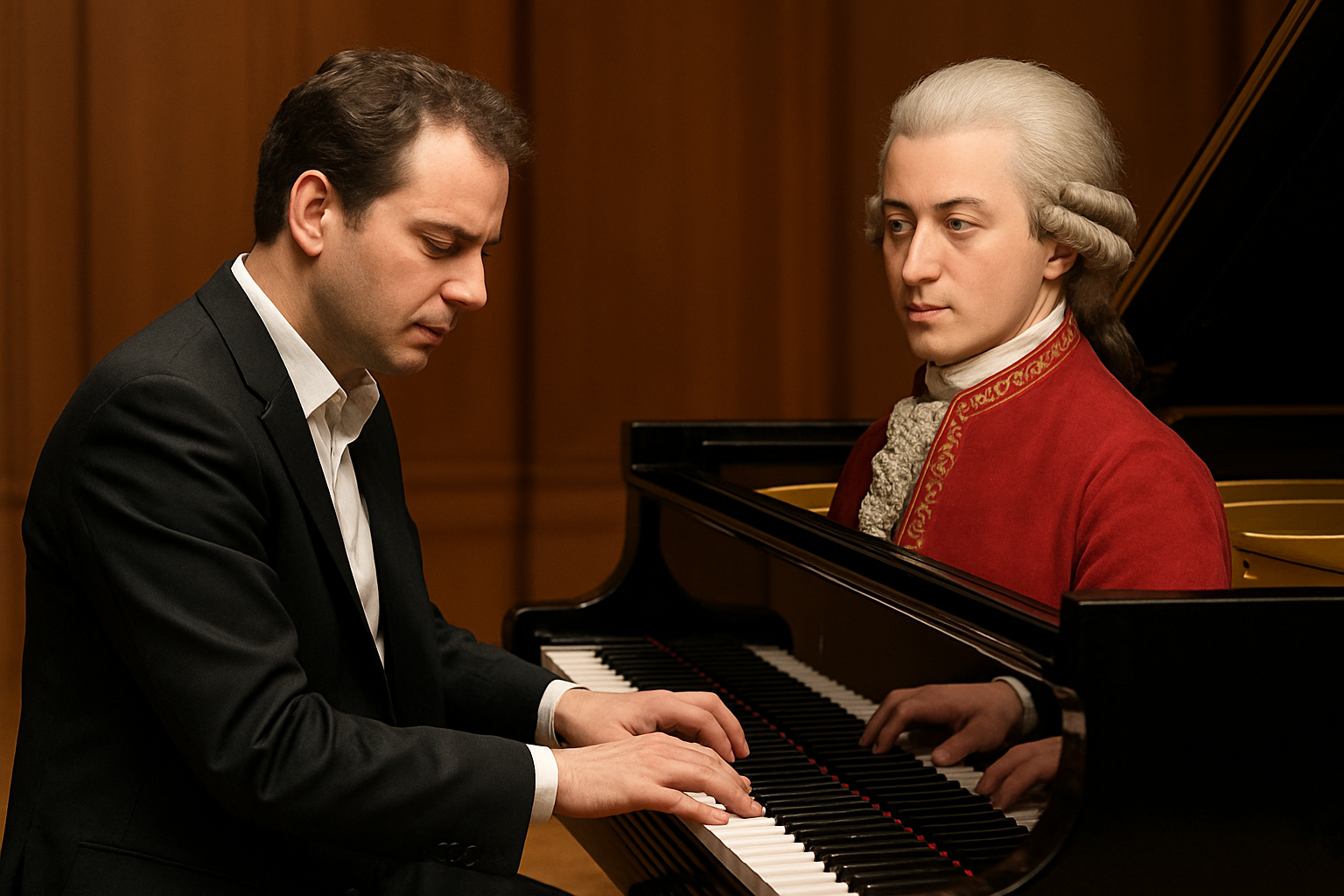
The advent of AI in music has sparked a wave of debate about the authenticity and emotional depth of machine-generated performances. When machines interpret masterpieces, like those of Wolfgang Amadeus Mozart, questions quickly arise: Can artificial intelligence truly capture the maestro’s genius, or is authenticity lost in translation?
The Rise of AI in Music
A growing number of technology firms have developed systems capable of transforming music scores into performances. AI algorithms analyze patterns, dynamics, and stylistic nuances, attempting to replicate human-like expressiveness. According to a New York Times article, the sophistication of these systems is such that they can produce music that rivals live performances in quality.
Authenticity and Emotional Interpretation
Authenticity in music often connects deeply with the human ability to convey emotions. As philosopher Theodor Adorno once posited, “The purpose of art is to express emotions and connect human spirits.” When AI systems interpret Mozart, the challenge is not just to reproduce notes accurately but to evoke feelings akin to those inspired by human musicians.
“Artificial intelligence, at its core, lacks the intrinsic human emotion and historical connection that musicians uniquely embed into their performances,” suggests musicologist Dr. Emily Hawthorne.
The Role of Human Oversight
One potential solution to the authenticity issue lies in collaboration. AI’s strengths in handling complex patterns can be harnessed alongside human oversight, ensuring performances are both technically proficient and emotionally resonant. Musicians and composers can guide AI systems, adding their interpretative flair to ensure a balance between precision and soul.
Looking to the Future
As AI technologies evolve, so too will their ability to interpret classical compositions. With advances in machine learning and neural networks, the gap between human and machine-interpretative capability may narrow significantly. Platforms like OpenAI continue to push the boundaries, experimenting with models that promise ever more nuanced musical outputs.
Conclusion
The interplay between AI and music will continue to be a topic of fascination and contention. While some purists may argue that machines can never truly replicate the “soul” of Mozart, the flexibility and innovation AI offers cannot be denied. Ultimately, the choice between machine and human performance may not be an either/or situation but an opportunity for a new hybrid form of musical expression, carving out new realms of possibility where “machine” and “authenticity” coexist.