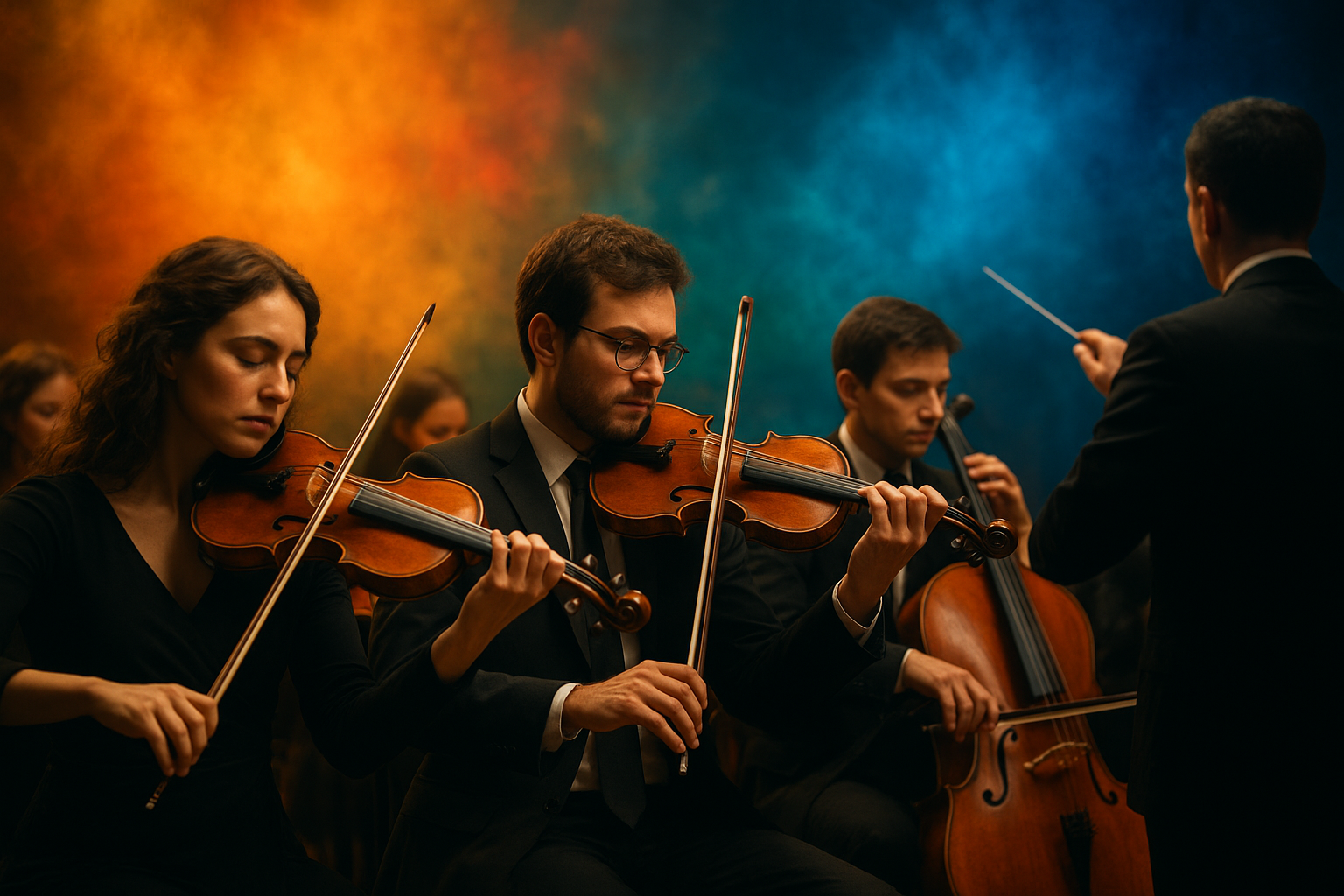
Music has the profound ability to evoke emotions, tell stories, and transform atmosphere. At the heart of its expressive power lies the art of orchestration – the masterful arrangement of music for an orchestra, which turns simple melodies into grand symphonies of emotive force. This process, often described as “orchestral color alchemy,” involves the combination of diverse instrument sounds to create specific tonal colors and emotional textures. Through expert orchestration, composers direct the emotional journey of their audience, transforming abstract notes on a page into vivid experiences.
The Alchemy of Instrumentation
In orchestral music, each instrument possesses a unique timbre, or tonal quality, which contributes to the overall color of the orchestra. This diversity allows composers to use instruments in much the same way a painter uses different hues.
- Strings: Often the backbone of the orchestra, string instruments can convey a wide range of emotions. The violin, with its bright and penetrating sound, can cut through the texture to express intense passionate melodies, while the cello adds warmth and depth with its rich tones. The double bass, on the other hand, provides the essential grounding bass line with a majestic and sometimes foreboding presence.
- Woodwinds: These instruments are known for their ability to add unique colors and textures. The clarinet, for example, has a versatile sound that can be dark and mysterious or light and playful. The flute floats over the orchestra like a shimmering feather, often used to evoke lightness and airiness. The oboe, with its piercing and poignant sound, is often used to convey melancholy and solitude.
- Brass: Known for their powerful and triumphant sound, brass instruments such as the trumpet and trombone are frequently utilized for their ability to project a commanding sound over the orchestra. The French horn, with its warm and rich tones, often suggests nobility and grandeur or quiet introspection.
- Percussion: Percussion instruments are integral to the orchestral palette, adding rhythm, texture, and accentuation. From the dramatic roll of a timpani to the delicate shimmer of a triangle, percussion can evoke a wide range of emotions, from suspense and excitement to whimsy.
- Keyboards: While not always a permanent fixture in the orchestral ensemble, keyboards such as the piano and celesta add unique dimensions. The piano offers a vast range of dynamics and is often used for solos that require introspection or delicacy. The ethereal tones of the celesta, as famously used by Tchaikovsky in “Dance of the Sugar Plum Fairy,” create an enchanting and magical atmosphere.
Crafting Emotional Landscapes
Composers use the interplay of these instrumental colors to craft intricate emotional landscapes. By blending the various sections, they can emphasize certain emotions, create tension or release, and guide the audience’s emotional responses. The decision of which instrument carries the melody or harmony, and how brightly it is painted against the orchestral canvas, is crucial in transforming an ordinary passage into a poignant moment of emotional impact.
“The possibilities of instrumentation are infinite; they require not only a profound theoretical understanding but also a natural intuition for sound and nature’s moods,” said Hector Berlioz, a pioneer in orchestration and a prominent Romantic composer.
Examples of Emotional Orchestration
Several famous compositions exemplify the power of orchestration in evoking emotion.
- Gustav Mahler’s Symphony No. 5: Mahler uses the full spectrum of orchestral color to convey a wide range of emotions throughout the symphony. Particularly in the fourth movement, the “Adagietto” for strings and harp, the composer creates an intimate and introspective atmosphere that evokes a profound sense of longing and beauty.
- Igor Stravinsky’s “The Firebird”: Stravinsky’s ballet suite showcases his revolutionary use of orchestration to create vivid and vibrant soundscapes. The “Infernal Dance” features bold brass and percussion that convey a wild, unyielding energy, while the finale employs soaring strings and triumphant brass to achieve a sense of victory and transcendence.
- Claude Debussy’s “Prélude à l’après-midi d’un faune”: Debussy’s masterful blending of woodwinds and strings creates a dreamlike, floating effect, thereby evoking the languid and sensual imagery of a faun’s afternoon dreams.
- John Williams’s Soundtracks: Renowned for his work in the film industry, John Williams has created some of the most memorable orchestral scores. In “Star Wars,” Williams uses lush, full-bodied strings and heroic brass themes to create an epic sense of adventure, perfectly matching the grand scale of the films.
The Science and Art of Orchestral Balance
A key aspect of orchestration is balance—ensuring that the various sections blend together to form a cohesive sound without overpowering one another. This balance requires a deep understanding of acoustics and the physical properties of sound.
“Orchestration is the most delicate balance between power and nuance, between the roar of the full orchestra and the whisper of a single instrument,” remarked Leonard Bernstein, whose insights on orchestration continue to inspire musicians today.
To achieve this balance, composers adjust the dynamics and articulation of each instrument. A skilled orchestrator will know how to use silence as effectively as sound, understanding when to allow an instrument to fade into the background or step forward into the spotlight. This modulation of sound creates dynamic variety, which enhances the dramatic effect of a performance.
Innovations and Future Directions
Modern orchestration continues to evolve, incorporating new technologies and blending traditional orchestral instruments with electronic elements. Contemporary composers experiment with live electronic manipulation and digital sampling to expand the aural palette. As composers push the boundaries of traditional orchestration, new works explore hybrid soundscapes that appeal to a broad, modern audience.
In this digital age, orchestration embraces both tradition and innovation, maintaining the profound emotional impact of music while exploring new sound possibilities. The alchemy of orchestration continues to evolve, enchanting audiences through the universal language of music.
For more on the magic of orchestration and its impact on emotions, explore this detailed guide by Classic FM.
In conclusion, the transformative power of orchestration lies in its ability to manipulate the orchestral palette skillfully, crafting experiences that resonate on a deeply emotional level. An ever-evolving art form, orchestration remains a testimony to the boundless creativity of composers as they paint with sound to capture the myriad emotions of the human experience.