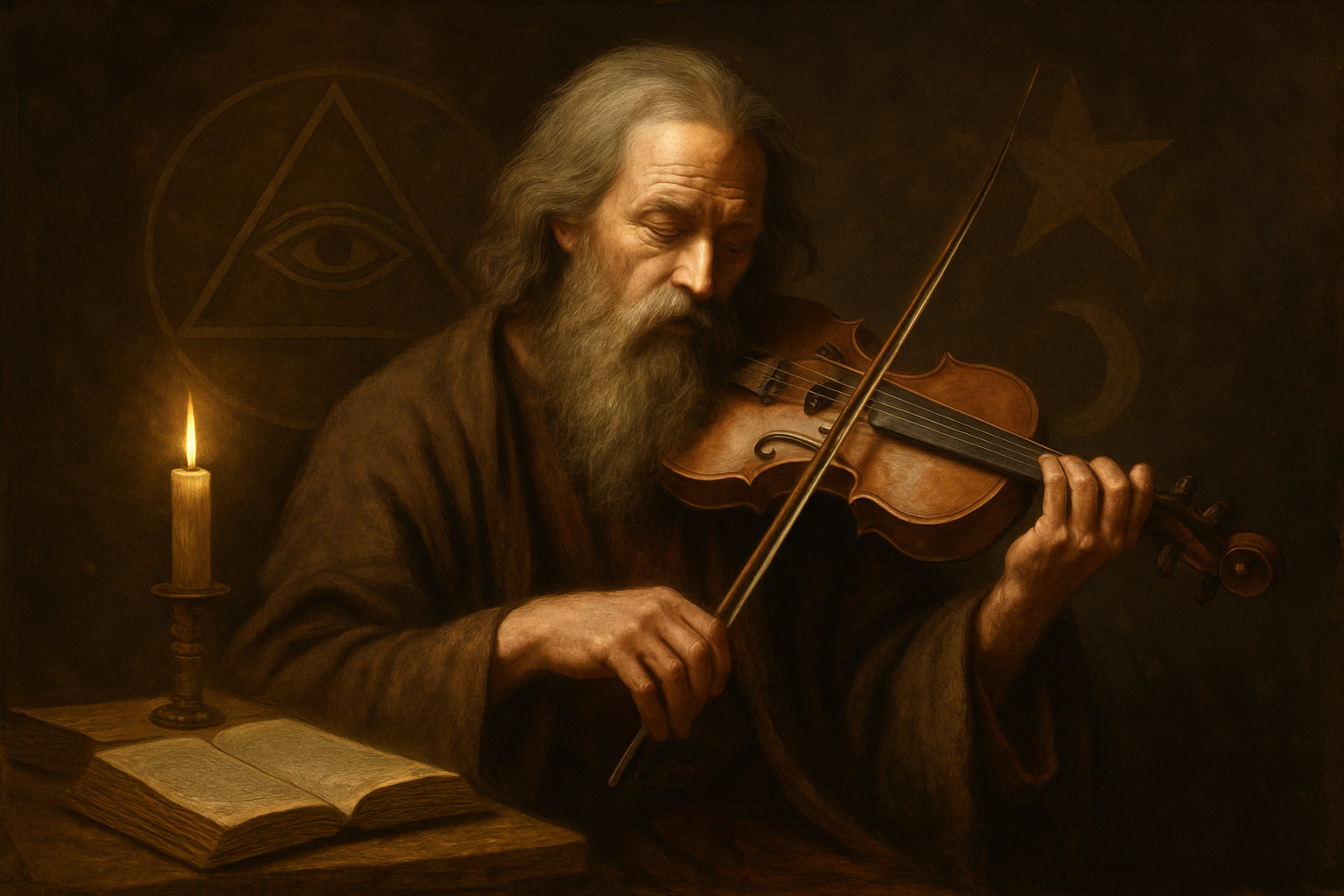
Throughout history, classical music has served as a bridge between the mystical and the mundane. Often veiled in the complexities of counterpoint and harmony, these compositions harbor esoteric symbols, offering listeners a portal into an enigmatic world. From the vibrant courts of the Renaissance to the grand concert halls of the Romantic era, visionary composers encoded spiritual symbols into their sonatas, symphonies, and concertos.
Beethoven’s Secret Code
Ludwig van Beethoven, one of the most celebrated composers of all time, was renowned not only for his towering symphonies but also for the deep philosophical undertones of his work. Some researchers suggest that Beethoven’s music contains elements of mysticism and hidden meanings influenced by his interest in philosophy and freemasonry.
“Beethoven’s music is a form of prayer, encompassing an array of spiritual and emotional realms,” says Robert Greenberg, a noted music historian. [1]
The famous Symphony No. 9, or the “Choral Symphony,” particularly in its “Ode to Joy,” is more than a simple expression of human unity. The structure and key transitions are thought to symbolize the journey of the soul from chaos to enlightenment. Scholars speculate that the piece’s climactic unison represents the mystical tradition of oneness.
Mozart the Alchemist
Wolfgang Amadeus Mozart is another towering figure whose music carries an aura of mystery. An alleged member of the Freemasons, Mozart’s compositions frequently reflect the esoteric themes of the order. His opera, The Magic Flute, is rife with Masonic symbolism, with numerous scholars pointing to its allegorical narratives of enlightenment and the triumph of light over darkness.
- The character of Sarastro is interpreted as a representation of wisdom, a nod to Masonic ideals.
- The initiation trials faced by Tamino and Pamina mirror the trials faced by Masonic initiates.
In addition to opera, Mozart’s chamber works, such as his String Quartets, are believed to contain numerological and symbolic references aligning with esoteric traditions.
Scriabin’s Mystical Visions
Progressing into the late Romantic and early 20th century, Alexander Scriabin emerges as a composer infused with mysticism more overtly. Scriabin’s works, notable for their daring innovation, were profoundly inspired by his synesthetic visions and interest in Theosophy. His Mysterium, an unfinished magnum opus, aimed to be a synesthetic, multi-sensory experience designed to induce transcendental awakenings in its audience.
“The purpose of art is not a state of aesthetic enjoyment or a feeling of thrill, but a state of ecstasy, fiat – the central idea of his entire philosophy of art.” – Richard Taruskin, musicologist. [2]
Scriabin believed that his music transcended mundane interpretations, serving instead as a channel for cosmic and divine messages. His use of the Prometheus chord and colored lights in performances intended to elicit spiritual ascendance draws clear lines between his work and mystical aspirations.
The Dualities of Chopin
Frederic Chopin’s music, particularly his nocturnes, falters on the line between the earthly and the transcendent. His compositions carry the spirit of the Romantic era’s fascination with the mystical and existentially profound. Chopin’s ability to evoke profound emotionalism and his frequent use of trills and arabesques create a soundscape reminiscent of the spiritual journeys depicted in esoteric traditions.
- Chopin’s ethereal use of melody and harmony creates emotional landscapes akin to spiritual quests.
- The intricate symbolism in his preludes expresses the temporal nature of existence, often interpreting life’s dualities.
Symbolism in Form and Structure
Beyond the individual compositions, entire forms and structures within classical music often carry symbolic meanings. The sonata-allegro form, with its exposition, development, and recapitulation, mirrors the mythical hero’s journey, where the protagonist transforms through trials and revelations. Symphonic structures are frequently aligned with archetypal narratives of creation, struggle, and resolution.
The complex interplay of these symbolic forms invites listeners to experience and interpret music in a non-linear, non-verbal sense, tapping into the essential mysteries of existence through sound.
A Continuing Legacy
The legacy of esoteric symbolism in classical music remains vibrant today. Contemporary composers continue to weave mystical and philosophical elements into their music, creating an ongoing dialogue between the ancient and the modern.
In sum, the mystical narrative woven into classical compositions reveals a rich tapestry of encoded knowledge and transcendent themes. For those willing to listen with an open heart and mind, these musical masterpieces offer not merely aesthetic pleasure but the potential for profound spiritual revelation.
Sources: