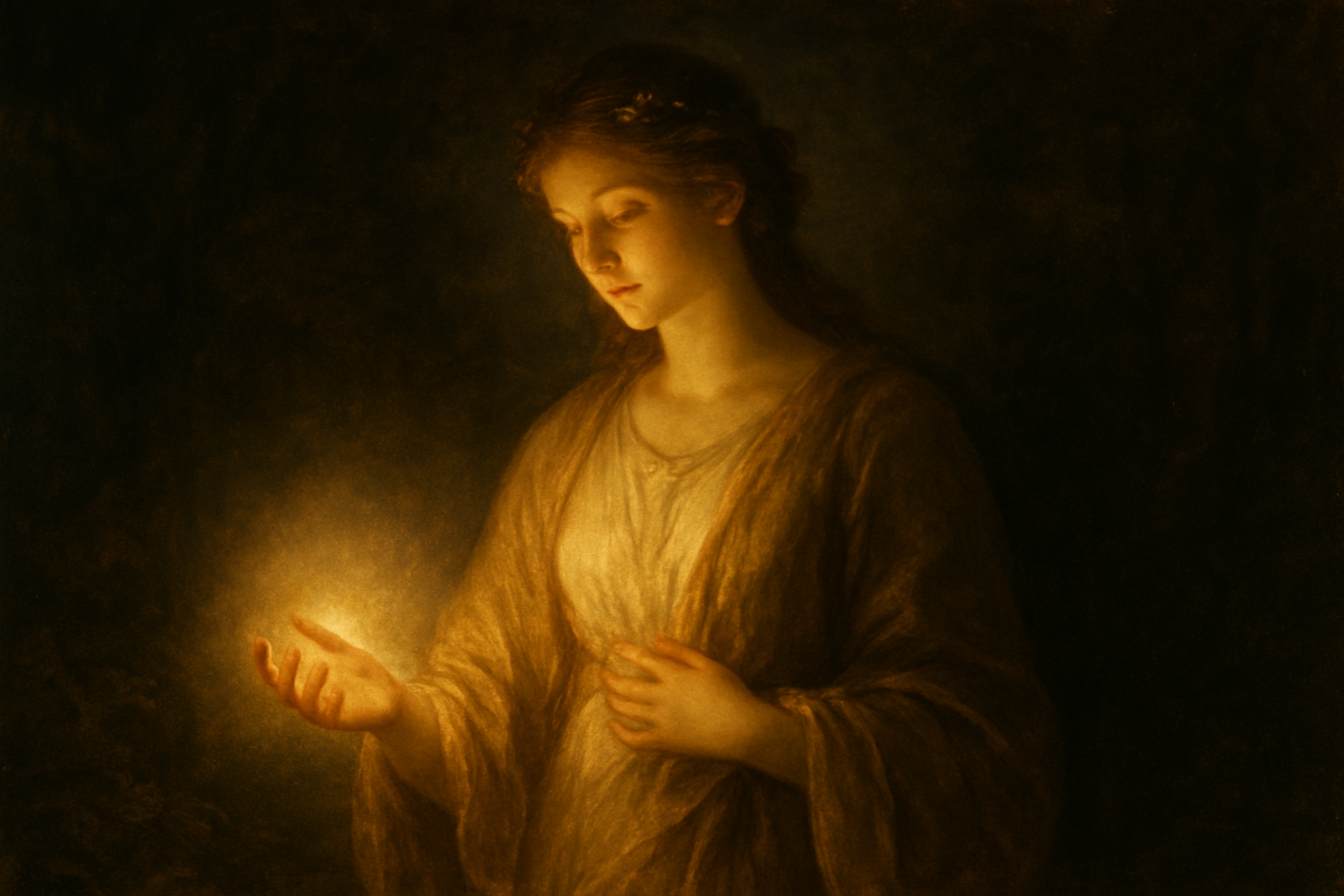
The Late Classical Period, roughly spanning the fourth to the fifth century, was a transformative era where mysticism and the concept of divine harmony reached their zenith. As the ancient world grappled with upheaval and reorganization, a profound shift in the spiritual landscape began to unfold, blending philosophy, religion, and art into a singular harmonious vision.
The Fusion of Philosophy and Mysticism
During this period, Neoplatonism emerged as a dominant philosophical movement that profoundly influenced mystical thought. Founded by Plotinus in the 3rd century, Neoplatonism continued to flourish into the Late Classical Period, advocating the idea that everything emanates from a single, divine source. This “One” was seen as the ultimate reality, beyond human comprehension yet accessible through spiritual ascent and inner revelation.
“The universe is so harmonious that it reveals its beauty only to those who are willing to see it.”
Plotinus’ disciple, Porphyry, continued to lay the groundwork for mystical practices aimed at achieving unity with the divine. His works, along with those of Iamblichus, who introduced theurgy into mystical practices, increasingly depicted the divine as a light that could guide the soul towards spiritual enlightenment.
Art as a Reflection of Divine Harmony
Art from this period also reveals a shift towards depicting spiritual journeys and divine light. Mosaics, paintings, and sculptures from Late Classical times frequently used light as a metaphor for divine truth.
- Light-filled Mosaics: Churches and places of worship were adorned with mosaics characterized by bright, shimmering tesserae that depicted heavenly scenes, angels, and figures bathed in divine radiance.
- Symbolism in Sculpture: Sculptures often portrayed ascension and mystical experiences, with figures carved in serene expressions contemplating the divine.
These artistic endeavors captured the era’s zeitgeist—a yearning for harmony that transcended the chaotic world, aspiring for a connection with the divine light.
Transcending Reality
The synthesis of mysticism and classical tradition in this era highlights a pivotal moment where philosophy, art, and spiritual quest coalesced. As philosopher Plotinus imagined, the journey of the soul could ascend through various levels of reality to ultimately reunite with a source of profound light and harmony.
Thus, the Late Classical Period stands as a testament to human yearning for mystical union amidst the desire to understand one’s place within the cosmos. In weaving together these strands of philosophy, art, and religious experience, the period remains an enduring beacon of light, illuminating a path for future generations seeking spiritual harmony.