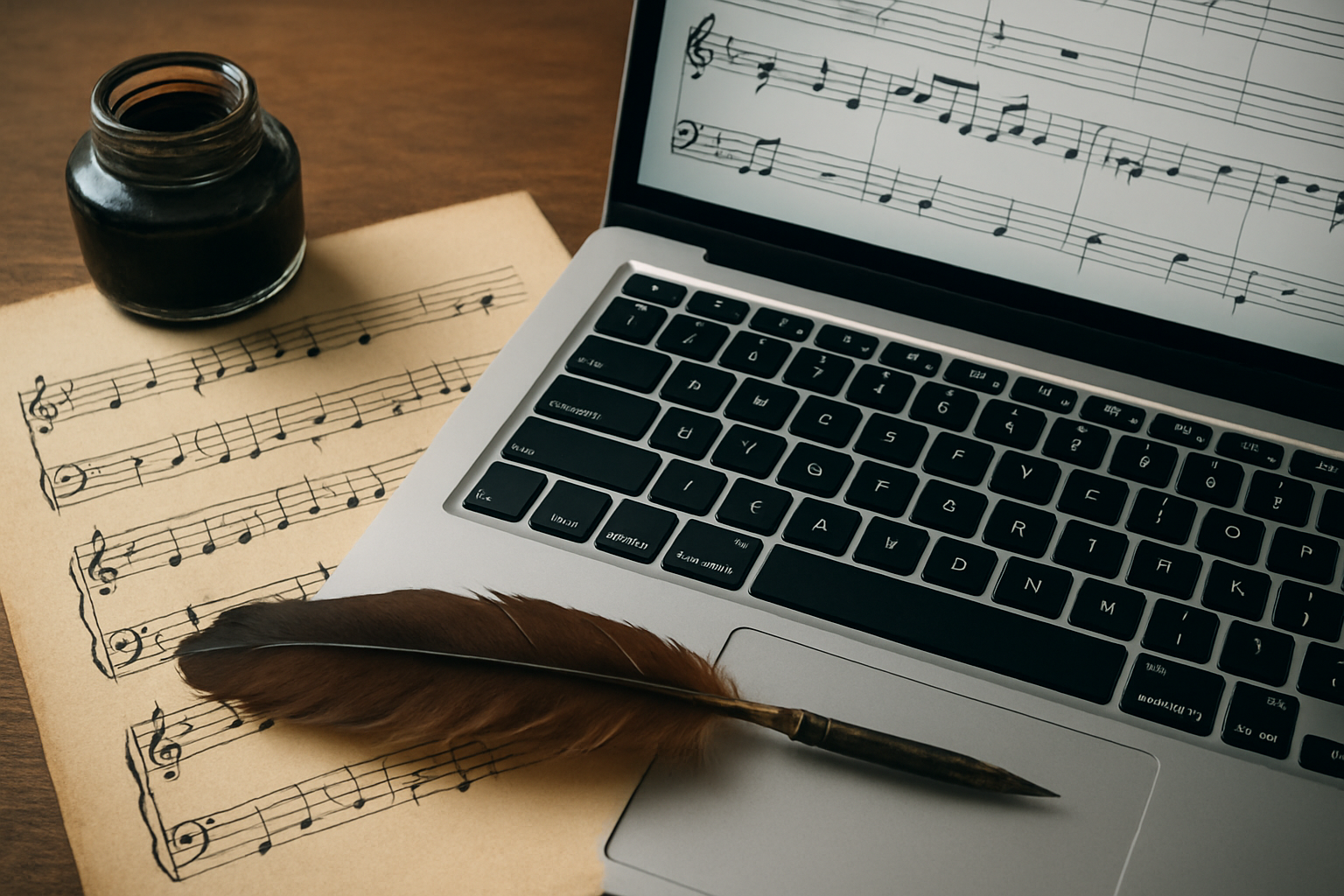
Ink, Quill, and Algorithm: How AI Is Rewriting the Composer’s Toolkit
The art of musical composition has always been a journey from the heart through the hand. From the quivering quill of Bach to the earnest ink of Beethoven, music has long been a domain of human expression and creativity. However, the digital age is composing a new stanza in this historical rhythm with artificial intelligence (AI) gradually becoming an integral part of the composer’s toolkit.
As technology pervades all aspects of life, the symphony of innovation is now echoing through the halls of music creation. Beyond providing digital screens to replace the composer’s paper sheets, AI is increasingly taking on roles as collaborator, assistant, and sometimes even composer.
The Evolution of Music Composition
The lineage of music composition is rich with evolution. From gregorian chants passed down through oral tradition to the structured symphonies of the classical era, music has constantly evolved with culture and technology. In the modern era, digital tools and AI have begun to add new dimensions to this dynamic landscape.
Traditionally, composing music involved drafting scores and a deep understanding of instruments and theory. Today, however, technology offers tools that extend beyond music notation software. These include sophisticated AI that can suggest harmonies, generate entire compositions, or even orchestrate pieces that blend genres.
AI as a Composer’s Assistant
AI technology, such as Google’s Magenta and Sony’s Flow Machines, is revolutionizing how composers approach music creation. Leveraging machine learning, these platforms analyze vast datasets of musical scores, learning patterns, and structures to assist composers.
- Harmony and Melody Generation: AI can analyze existing compositions, suggest harmonies, experiment with melodies, and provide new ideas that might defy traditional music theories.
- Style Duplication and Innovation: By learning from a wide range of genres, AI can create music in the style of Bach, the innovation of Jazz, or the electronic pulse of modern pop.
According to François Pachet, a principal investigator at Spotify, “Our goal is to give musicians tools that allow them to push their limits and explore new territories,” emphasizing the role of AI as an enabler rather than a replacement.
AI Composing Independently
Beyond assisting, AI is also taking center stage in creating compositions. In 2016, Sony’s AI composed a pop song titled “Daddy’s Car” in the style of The Beatles. The role of AI in this was not just to mimic but also to innovate within a style it had learned through data analysis.
“AI isn’t just copying human creativity but is innovating within confines it learns, creating hybrid styles that weren’t possible before,” says Dr. Anna Huang, Research Scientist at Google AI.
The Symphony of Human and Machine
Despite these advancements, AI has not overshadowed the human composer. Instead, it acts as a collaborator allowing the human touch to be more poignant and profound. Composers like Taryn Southern have harnessed AI to create entire albums, as seen in “I AM AI”, demonstrating the potential for AI to amplify human creativity.
Yet, the debate continues around the authenticity and emotive capacity of AI-composed music. Music, fundamentally a language of emotion, relies heavily on human experience. Can AI, devoid of emotional cognition, truly capture the essence that moves us?
Challenges and Ethical Considerations
As AI in music composition grows, so do concerns. One major challenge is the issue of originality and copyright. With AI-generated music drawing on existing works, the question of ownership arises. Additionally, there’s a concern about employment within the music industry. Would widespread AI adoption lead to reduced opportunities for human composers?
Experts advocate for frameworks ensuring fair use and creating opportunities rather than competition. Composer and AI researcher Dadabots argues that “instead of replacing composers, AI should be used to open new avenues for composers to explore.”
Conclusion
The pen, paper, and performance remain, but artificial intelligence adds a new note to composition, affecting how we create and consume music. As we continue to explore this technology, it becomes evident that the age-old melody of human creativity is only amplified, not overshadowed, by the rise of AI. In this grand composition of ink, quill, and algorithm, both the human spirit and machine intelligence find a harmonious convergence.