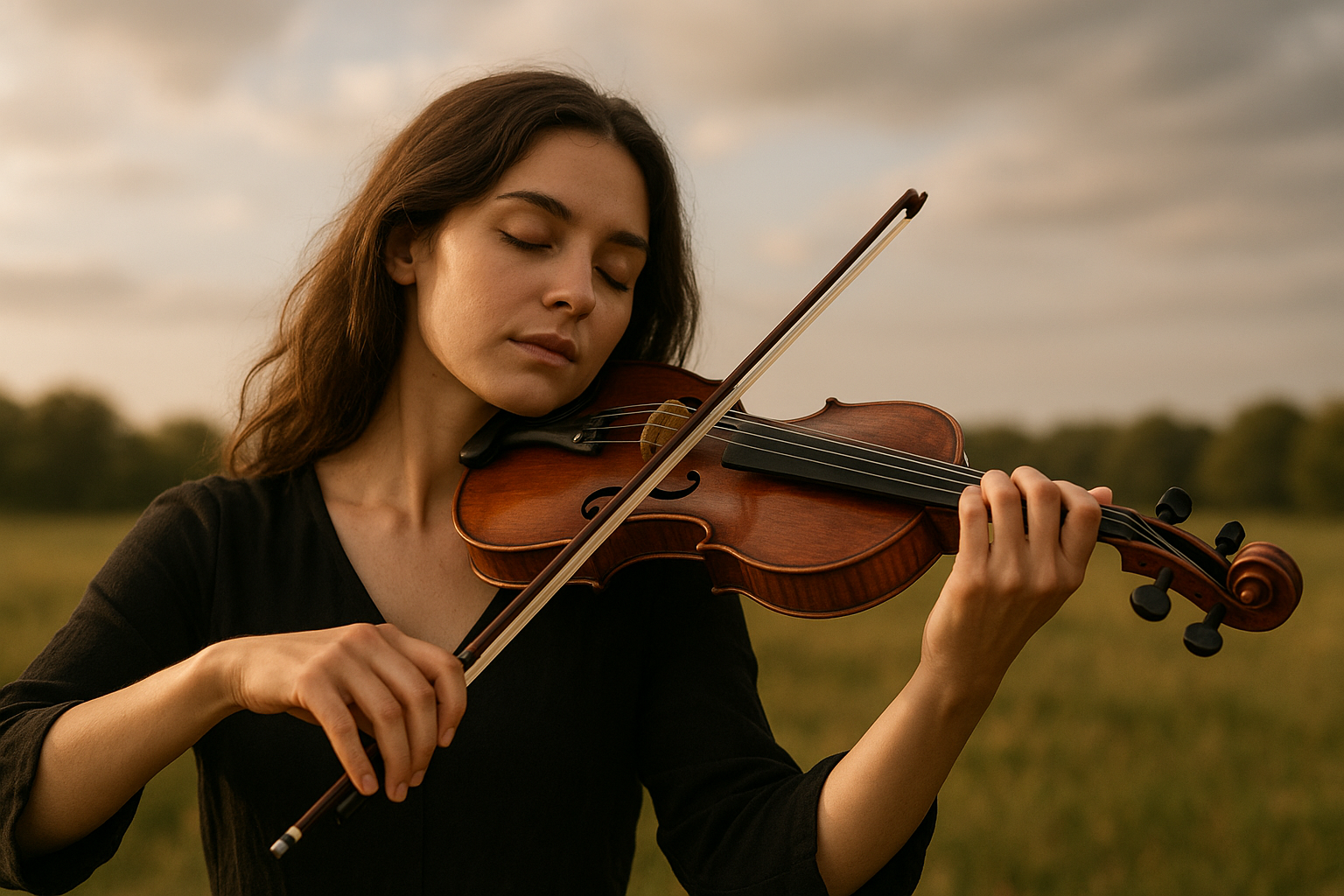
In the intricate dance between sound and silence, where one begins and the other ends, something extraordinary emerges: resonance. The concept of resonance transcends mere acoustics and moves into the realms of emotion, memory, and communication. This article explores how resonance operates beyond the confines of silence, touching upon its psychological, cultural, and artistic implications.
The Physics of Resonance
At its core, the concept of resonance in physics refers to the tendency of a system to oscillate at larger amplitudes at certain frequencies. When the frequency of these oscillations matches the system’s natural frequency, the system absorbs energy most efficiently. This principle is commonly demonstrated in the way a singer can shatter a glass with just their voice by sustaining the note that matches the glass’s resonant frequency.
As Encyclopedia Britannica explains, “Resonance occurs when a vibrating system or external force drives another system to oscillate with greater amplitude at a specific preferential frequency.”
Resonance in Psychology
Beyond the scientific domain, resonance extends into psychological responses. Often, music or poignant words resonate with us due to their emotional alignment with our values, experiences, or feelings. This psychological resonance creates a powerful connection between the source of the sound and the listener, facilitating deeper understanding and empathy.
Clinical psychologist Dr. Martha K. McClintock stated, “Our experiences of resonance, particularly in music, are heavily tied to emotional expression and the activation of memories, both conscious and unconsciously stored.” Resonance thus acts as a bridge between our external world and internal psyche, highlighting the profound impact silence and sounds have on our mental landscape.
Resonance in Culture and Society
Cultural landmarks have leveraged resonance to affect audiences profoundly. In filmmaking, for instance, moments of silence can speak louder than words, effectively using auditory absence to create suspense or evoke emotion. Alfred Hitchcock was a master of this technique, letting silence amplify anxiety and anticipation in films like “The Birds.”
“The ultimate weapon of a director is the word silence.”
— Alfred Hitchcock
Moreover, literature often uses silence in dialogue to convey tension or unspoken understanding. This subtlety allows readers to feel the resonance in empty spaces, engaging their imagination to fill gaps with personal interpretations.
Resonance in Artistic Expression
Artistic endeavors have harnessed resonance to expand their expressive capabilities. In visual arts, resonance may manifest not through absence but through juxtaposition—a quiet still-life painting placed next to a vibrant abstract piece can evoke a deeper contemplation of each when viewed together. The contrast highlights unique elements and creates a silent dialogue between opposites.
In the realm of music, composers often craft pieces that play with sound and silence to evoke specific emotional responses from the audience. Consider John Cage’s 4’33”, an avant-garde work that ingeniously uses silence to challenge traditional notions of music and listenership. In this piece, the ‘music’ comes not from notes played but from the ambient sounds present in the space as perceived by the audience.
“There’s no such thing as silence. What they thought was silence, because they didn’t know how to listen, was full of accidental sounds.”
— John Cage
Conclusion
Resonance, while born of silence, reaches far beyond it, impacting our interactions with the world and one another in intricate ways. Whether through the science of physics, the nuances of psychological impact, the cultural narratives we create, or the artistic expressions we cherish, resonance is a powerful force that shapes human experience.
As we continue to navigate through the complex interplay of silence and sound in our everyday lives, recognizing the resonance beyond silence may bring us closer to understanding the hidden layers of meaning that lie in between. In embracing this interplay, we allow silence to speak and resonance to echo through the halls of our collective consciousness.