The Formal Clarity of Eine kleine Nachtmusik: Mozart’s Perfect Serenade
When discussing the most compelling compositions of Wolfgang Amadeus Mozart, Eine kleine Nachtmusik (Serenade No. 13 for strings in G major, K. 525) often stands out as a prime example of musical form and elegance. Though it’s one of Mozart’s shorter works, its structure and melodic brilliance make it one of the most celebrated pieces in the classical repertoire.
Composed in 1787, during a remarkably productive period for Mozart, Eine kleine Nachtmusik is underscored by a clarity and simplicity that belie its exquisite technical sophistication.
The Structure
The serenade is typically performed in its standard four-movement version, although Mozart’s original manuscript suggests a possible fifth movement. The movements are:
- Allegro: The first movement opens with a lively, dance-like theme that immediately captures the listener’s attention. It adheres to a sonata-allegro form, a hallmark of classical architecture, featuring an exposition, development, and recapitulation.
- Romanze. Andante: This second movement shifts into a more tender mood with a lyrical melody that’s both serene and emotive. The contrasts between the A and B sections showcase Mozart’s ability to balance tonal colors.
- Menuetto. Allegretto: The third movement brings a rustic charm with its minuet and trio, offering a danceable rhythm deeply rooted in the social functions of the time.
- Rondo. Allegro: In the closing movement, Mozart returns to a bright, vivacious theme with a rondo form that encapsulates the piece’s energetic spirit. The recurring refrain alternates with contrasting episodes, ensuring a delightful finale.
Clarity and Expression
Mozart’s skillful use of counterpoint and thematic development is evident throughout Eine kleine Nachtmusik. Scholar Julian Rushton notes, “The opening movement is remarkable for its harmonic logic and thematic imagination.” This expertly balances innovation with adherence to classical form, making it a prime example of Mozart’s mature style.
Its clarity has made it a favored piece for introductory music appreciation courses and a staple of chamber music performances worldwide. A review from The New York Times highlights the piece’s enduring popularity, “It is music that speaks directly to the heart, simplicity wrapped in elegance.”
“Listening to Eine kleine Nachtmusik unfolds like a conversation: each movement has something distinct yet interconnected to convey. It’s a dialogue that remains engaging from the first note to the last.” — Classical Music Magazine
Historical Context
When Mozart composed Eine kleine Nachtmusik, he was immersed in the vibrant cultural tapestry of Vienna. The classical serenade was often intended as light entertainment for social gatherings, yet this piece transcends such contexts, frequently performed in concert halls worldwide. Mozart composed it the same year he started work on the more dramatic opera Don Giovanni, demonstrating his ability to shift seamlessly between different musical genres.
Despite its apparent simplicity, the serenade features complex layers underneath its genial surface. Scholar Stanley Sadie noted, “Beneath its affable exterior, it challenges performers and listeners with rapid shifts in dynamics and tone.”
Enduring Legacy
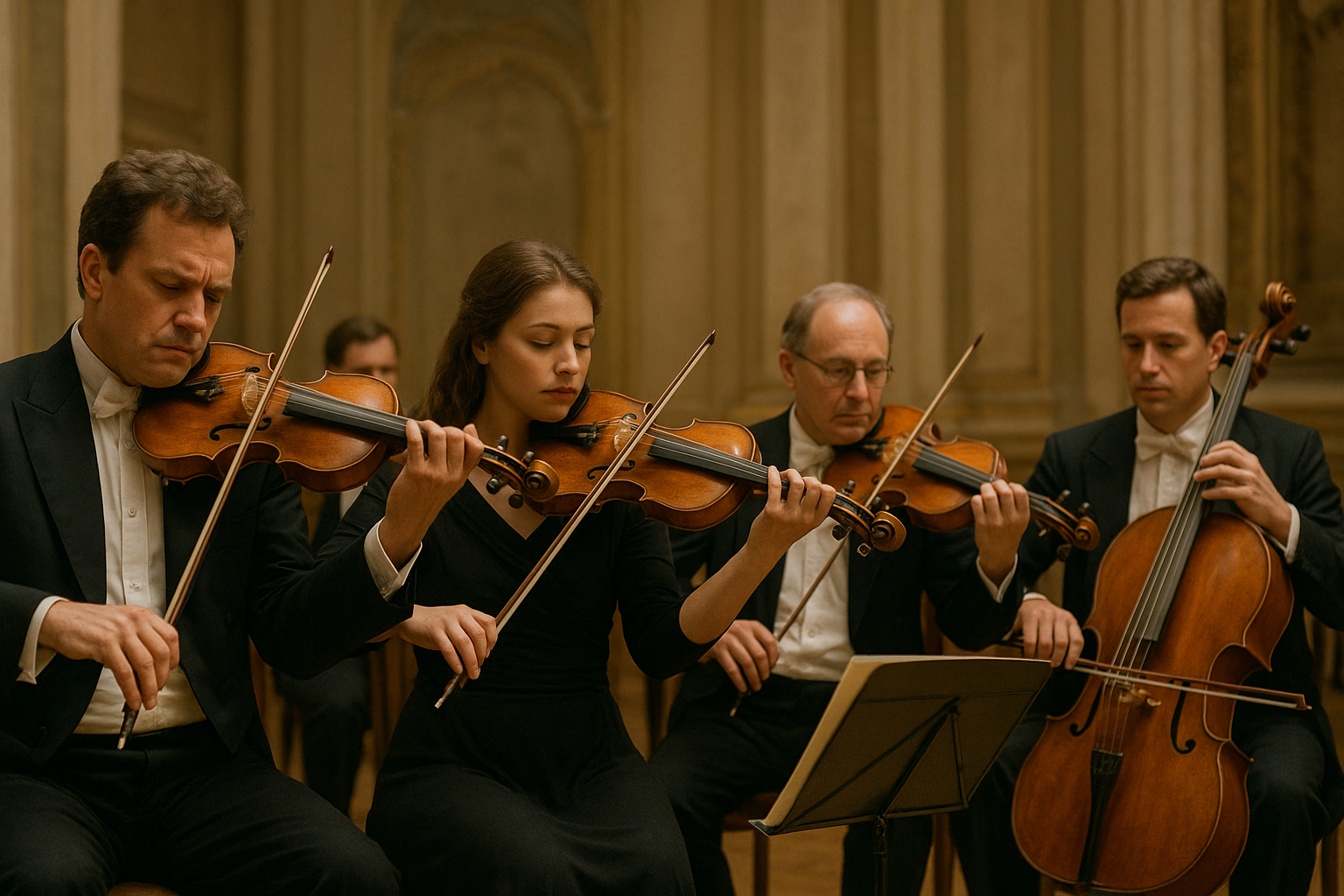
Today, Eine kleine Nachtmusik remains one of Mozart’s most recorded and performed works. Its appeal is universal; whether it’s an orchestral version for expansive concert settings or an intimate string performance in a chamber setting, the serenade continues to enchant audiences.
Critics and casual listeners alike are drawn to its balance of emotional depth and joyous expression. As noted by the Gramophone, “It is the quintessential Mozart: clear, balanced, and brimming with an inner joyful light.”
In an era where complexity often reigns, the formal clarity and aesthetic beauty of Eine kleine Nachtmusik offer a refreshing return to the fundamentals of musical excellence, showcasing why Mozart remains an unmatched maestro of the classical form.