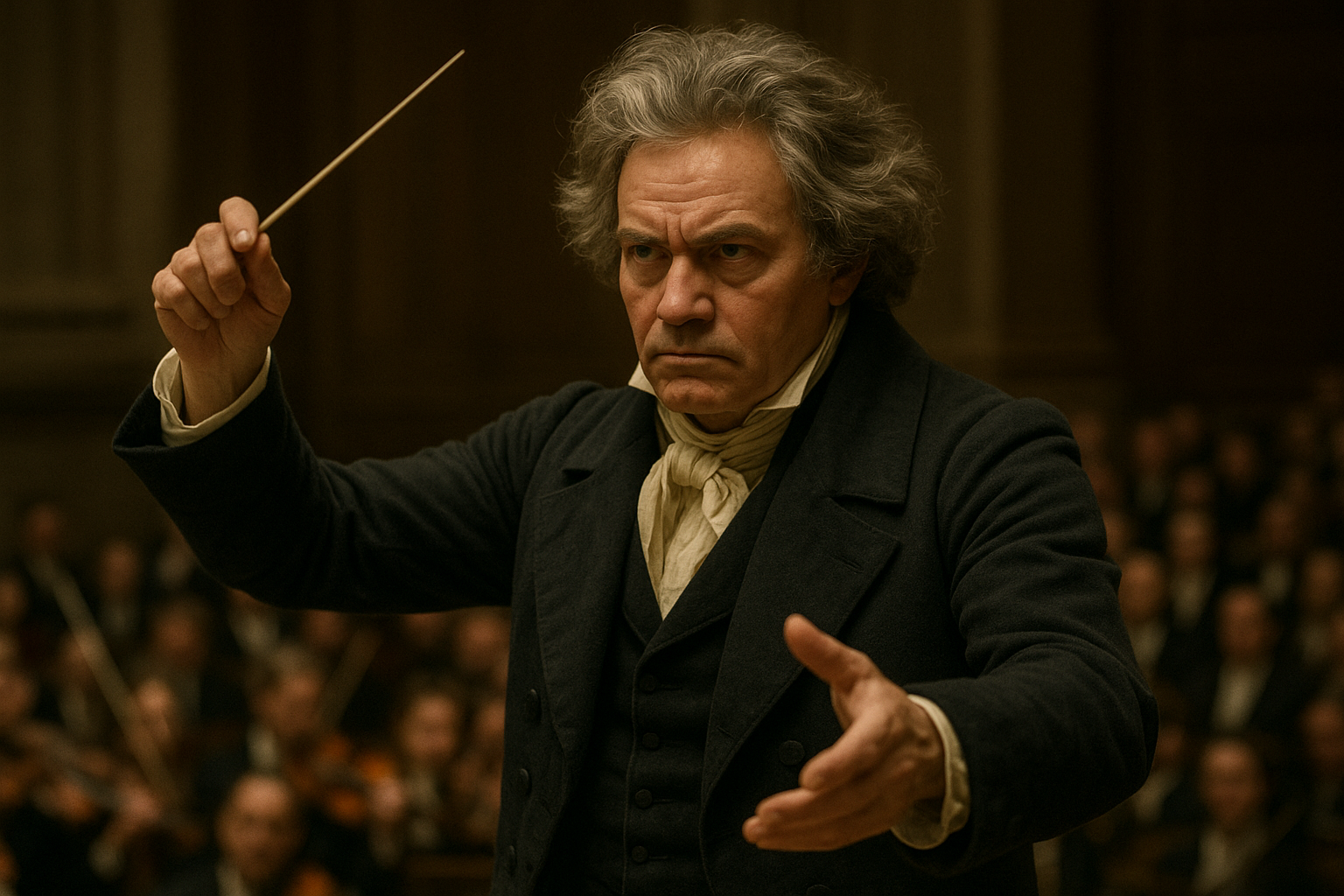
The Fifth Symphony: Beethoven’s Fate Motive and Formal Innovation
Ludwig van Beethoven’s Symphony No. 5 in C minor, Op. 67, often referred to simply as “Beethoven’s Fifth,” remains one of the most iconic pieces of classical music. This work is celebrated not only for its intense emotional depth but also for its groundbreaking structural innovations and the famous “Fate Motive.”
The “Fate Motive”
The symphony is instantly recognizable for its opening four notes: short-short-short-long. Beethoven himself is reputed to have described this motif as “Fate knocking at the door.” These notes are evocative and have inspired countless interpretations over the years. According to V&A Museum, “it throws open a window into Beethoven’s fiery personality and revolutionary compositional voice.”
“The opening of Beethoven’s Fifth Symphony is widely known, even among people who have never been to a symphony concert,” writes Gramophone.
“The repeated three short notes and a long note are heard in one of the most famous openings of any piece of classical music.”
Formal Innovation
Beethoven’s Fifth is remarkable for its cohesive structure. Unlike many works of the time, Beethoven constructed his symphony as a tightly integrated whole. The symphony’s development of thematic material from the opening bars through to the dramatic finale was revolutionary in the early 19th century. Beethoven’s ability to weave the “Fate Motive” throughout the symphony demonstrated a novel approach to thematic cohesion.
- First Movement: The Allegro con brio introduces the “Fate Motive,” setting a turbulent and foreboding tone.
- Second Movement: The Andante con moto offers a softer, more lyrical response, featuring variations entwined with the main theme.
- Third Movement: The Allegro breaks traditional form by acting as a bridge leading directly into the triumphant final movement.
- Fourth Movement: The Allegro is a burst of energy, heralding structured optimism that resolves the symphony’s narrative arc.
Legacy
Beethoven’s Fifth Symphony has had an enduring influence on music. Its structural innovations and thematic motifs can be seen in the works of many later composers, and it continues to be a staple in orchestral performances worldwide. As noted by BBC Music Magazine, “It is a powerful piece of music that retains its ability to inspire and move audiences.”
In conclusion, Beethoven’s Fifth Symphony is not merely a cornerstone of classical repertoire; it is a testament to Beethoven’s genius and his ability to convey the profound anthems of human experience through daring formal innovations and emotional expression.