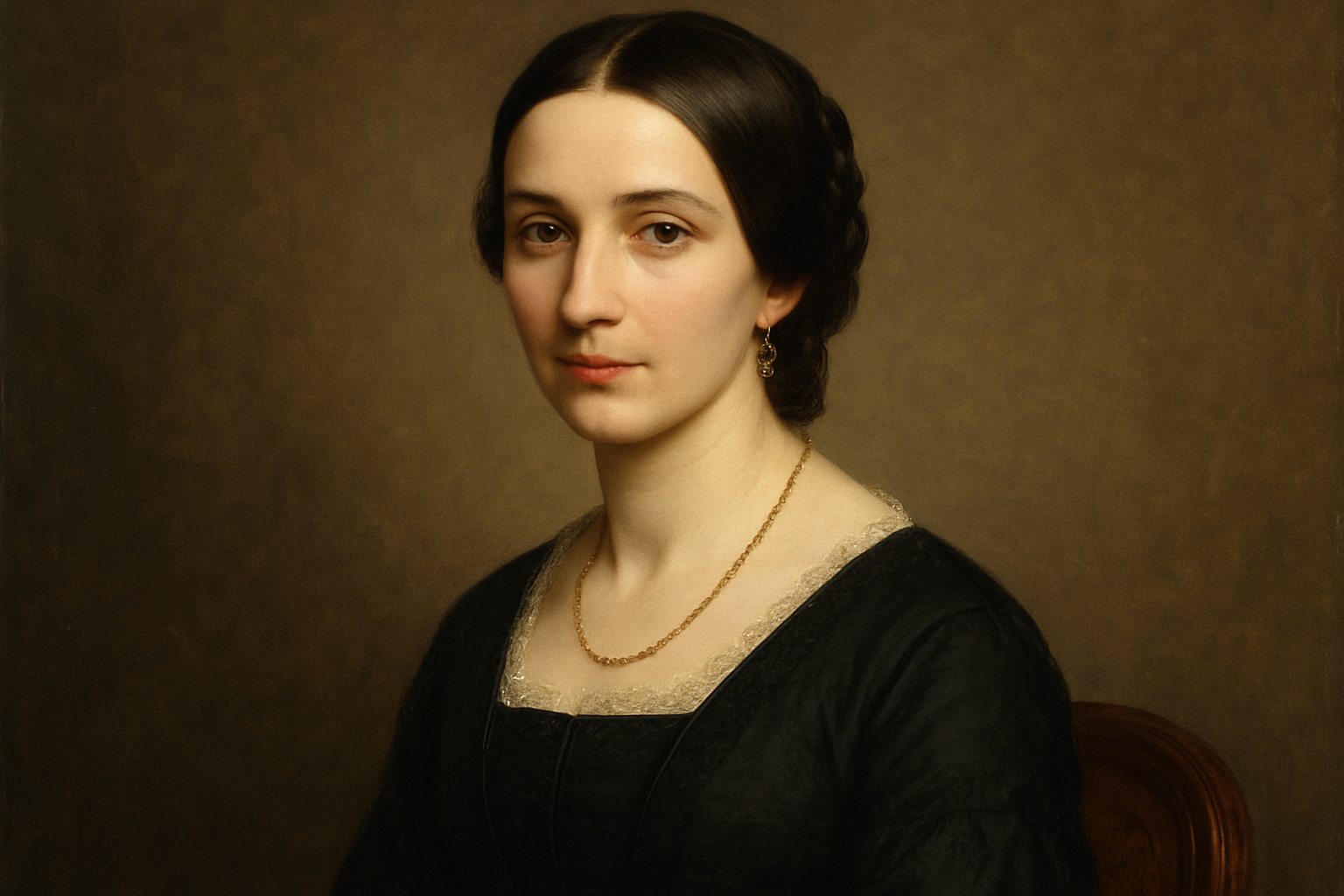
Clara Schumann remains a formidable figure in the world of classical music, not only as the wife of the renowned composer Robert Schumann but as a pioneering musician whose talents and innovations forged a path for future generations of female artists. In the 19th century, a time when women were often excluded from professional artistic pursuits, Clara’s legacy as both a composer and performer has continued to resonate with audiences and musicians alike.
The Early Years
Born Clara Wieck on September 13, 1819, in Leipzig, Germany, she entered the musical world at an early age. Her father, Friedrich Wieck, was a music teacher determined to mold his daughter into a musical prodigy. Clara’s rigorous education under her father’s guidance included lessons in piano, violin, singing, theory, harmony, composition, and counterpoint.
A Prodigy Emerges
By the age of nine, Clara was performing publicly, and her talent quickly captured the hearts of audiences across Europe. Her early compositions, crafted under the watchful eye of her father, displayed a remarkable grasp of musicality and sophistication. The Encyclopædia Britannica notes that Clara’s performance career spanned over 60 years, during which she made substantial contributions to the popularization of her husband’s work, as well as the promotion of the music of Johannes Brahms, her close friend and confidant.
Married Life and Professional Challenges
Clara married Robert Schumann in 1840, and together they became one of music history’s iconic couples. Yet, Clara’s own career never faded into the background. Despite personal hardships, including the mental illness and eventual death of her husband, Clara continued to compose and perform.
“I once believed that I possessed creative talent, but I have given up this idea; a woman must not wish to compose — there has never yet been one able to do it. Should I expect to be the one?” — Clara Schumann
Legacy
Despite her self-deprecating quote, Clara’s contributions have undeniably carved her place in history. Although her compositions, including Piano Concerto in A Minor and Three Romances for Violin and Piano, were not as prolific as those of her male counterparts, they have recently been subject to scholarly reevaluation and greater appreciation.
Today, Clara Schumann is celebrated as a composer of considerable merit and a performer of profound skill. Her life and work continue to inspire musicians and audiences, reaffirming her status as a pioneering figure in the realm of classical music.
- Name: Clara Josephine Wieck Schumann
- Born: September 13, 1819
- Died: May 20, 1896
- Occupation: Composer, Pianist