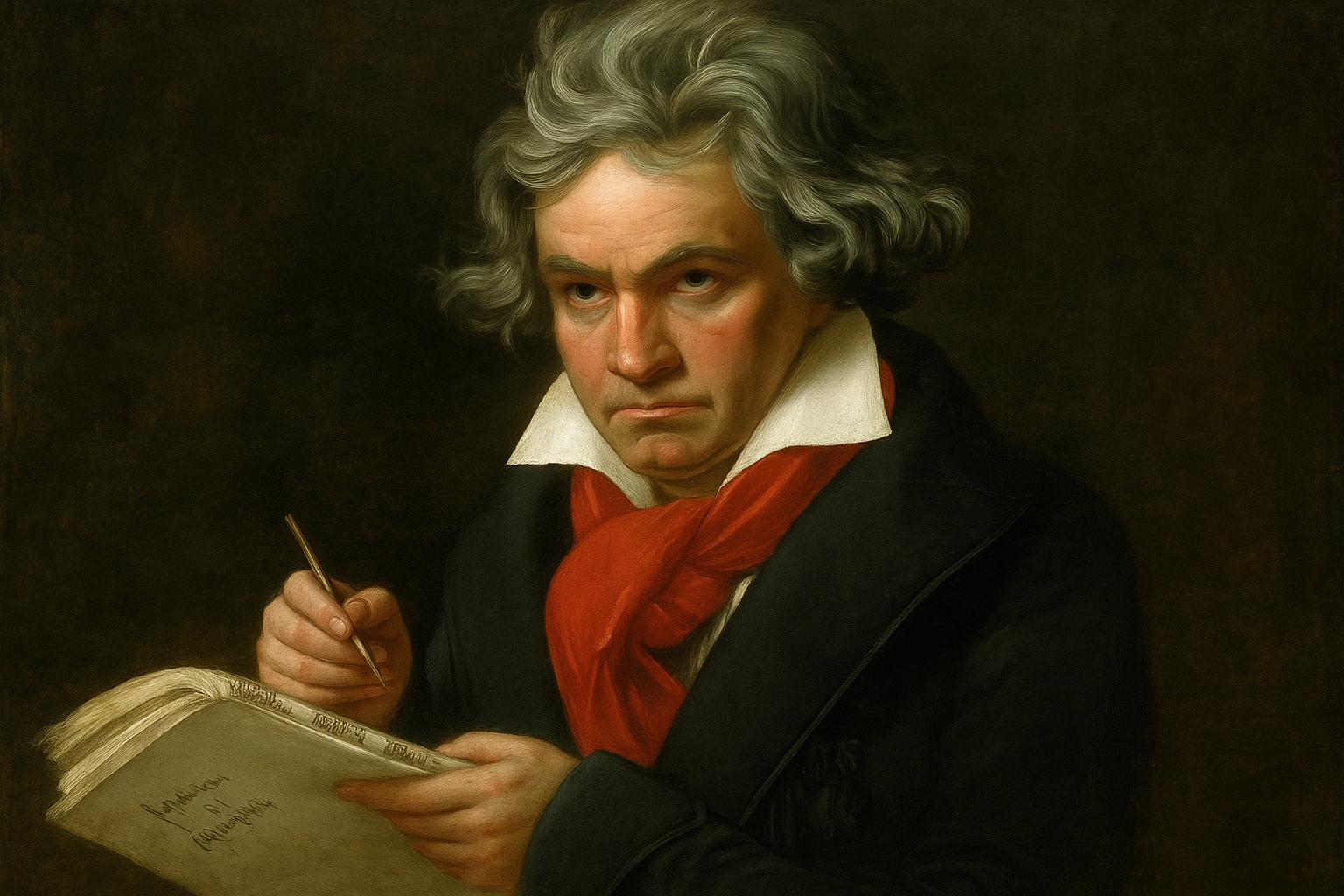
Beethoven’s Revolution: The Journey from the Eroica to the Ninth Symphony
Ludwig van Beethoven, one of the most influential composers in the history of Western music, brought about a profound transformation in the format and thematic content of symphonic music. This metamorphosis is most dramatically exemplified in two of his masterpieces: the Eroica Symphony and the Ninth Symphony. The progression from the former to the latter marks a significant period of innovation that shaped the future of music.
The Eroica Symphony: A Bold New Direction
Beethoven’s Symphony No. 3 in E-flat major, Op. 55, known as the Eroica, represents a bold departure from the musical conventions of the 18th century. Originally intended to be dedicated to Napoleon Bonaparte, the symphony was retitled after Beethoven learned that Napoleon had declared himself emperor. “Beethoven broke with tradition and entrenched the idea of music as an expression of human triumph over adversity,” says musicologist Lewis Lockwood.
This symphony expanded the scope, size, and ambition of the symphonic form. Its first movement alone is almost as long as entire symphonies by earlier composers like Haydn or Mozart. The second movement, a somber funeral march, introduced an emotional depth previously unseen in symphonic music. As Sir John Eliot Gardiner notes, “This was music as a powerful force, capable of taking its listeners through an epic journey.”
From Eroica to the Middle Symphonies: Experimentation and Expansion
In the wake of the Eroica, Beethoven continued to explore new musical ideas through his middle-period symphonies. His Fifth Symphony, with its iconic four-note motif, serves as a testament to his relentless innovation. “Symphonies became platforms for expressing a broader range of human emotions, beyond the purely aesthetic or entertaining,” notes Jan Swafford, author of Beethoven: Anguish and Triumph.
These works explored the dynamic potential of orchestration and thematic development. They set the stage for Beethoven’s burgeoning genius to fully manifest in his final symphonic masterpiece, the Ninth Symphony.
The Ninth Symphony: Ode to Joy and Human Unity
The Symphony No. 9 in D minor, Op. 125, incorporating Friedrich Schiller’s poem “Ode to Joy,” was revolutionary for its inclusion of vocal soloists and a chorus—an unprecedented combination for a symphony of its time. By weaving choral elements into the symphony, Beethoven envisioned a unified human race coming together in a celebration of joy and brotherhood. As Richard Taruskin discusses in The Oxford History of Western Music, “Beethoven’s Ninth represented the apotheosis of his symphonic achievements and a harbinger of things to come in music history.”
“All men will become brothers,” proclaims Schiller’s text, heralding Beethoven’s message of unity and universal harmony.
The thematic depth and complexity of the Ninth Symphony went beyond music theory—it engaged with ideas of humanism and political enlightenment. Its premiere in 1824 was not only a musical event but a cultural milestone.
Beethoven’s Legacy and Continuing Influence
The influence of Beethoven’s revolutionary approach to the symphony stretched far beyond his lifetime. Composers in the Romantic era like Brahms, Mahler, and Bruckner were deeply inspired by Beethoven’s work. As stated by the conductor Leonard Bernstein, “No composer has influenced the core of symphonic thought and work more than Beethoven.”
- Johannes Brahms: Often hailed as Beethoven’s successor, Brahms carried the traditions of structural complexity and thematic development established by Beethoven.
- Gustav Mahler: His symphonies expanded on Beethoven’s operatic qualities, infusing them with lush orchestration and emotional scope.
- Anton Bruckner: Known for his expansive symphonic architecture, Bruckner’s works reflect Beethoven’s artistic vision of grandeur and spiritual transcendence.
Today, Beethoven’s symphonies remain at the heart of orchestral repertoire worldwide, embodying a transformative moment in music history that continues to evoke inspiration and awe. His journey from the Eroica to the Ninth Symphony stands as a testament to the power of music to transcend mere entertainment and become a force for human expression and unity.