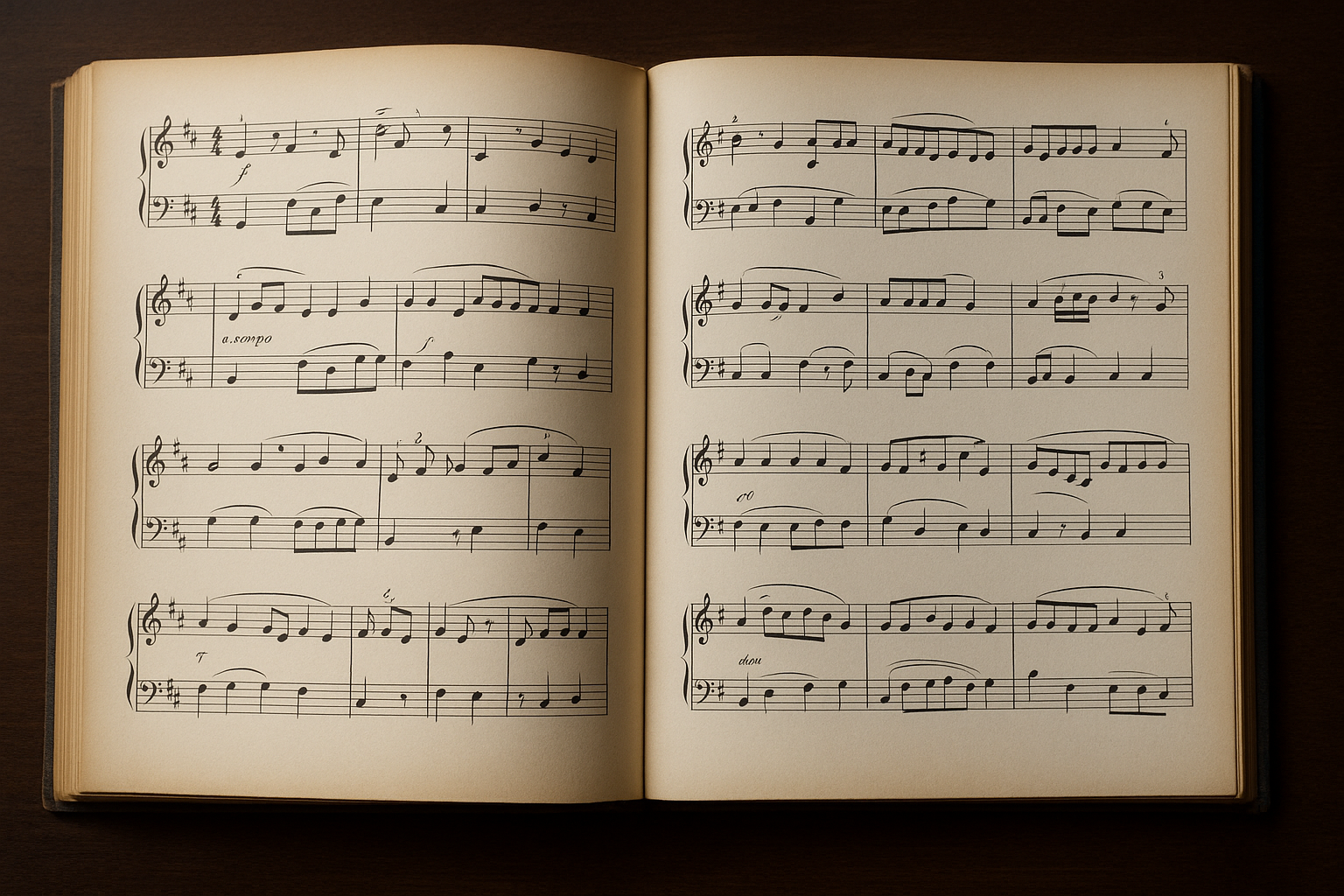
Music, much like literature, undergoes multiple interpretations, translations, and reproductions throughout its lifetime. This is especially true in classical music, where editions of scores play a crucial role in the work’s performance and subsequent perception. Why do different editions of the same work vary so greatly, and how does this affect the music? Understanding the nuances between editions provides insight into the composers’ intentions, the editor’s interpretations, and the evolving musicology norms.
The Role of the Editor
The editor of a musical score has a significant responsibility. According to BBC Culture, editors are tasked with interpreting the often scant details in a composer’s original manuscript. They make decisions on everything from dynamics and phrasing to articulation and tempo.
“Each version of a musical score tells a different story,” says musicologist Dr. Andrea Milne. “The editor’s job is to decode what the composer might have intended in the absence of detailed instructions.”
Historical Context and Authentic Performance
One key reason different scores tell different stories is the pursuit of authenticity. Editions prepared in the early 20th century might reflect a Romantic interpretation of a Baroque work, for instance. Modern editions often strive for historically informed performance (HIP), aiming to replicate how the music might have sounded at the time of its composition. This has led to the publication of historically informed scores, like the Bach Edition by Breitkopf & Härtel, which attempt to strip away modern influences.
- The introduction of Urtext editions in the 19th century emphasized fidelity to the original manuscripts and first editions.
- Performing editions often include the editor’s interpretation, which can reflect contemporary performance practices.
- Facsimile editions present the composer’s own handwriting, offering performers a more personal connection to the music.
Interpreting the Silence between the Notes
Composers often left a significant amount of information unnotated, leaving interpretive gaps. These gaps can be filled differently depending on the era, cultural context, or the personal bias of the editor. For instance, Beethoven’s dynamic markings might be approached more forcefully in a modern interpretation than in his own time.
“The gaps are where the music happens,” said Pianist András Schiff in an interview with The Guardian. “Between the notes, between the measures, those are the spaces where interpretation breathes life into the score.”
Technological Advances and Accessibility
Technology has significantly influenced the availability and development of musical scores. Digital platforms and software allow for easy comparison of different editions, providing resources for musicians to understand various interpretations at a glance. Resources like IMSLP offer a treasure trove of scores that are instantly accessible to musicians worldwide, democratizing access to music and its myriad interpretations.
- Online archives have rendered rare and historical editions more accessible to performers and researchers alike.
- Technology enables meticulous analysis of scores, allowing musicians to note even the tiniest of variations between editions.
- Collaborative platforms enable musicians worldwide to discuss and decide upon different interpretations collaboratively.
The Performer’s Choice
Regardless of the edition chosen, the final responsibility lies with the performer. It’s the musician’s task to decide which edition aligns best with their interpretation and the context of their performance. No single edition is “correct”; rather, each provides a different lens through which the music can be understood.
“Each score is a jumping-off point, a blueprint,” noted Conductor Simon Rattle in an illuminating discussion on editions. “It’s up to the performer to fill in the landscape.”
Conclusion
Ultimately, the variations across different editions of musical scores encapsulate the diverse landscape of musical interpretation. They reflect changes in scholarly understanding, performance practice, and editorial philosophy. Understanding these variations enriches the musician’s art and deepens the listener’s experience, allowing a single piece of music to offer an infinite array of stories.