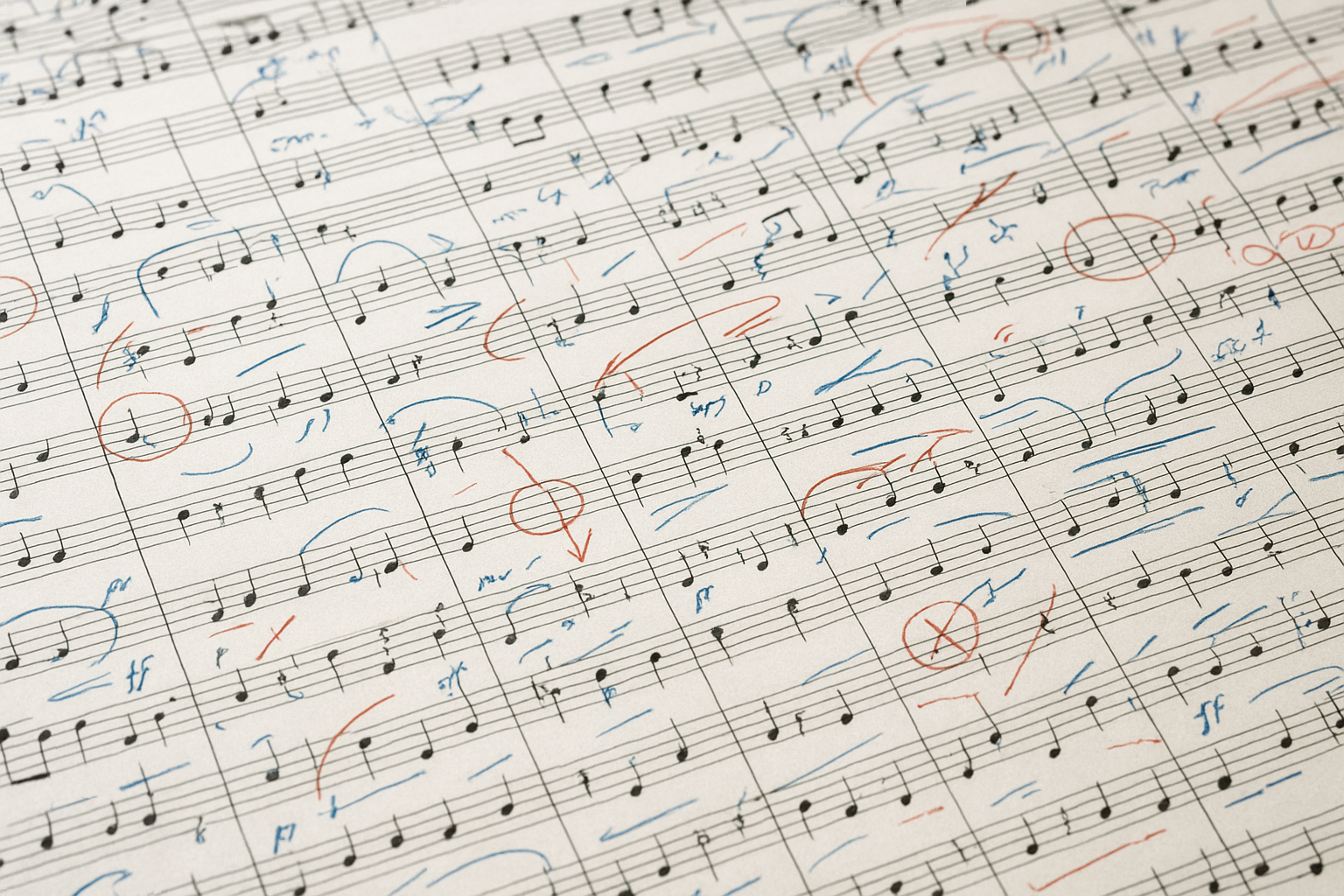
The Conductor’s Blueprint: Key Markings and Annotations in a Full Score
As the visual roadmap for a conductor, a full score is a dense tapestry of musical notation and nuanced annotations. These markings are vital for the conductor to interpret and communicate the composer’s intentions to their orchestra. Let’s dive into the world of a conductor’s annotations and how they transform a static page of notes into a dynamic performance.
Understanding the First Layer: Dynamics and Articulation
- Dynamics: These markings (piano, forte, crescendo, etc.) represent volume changes in the music. They guide the intensity and emotional landscape of the performance. A skilled conductor will often add crescendos or decrescendos customized to their interpretation.
- Articulation: Instructions like staccato, legato, or marcato inform the attack and release of notes, contributing to the piece’s overall texture. Conductors might underline or circle these to emphasize their significance during rehearsal.
Adding a Personal Touch: Tempo and Phrasing
While composers specify a tempo, conductors often adapt it to suit their interpretation or the acoustics of a performance space. Annotations such as “slightly faster” or “breathe” indicate tempo adjustments or phrasing suggestions that are not printed in the original score.
“Every conductor has their own philosophy and approach when it comes to interpreting a score,” remarks conductor John Wilson.
Communicating with the Ensemble: Cue Markings
Conductors add cues to remind themselves of critical moments such as entries for particular sections or soloists. These often take the form of circled noteheads or additional arrows, ensuring seamless cues during a live performance where no detail can be overlooked.
- Visual Symbols: Conductors use various symbols to signal important transitions, often including personal shorthand known only to them or their ensemble.
Embracing the Unexpected: Contingency Annotations
Live performances are unpredictable, and conductors must be ready to alter course if needed. Annotations such as “watch ahead” or “eyes up” remind the ensemble to remain vigilant and responsive to the conductor, allowing fluid adaptation to any unforeseen circumstances.
In essence, a conductor’s annotations are more than mere scribblings; they’re a blueprint that bridges the gap between the silent language of a score and the exhilarating experience of a live performance. These meticulous markings enhance the rehearsals, ensuring that the orchestra follows not just the written notes but the vision transforming a composition into a breathtaking auditory journey.