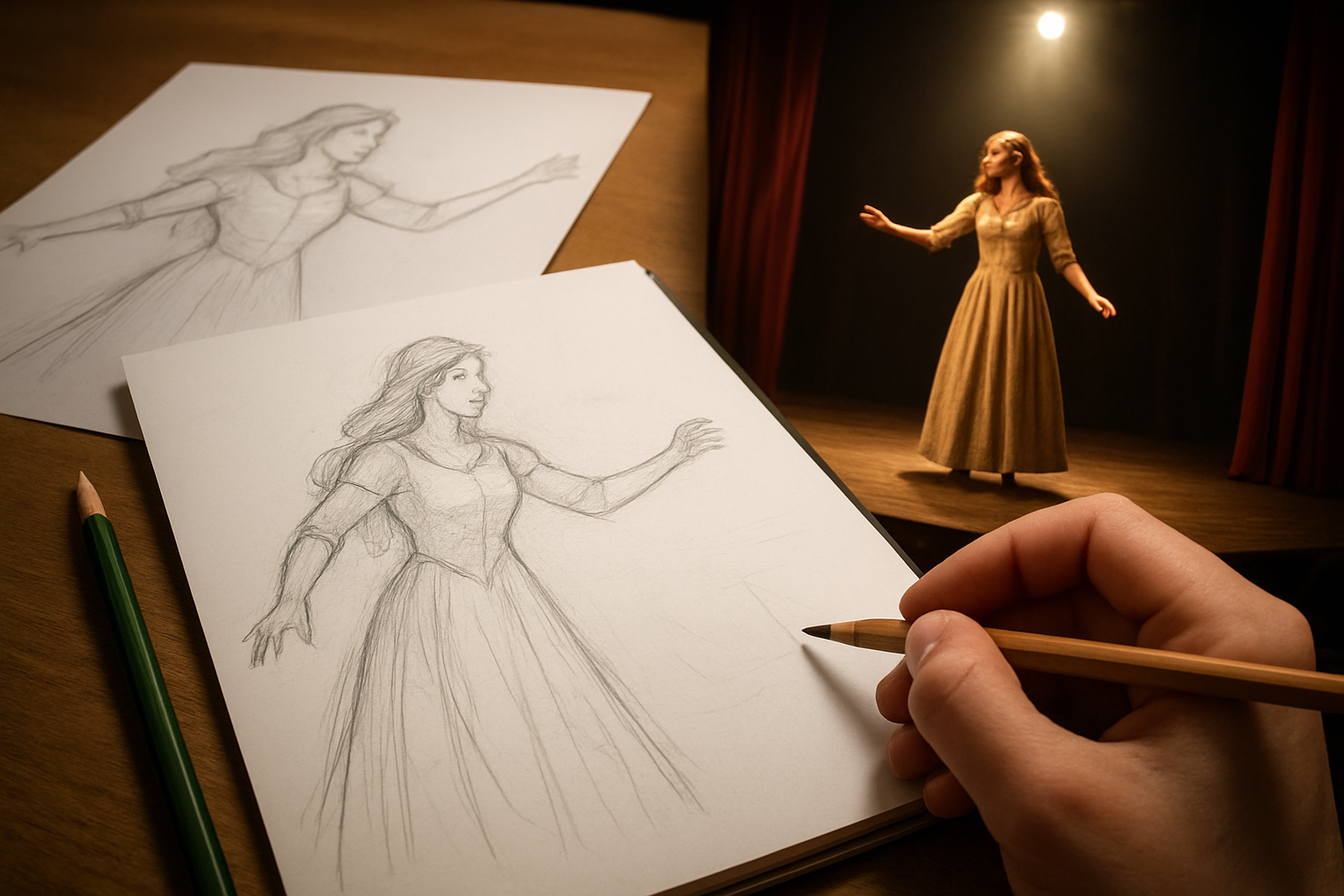
The journey from an initial idea to a polished stage performance is not just a linear path but a complex, iterative creative process. In the performing arts, this transformation often begins with a series of drafts, each contributing to the final production. Understanding these developmental stages can offer valuable insights into the creative trajectory and the collective efforts of everyone involved.
The Genesis of an Idea
Every project begins with a spark, a concept that motivates the creators. This initial moment, often captured in a rough sketch or draft, is crucial as it sets the tone for the rest of the process. As playwright Tennessee Williams noted, “I don’t believe anybody ever becomes a writer by warm, huddled fire. You have to go outside and face yourself in the cold.”
Initial Drafts: Where Creativity Flows Freely
The first few drafts of a script or a performance piece allow for the unabashed flow of creativity. These drafts are characterized by raw inspiration and ideas that have not yet been molded into a cohesive structure. Artists and writers often use free writing, brainstorming sessions, and other methods to bypass internal censorship and allow ideas to flourish unimpeded.
- Freewriting sessions to explore themes without constraints
- Mind mapping to visually organize ideas and plot elements
- Collaborative brainstorming with directors and other team members
Revisions: Sculpting the Core
The subsequent drafts are where revision takes center stage. Here, the rough sketches begin to take form. Artists refine the narrative arc, tighten dialogue, and clarify characters’ motivations. This process is akin to sculpting a statue from a block of marble—chipping away excess and honing the vision until it begins to take shape as intended.
“Creativity is allowing yourself to make mistakes. Art is knowing which ones to keep.” — Scott Adams
For playwrights, this phase may include workshops and readings, where the feedback from actors and directors becomes invaluable. The feedback not only highlights areas of confusion but also identifies what resonates with the audience. Each of these critical insights helps guide further revisions.
Finalizing the Script: The Masterpiece Emerges
At some point, the script transitions from drafts to a more polished version. The piece may undergo several reads, rehearsals, and iterations even before it is deemed ready for the stage. The final draft embodies the narrative’s intrinsic qualities, the dramatic tension, and the rhythm that will carry the audience through the experience.
Choreography and Stage Design: Complementing the Narrative
While scripts and performances are refined through drafts, the visual and physical elements of stage design undergo a parallel process. Set designs often originate as sketches, evolving through multiple versions. Choreography also follows a similar blueprint, where initial movements are sketched out, tested, and refined in rehearsal spaces.
- Exploration of space dynamics and physical storytelling
- Adjustments to set pieces based on rehearsal feedback
- Consultation with lighting and costume designers for cohesive visual aesthetics
The Role of Collaborators
No theatrical piece reaches the stage without the concerted effort of various collaborators. Directors, actors, stage managers, and technical crew all contribute to the complex mosaic. Each change, whether it’s a line of dialogue or a lighting cue, is a collaborative decision that enhances the overall production.
As playwright Harold Pinter expressed, “There are no hard distinctions between what is real and what is unreal, nor between what is true and what is false.” This insight highlights how collaboration blurs the lines between individual visions to create something greater than the sum of its parts.
Conclusion: The Power of the Process
The evolution from sketch to stage underscores the power and complexity of the creative process. Drafts are not mere stepping stones; they are the chisel with which artists carve their works. By examining these drafts, one can appreciate the labor and creativity involved, witnessing how raw ideas coalesce into a masterpiece.
The changing nature of drafts is a testament to the adaptive spirit of the arts. It reminds us that each stage of development, each revision and feedback, takes us closer to not only a finished product but a shared human experience.
For further reading on creativity processes in the performing arts, visit this comprehensive guide by ArtsLaw.